

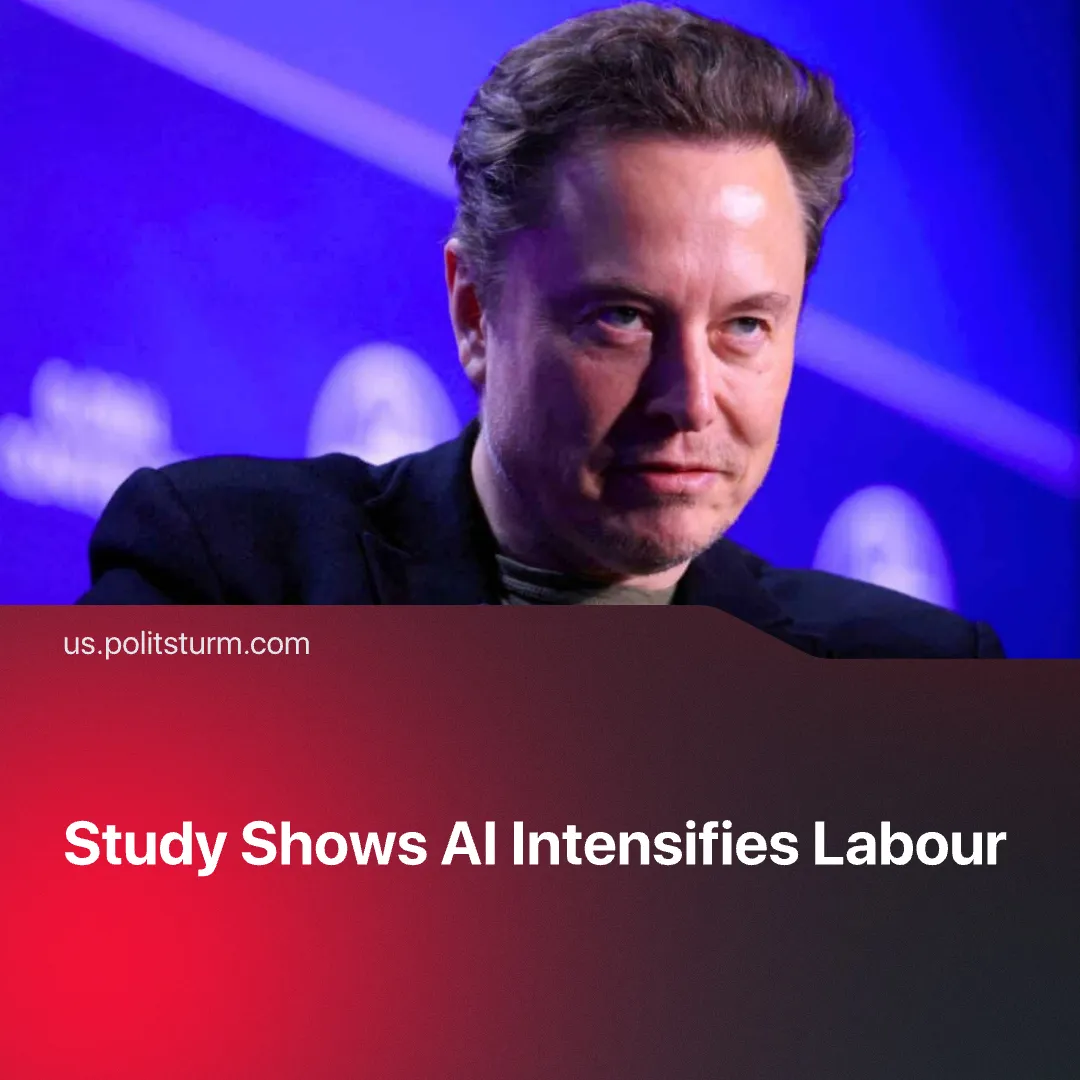
New study shows AI intensifies labour, contradicting billionaire claims of a “technological liberation” from work.
Details. A recent study published by Harvard Business Review concludes that AI adoption is restructuring work in ways that intensify labour, rather than reduce it.
►The study has found that many employees now take on a wide range of extra tasks that were once assigned to workers in specialised roles. The remaining specialists spend most of their time reviewing, editing, and correcting AI-generated output rather than performing the core duties of their profession.
► AI systems also extend the working day indirectly. Because AI tools require little effort to use, workers often engage with them during breaks or downtime, effectively extending the working day and keeping them continuously tied to work.
► AI automation lets workers handle multiple tasks at the same time, allowing the system to run one task while the worker checks, corrects, or starts another. This constant jumping between tasks speeds up work, increases mental strain, and leaves less time for rest.
► While the study acknowledges rising fatigue, stress, and health risks, it treats these effects as issues of workplace design, proposing managerial adjustments, for example, by introducing scheduled breaks to reduce fatigue. This presumes employers are willing to constrain output and exploitation, despite capitalism’s drive to maximise profit.
Context. Members of the capitalist class and their mouthpieces have claimed that AI will reduce or eliminate the need for human work.
► Musk has claimed AI will make work unnecessary, saying, “There will come a point where no job is needed… the AI would be able to do everything.” Venture capitalist Vinod Khosla argues AI will “free humanity from the need to work,” while Google DeepMind’s Demis Hassabis speaks of AI producing “radical abundance.”
► Past technical or technological developments also produced the opposite result. Mechanisation and automation allowed capital to extract more output with fewer workers, intensifying labour while driving down wages and triggering mass layoffs.
► Rising unemployment increased competition between workers for jobs and lowered employed workers’ bargaining power. Profits rose, while the long-term physical and psychological damage caused by intensified work was largely ignored.
► Karl Marx long ago noted “…machinery, considered alone, shortens the hours of labour, but, when in the service of capital, lengthens them; in itself it lightens labour, but when employed by capital, heightens the intensity of labour…"