

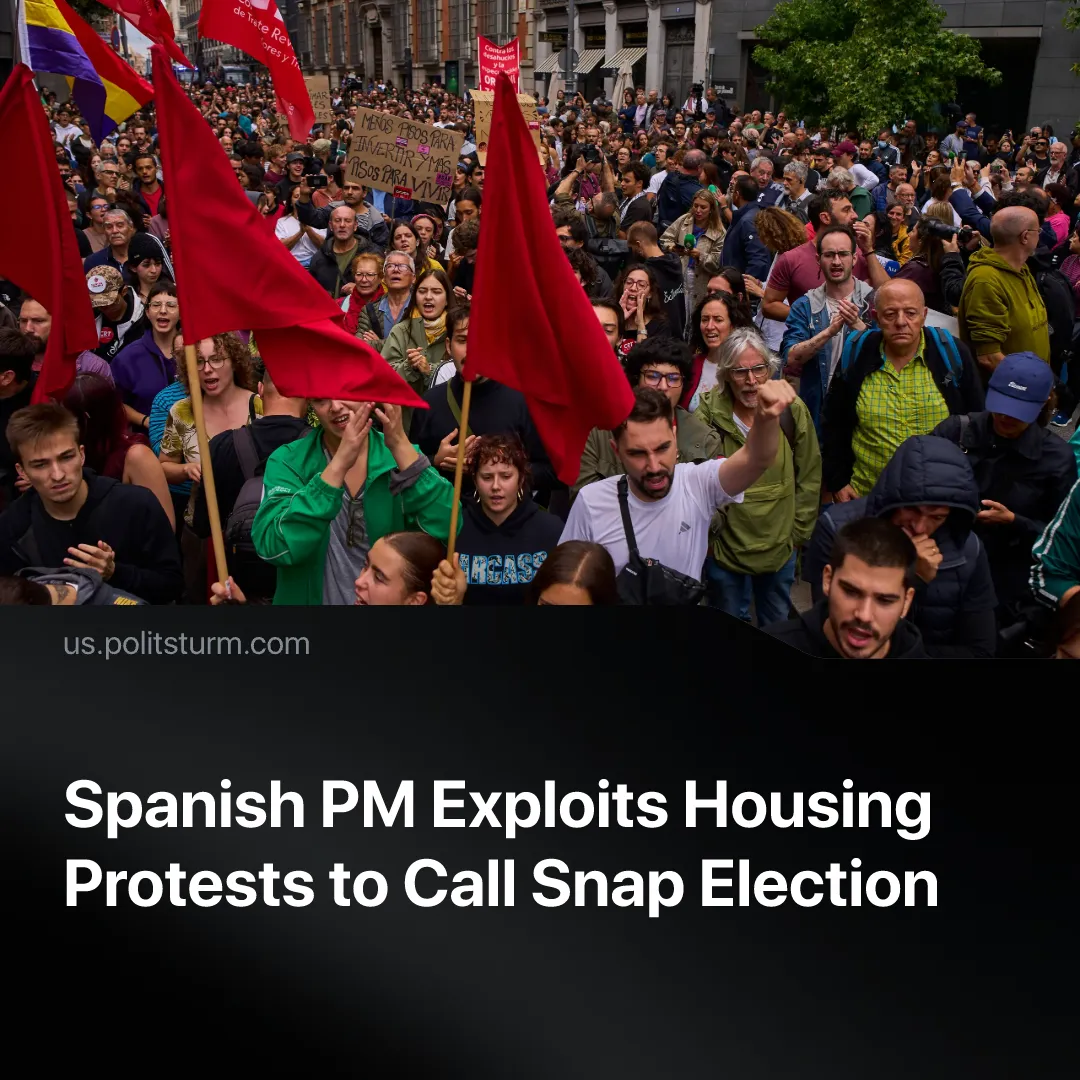
Mass housing protests have prompted the Spanish Prime Minister to opportunistically call a snap election. After eight years of presidency he blames "the elites" for the crisis.
Details. Spanish Prime Minister Pedro Sánchez responded to mass housing protests with two emergency housing decrees, which tenants' organisations criticised as “insufficient” and “shameful”. Parliament voted them down on 2 October after the conservative PP, far-right Vox and Catalan nationalist Junts opposed the government.
► Lacking a parliamentary majority, Sánchez called snap elections for 29 November, claiming a stronger mandate was needed to overcome the “resistance of the elites”. The following day, his government reapproved modified versions of both decrees through the Council of Ministers, seeking ratification by Parliament's smaller Permanent Deputation.
Context. Around 40 Spanish cities saw massive protests, with between 20,000 and 120,000 people marching in Barcelona alone under the slogan "let's end the housing business." The Madrid Tenants’ Union called a 24-hour general strike for 11 November, backed jointly by Spain’s two largest unions (CCOO and UGT) for the first time in 14 years.
► The crisis erupted after the eviction of 87-year-old tenant Maricarmen. A corporate landlord invalidated her rent-controlled lease and demanded a €1,650 rent that exceeded her monthly pension by €300. Riot police carried her out on a stretcher despite massive street resistance. She later died in a hospital, just before a deal allowing her return could take effect. Protesters directly blamed the landlord for her death.
► Spanish workers spend over 40% of their income on rent, while real wages remain flat and inflation pushes basic goods out of reach. Nearly two-thirds of adults under 35 are forced to live with their parents, making housing the top concern for 64% of voters.
► Similar crisis are visible across the world. In France, student protests have spread amid wider economic discontent, while the US has seen growing numbers of young adults living with their parents. Canadian renters also face severe financial pressures, with growing reliance on food banks.
Important to Know. Sánchez’s PSOE (Partido Socialista Obrero Español - Spanish Socialist Workers' Party) is a reformist party. It promises relief without touching private property. It adopts radical language to corral working-class rage back into the capitalist system.
► His 8 years of presidency prove this. His flagship housing policy, a “rent cap”, was voluntary for regional governments , allowing conservative regions to ignore it entirely. He invited corporate landlords to a housing summit, prompting Barcelona’s Tenants’ Union to boycott, comparing it to “calling a summit for curing cancer and inviting tobacco companies to participate.”
► The snap election offers Sánchez an opportunity to capitalise on the housing protests, presenting himself as an opponent of powerful property interests despite his government's record. Yet his government reapproved substantially similar decrees immediately after calling the election, showing that these measures could be pursued without a new electoral mandate.
► The housing crisis is rooted in capitalist private property, which turns a basic human necessity into a source of profit for landlords, developers and banks. As long as housing is produced and distributed according to profitability rather than social need, shortages and unaffordable rents will persist.