

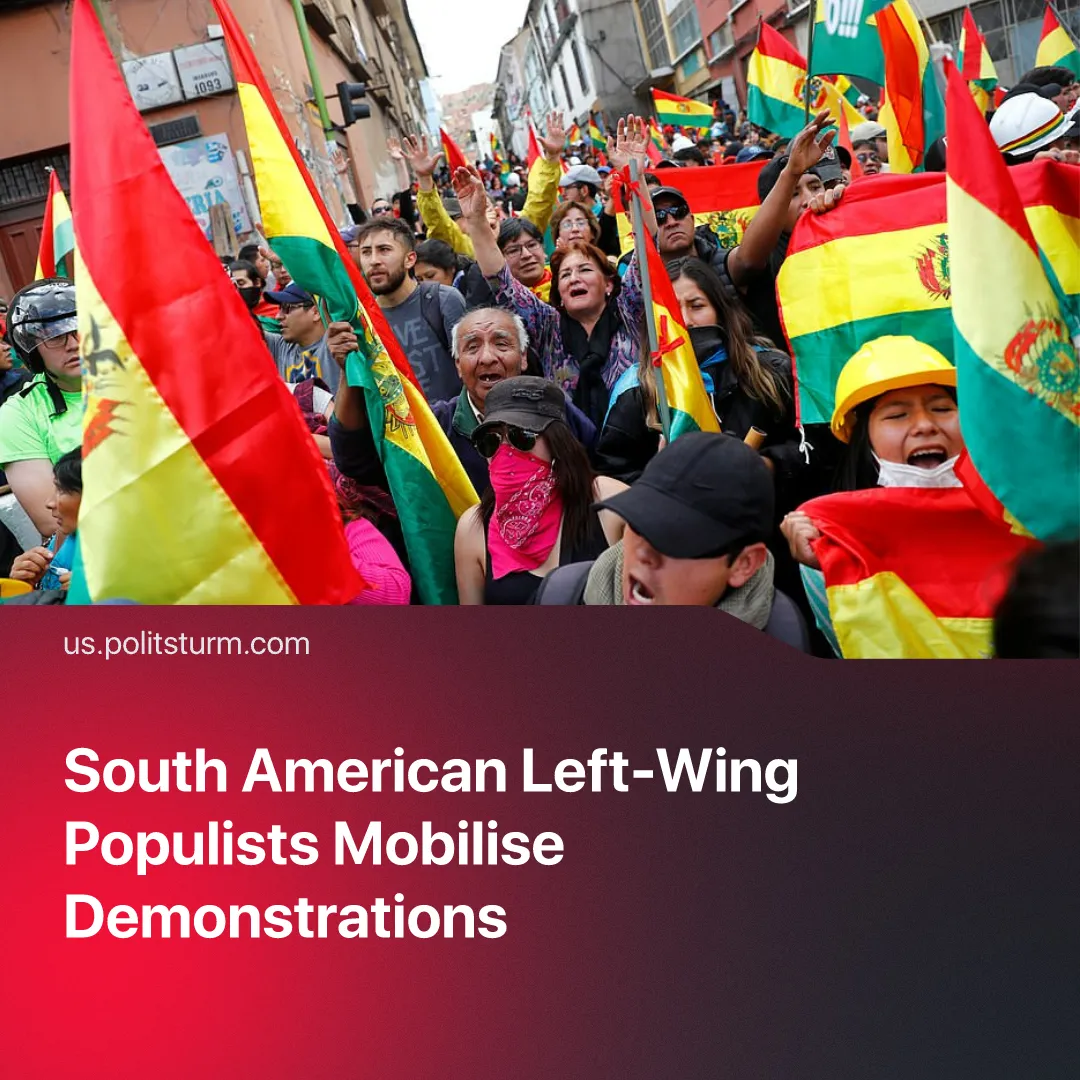
South American Left-wing populists mobilise popular demonstrations and protests against austerity and US imperialism. How successful can they be?
Details. Bolivia is currently experiencing major protests and clashes after the government introduced austerity measures, moved toward ending fuel subsidies, and advanced a law that allows small land to be used as collateral for bank loans. Miners, transport workers, peasants and unions have mobilised against these measures, with some also demanding the resignation of Rodrigo Paz.
► Former Bolivian president Evo Morales openly backed the movement and remains highly influential among sections of the unions, coca growers and peasant organisations participating in the unrest. Government opponents accused him of encouraging an insurrection, while Morales-linked supporters and other protestors in general marched on La Paz and clashed with police. The military has been deployed to combat the protests, which have led to seven deaths.
► In Colombia, Gustavo Petro repeatedly used popular mobilisation during 2025 to pressure parliament and push through his labour reforms, which included improved pay and better working hours. In 2026, he again called for demonstrations after threats of possible US military action in the region, framing them around national unity and defence of the Colombian state.
Context. Gustavo Petro and Evo Morales are among the last remnants of Latin America’s non-communist “Pink Tide”, where populist “socialist” movements worked-class energy toward reformism and nationalism. Many of these countries later shifted toward austerity and cooperation with Washington, as seen with the collapse of Peronism in Argentina, and with Luiz Inácio Lula da Silva, who increasingly prioritised stability for Brazilian capital and abandoned popular reforms.
► Venezuela also relied heavily on populist mobilisation and anti-imperialist rhetoric before US intervention escalated. But the Maduro government never sought to place power in the hands of the working class, instead preserving capitalism, suppressing independent unions and communists, and using socialist language opportunistically while workers remained largely apathetic once Washington moved decisively against the country.
Important to Know. Whilst left-populist movements can mobilise workers and sometimes win limited concessions, this serves to redirect working class energy towards dead ends, convincing workers that the system that exploits them can be fixed. Rather than building independent communist organisations and proletarian power, they tie workers to sections of the domestic capitalist class through nationalism, electoralism, and support for the existing capitalist state.
► This eventually demoralises workers and weakens resistance, as seen in Venezuela, Argentina, Brazil and many other countries, where a once energetic and nearly revolutionary working class, after years of populism and anti-communism are left politically unprepared, disorganised and vulnerable to the advances of capital and foreign intervention.