

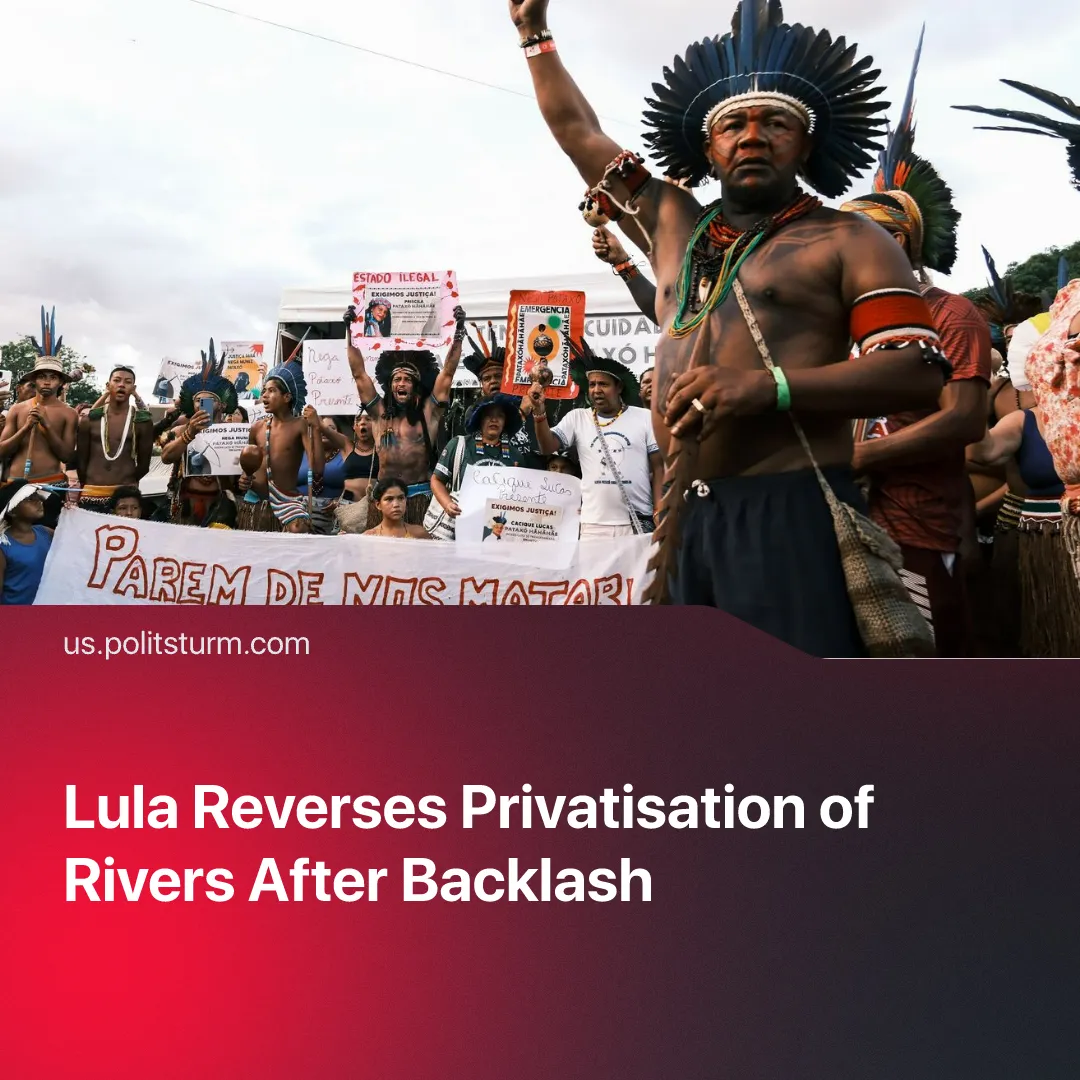
Protestors forced the Brazilian Government to temporarily u-turn on privatising three major rivers. Lula’s government tries to portray this as a planned pro-worker move.
Details. In late February, Brazilian President, Luiz Inácio Lula da Silva reversed decree n. 12.600, which would see three rivers – River Madeira, Tocantins and Tapajós – handed over to private enterprises, after native South American activists occupied one of Cargill’s (an American-based company) riverside terminals in the state of Pará for 33 days.
► Protestors also coordinated a boat protest, where one of Cargill’s rafts was also occupied. It was reported that protestors were intimidated by federal police forces.
► Sympathy action took place in other states, such as through the occupation of Cargill’s headquarters in São Paulo. Certain trade unions also expressed their support for the protests.
► The Government initially attempted to negotiate – suspending the dredging of River Tapajós and offering to create a body to oversee a proper consultation process over the privatization of the rivers. This was rejected by protestors, who announced they would not settle for less than the annulment of the decree 12.600.
► After giving in to the pressure, the “workers’ government” is attempting to portray these events as proof that it “has the capacity to listen to the people, including reviewing decisions when necessary.”
Context. The decree was originally published in August 2025 and would place the three rivers under Brazil’s National De-nationalisation Programme. Recognising the importance of these rivers for the export of soy beans and corn, the programme sought to expand the rivers’ competitiveness through dredging and other physical alterations to the river in the interests of private monopolies.
► This took place a few months before the COP30, alongside the cutting down parts of the Amazon Rainforest in order to help accommodate the climate summit.
► Protests took place during COP30, pointing out the obvious environmental and social implications of this decree. In response, it was announced that native populations would be part of the consultation process – but no such process took place until the most recent protests.
► Despite this momentary setback, monopoly capital will continue to push for the privatisation of these key rivers. Under current conditions it continues to advance its interest with the help of the “workers’ government" – the current administration has set limits to primary public spending and expanded the scope for “public-private partnerships,” for example.