

Preface by Politsturm
For the 109th anniversary of the October Revolution, Politsturm has prepared an adapted translation of a unique material on the history of the Bolshevik Party.
The original text, authored by L. Ryklin, was published under the title "Lenin’s Struggle Against International Centrism for the Party" in the Soviet journal “Istorik-marksist” (The Marxist Historian), No. 3, 1932.
The author illustrates the arduous and persistent work undertaken by the Bolsheviks to defend their principles – not only against opponents within the Russian labor movement but also against the established authorities of international social democracy.
The opponents of the Bolsheviks portrayed the struggle for the Party as mere "squabbling" rooted in personal animosity. The leaders of the Second International readily accepted this interpretation, repeatedly supporting attempts at unification while opposing Lenin. Through concrete examples, the author demonstrates that both viewed the Bolsheviks as a "deviation" from the established standards of social democracy.
Mensheviks, Trotskyists, and other anti-Bolshevik factions sought to gain access to the broad masses of workers and bring them under their own influence – much as opportunists had done within the social-democratic parties of Europe. The leaders of the Second International, who held either centrist (Kautsky) or "semi-left" (Luxemburg, Mehring) positions, viewed the unification of the Bolsheviks and Mensheviks as a mechanical merger, assuming that the combined whole would inevitably be superior to the separate parts.
As the author shows, these perspectives persisted for decades. Regardless of the specific views held, the well-intentioned calls for the Bolsheviks to unite with their opponents would have, in effect, led to the destruction of their Party. Had the leadership of the Second International succeeded in its aims, the Russian Social Democrats would have met the same fate during World War I as their counterparts in Germany, Austria, France, Belgium, and elsewhere. Without the Bolshevik vanguard party, the October Revolution would have been impossible. Despite the immense authority of those arrayed against them, Lenin and the Bolsheviks did not back down.
In documenting this struggle, the author draws not only upon Lenin’s own writings but also on unique quotations from his opponents – most notably Trotsky. Following the October Revolution, Trotsky sought to portray himself as a consistent Bolshevik, effectively obscuring his past. When preparing his collected works, he removed parts of his materials where he had previously leveled against the Bolsheviks and omitted other materials entirely. The excerpts from Trotsky’s writings presented here reveal his true views and the genuine nature of Trotsky’s struggle against Lenin and the Bolsheviks. That is why Politsturm included his name in the title of the translation.
History has proven Lenin’s analysis to be correct: it was not petty squabbles or personal animosity that divided the Bolsheviks from their opponents, but profound theoretical disagreements. Such differences cannot be resolved through rotten compromises, but only through the consistent pursuit of a theoretical struggle – a lesson that contemporary communists have to remember.
Introduction
By the end of the 19th century, capitalism had entered a new stage of development – the stage of imperialism.
In accordance with the demands of the new era, the proletariat and its vanguard were confronted with new, immense revolutionary tasks. To rely on the old Social Democratic parties formed under the conditions of parliamentarism, during the process of resolving the tasks posed by the epoch of imperialism meant to "doom oneself to hopeless despair, to inevitable defeat" (Joseph Stalin, The Foundations of Leninism).
The Social Democratic parties of the pre-war Second International represented a bloc of proletarian and petty-bourgeois interests. The Bolsheviks repeatedly pointed out this characteristic of the West European Social Democratic parties even before the war. In his polemics against the leaders of international opportunism, Otto Bauer, Karl Renner, and others, even before the war, comrade Stalin emphasized that the Austrian Social Democrats had abandoned their fundamental task of organizing only the proletariat within their ranks. Instead, at a time of the sharpest intensification of class struggle, they advocated the "organization of interclass alliances" [1].
It was precisely on this basis that centrism emerged within the Social Democratic parties of the Second International, representing nothing other than an ideology of adaptation, an ideology of subordinating proletarian interests to the interests of the petty bourgeoisie within the framework of a single party.
Centrism was a natural phenomenon within the Second International during the pre-war period. In the struggle between the two currents, the two tendencies within the West European parties, the mission of the centrists was to obscure and gloss over fundamental differences, to portray them as insignificant and unworthy of internal party disputes or confrontations, and to subordinate the Left to the Right within the framework of a single party.
“It is the practice of Social Democracy,” Stalin said at the Seventh Plenum of the ECCI, “to cover up and conceal these contradictions and disagreements. It is the practice of the Social-Democrats to turn their conferences and congresses into an empty parade of ostensible well-being, assiduously covering up and slurring over internal disagreements” [2].
This “line” of corrupting and obscuring political consciousness, a line of the party's ideological impoverishment and degradation, was one of the causes of the dissolution of West European Social Democracy, of its ideological death.
“The policy of a “middle” line in matters of principle is the policy of decaying and degenerating parties. Such a policy cannot but lead to the conversion of the party into an empty bureaucratic apparatus, running idle and divorced from the masses of the workers” (ibid.). This policy, which both domestic and international centrism sought to instill in Russian Social Democracy, was alien to the party of a new type, the Bolshevik Party, and met with its resolute resistance.
In the struggle against opportunism and its particular form – centrism – Lenin was the only one who raised the fight for orthodox Marxism to a genuinely principled level. Four features characterized Lenin's position in this struggle.
First, Lenin was the only leader of the international proletariat who exposed the ideological and class roots of opportunism and, more clearly than anyone else, emphasized the international character of opportunism. In his struggle against the Legal Marxists, the Economists, the Mensheviks, the Liquidators, and the Trotskyists, Lenin consistently demonstrated their connection with the "vacillations of thought", the deviations, and the vulgarization of Marxism within international Social Democracy.
Second, the very nature of international opportunism and especially of Russian opportunism, against which Lenin was compelled to wage the foremost struggle, made his fight exceptionally comprehensive, because opportunists of every variety left no aspect of the Marxist worldview untouched by their "revisions", criticizing all the fundamental sociological and economic tenets of Marxism revising every aspect of the Social Democratic program and tactics. In his struggle against them, Lenin consistently defended the orthodox Marxist position on all these questions, while never reducing the dispute to the level of an abstract academic debate.
Third, Lenin's struggle against both domestic and international opportunism and against its particular form – centrism – was not merely a defense of Marxism, but also its further development, raising it to a higher stage.
Fourth, Lenin's entire struggle against international opportunism was subordinated to a single objective: the creation of a party of a new type, a militant party capable of "conducting a systematic, persistent and, under any concrete conditions, genuinely revolutionary struggle" [3].
Lenin was the only leader in the international workers' movement who consistently and to the very end fought for a split with the opportunists and centrists as the decisive condition for creating a party of a new type.
A special place in the struggle to create this party of a new type belongs to the Bolsheviks' struggle against centrism, which represents the greatest threat to the workers' movement and hinders the creation of a genuinely proletarian party.
Given the balance of forces typical of the parties of the Second International, "Bolsheviks could not at that time but concentrate their fire on the Centrists, who were trying to subordinate the proletarian elements to the interests of the petty bourgeoisie... The Bolsheviks were obliged at that time to advocate the idea of a split, for otherwise the proletarians could not have organised their own monolithic revolutionary Marxist party" [4].
The entire history of our Party is a history of overcoming internal contradictions in spite of the centrists and in struggle against them, and of the Party's steady strengthening on the basis of overcoming those contradictions.
Unlike the West European parties of the Second International, the overcoming of internal disagreements through struggle and the elimination of opportunist elements constitutes the law of the development of our Party.
During the Iskra period, when disagreements first emerged within the editorial board, which later developed into the struggle between the Bolsheviks and the Mensheviks, Lenin and the Bolsheviks did not take the path of glossing over these differences or pursuing an unprincipled unity. Instead, they exposed and overcame these contradictions through struggle.
On the eve of the 1905 Revolution, the Bolsheviks, having convened their own separate Third Congress, won the support of the majority of the Party because they "did not slur over disagreements based on principle and fought to overcome them by isolating the Mensheviks" [5]. The same line of exposing and overcoming disagreements by cutting off opportunist elements can be observed in the period following the defeat of the 1905 Revolution, the period of reaction and the upsurge, and so on.
During the periods of reaction and upsurge, "the Bolsheviks proceeded to rebuild and strengthen the Party, not by slurring over the disagreements with the Liquidators on matters of principle, but by bringing them into the open and overcoming them" [6].
A special place in the Party's struggle against opportunism in Russia was occupied by its struggle against Trotskyism. The struggle against Trotskyism, culminating in its complete defeat even before the war, provided the necessary conditions for the creation of a truly militant, monolithic proletarian party.
In this article, we shall attempt to demonstrate, through concrete facts, the connection between Trotskyism and Kautskyism, as well as the actual history of Lenin's struggle against both domestic and international centrism in the pre-war period, hoping to return to these questions in subsequent articles.
I. Lenin and Kautsky: The International Nature of Opportunism
The struggle between the two tendencies within the international workers' movement found its expression in Russia in the split at the Second Congress and the formation of two parties. As Lenin wrote in his notes on the Second Congress, these were the revolutionary proletarian party – the Bolsheviks – and the intelligentsia-opportunist party – the Mensheviks.
Soon after the Second Congress, the Bolsheviks, in their report to the Amsterdam Congress, pointed to the international significance of the split, arguing that the struggle and the split within the RSDLP reflected the processes unfolding throughout the international workers' movement.
The report stated: "We do not deny that there exists within our Party a certain antagonism. It is the very same antagonism that divides Social-Democracy everywhere into the revolutionary (orthodox) and the opportunist (revisionist), ministerial and reformist, trends. This division has manifested itself with particular clarity in Russia during the past 10 years".
The Bolsheviks thus declared that the struggle within the ranks of the RSDLP was not the result of personal squabbles or a family quarrel, but an expression of irreconcilable differences of principle dividing Social-Democracy into its opportunist and revolutionary wings.
It was therefore only natural that Kautsky, like the leadership of the Second International as a whole, should side with the Mensheviks against the Bolsheviks in this struggle. Almost simultaneously with the publication of Lenin's “One Step Forward, Two Steps Back”, which caused considerable consternation among the Mensheviks, Kautsky published his letter in No. 66 of Iskra, in which he expressed complete solidarity with opportunism on questions of organization.
Kautsky regarded the organizational differences within the RSDLP as clearly exaggerated and maintained that the entire dispute revolved around a simple question – the practicality of one or another form of organization under the specific conditions in which Russian Social-Democracy existed. By thus obscuring the fundamental significance of these differences, Kautsky went on openly to defend the Menshevik organizational principles against the new type of party that Lenin was building, and accused the latter of schism-making over a mere organizational issue.
He wrote: “There is no need to exaggerate the significance of the organizational questions in the form in which they are now confronting Russian Social-Democracy. I see no conflict of principle here – neither between the proletarian and intelligentsia branches, nor between “democracy and dictatorship” – but merely a question of expediency, a question of which form of organization, under the present Russian conditions, will best ensure the necessary mobilization, flexibility, and adaptability to the changing conditions of the struggle, while at the same time preserving unity and systematic conduct of action”.
Kautsky considered it necessary to grant the organizations the maximum degree of autonomy precisely under conditions in which the Party was compelled to operate illegally, and regarded it as unnecessary to require every Party member to belong to one or another clandestine organization.
He wrote: "Every formal centralization can only diminish the effectiveness of the organization. … Therefore, if at your Congress I had to choose between Martov and Lenin, then, on the basis of all the experience of our work in Germany, I should decidedly declare myself in favour of Martov".
This address by Kautsky against the militant vanguard party, in defence of intellectual laxity was the first attempt to reconcile the two parties and to subordinate the Bolsheviks to the Mensheviks by portraying their differences as insignificant. Kautsky sought in every possible way to belittle the significance of the fact that "division into minority and majority is only a variant of the old division into a proletarian-revolutionary and an intellectual-opportunist wing of our Party" [7]. Lenin replied to Kautsky: "That is a fact, and there is no explaining or laughing it away” (ibid.).
It is well known that Rosa Luxemburg, proceeding from the "theory of spontaneity", likewise came to the defence of the Menshevik organizational principles, defending the "organization-as-process" against the Bolshevik Party. She regarded the accusation that the Mensheviks were opportunists as entirely unfounded.
Rosa Luxemburg's anti-Leninist understanding of the roots of opportunism led her to maintain that, in Russia, where there was no constitution and no parliament, there was therefore as yet no soil on which opportunism could grow within Russian Social-Democracy. As Lenin wrote, Rosa Luxemburg thus completely ignored the specific form of opportunism in Russia, failing to understand that "in such a petty-bourgeois country as Russia, in the era of bourgeois revolution, in the formative period of the young Social-Democratic Labour Party, these tendencies were bound to manifest themselves much more sharply, definitely, and clearly than anywhere else in Europe" [8].
Proceeding from the deeply opportunist theory of the organization-as-process, Rosa Luxemburg, as it is known, accused Lenin of advocating ultra-centralism and of mechanically transferring Jacobin-Blanquist principles of organization into the Social-Democratic movement.
This assessment of the disagreements within the RSDLP made by Rosa Luxemburg provoked a sharp rebuke from Lenin in his article “One Step Forward, Two Steps Back”, which Kautsky refused to publish in “Neue Zeit”.
Rosa Luxemburg, as Lenin wrote, "favours me with a whole lecture on opportunism... in the parliamentary countries. But about the peculiar, specific varieties of opportunism in Russia, the shades which it has taken on there and with which my book is concerned, we find not a word in her article" [9]. Lenin continues: “The reader who takes the trouble to make a first-hand study of the struggle in our Party will readily see that, concretely and practically, Comrade Rosa Luxemburg’s talk about “ultra-centralism”, about the need for centralisation to be gradual, and the like, is a mockery of our Congress, while abstractly and theoretically (if one can speak here of theory at all) it is nothing but a vulgarisation of Marxism, a perversion of true Marxian dialectics, etc." (ibid.).
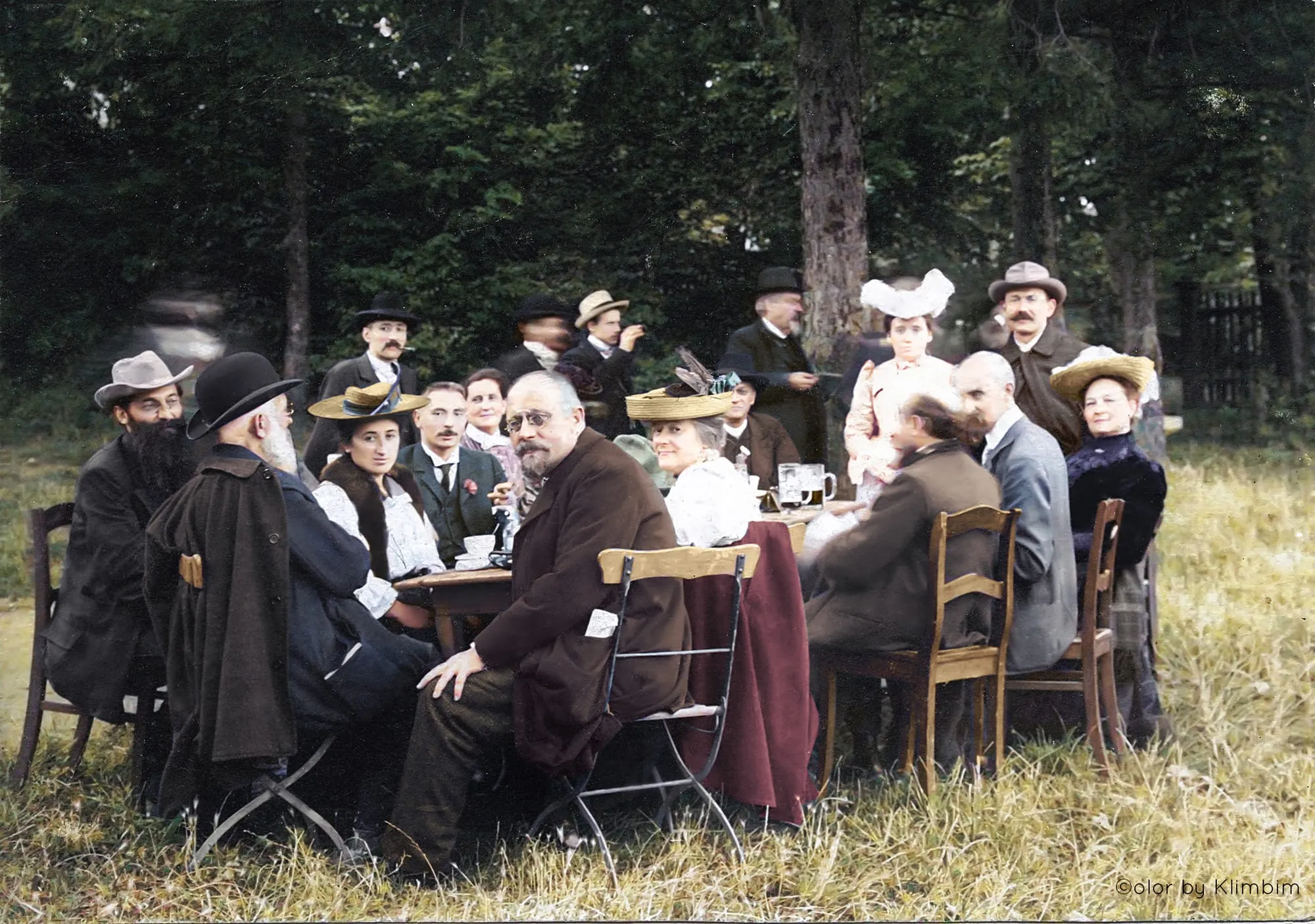
Lenin wrote in a different article: "The struggle within our Party has ended in a split; it is now merely a struggle between two parties, one of which is in the throes of organisation-as-process" [10].
All the attempts by Kautsky and the leadership of the Second International to play down the profound significance of the disputes between the two parties were aimed, as we have noted above, at liquidating the Bolshevik Party and subordinating it to the Mensheviks.
It was precisely for this purpose that the leadership of German Social-Democracy, speaking through Bebel, supported the proposal of the Swiss Social-Democrat Greulich to reunite the split parties and proposed the establishment of a court of arbitration in order "to put an end to the split and the mutual struggle between Party comrades standing on the same principled ground". It was only natural that this decision to establish a court of arbitration, which represented a striking expression of the centrist attitude toward the struggle between two diametrically opposed tendencies within the Russian workers' movement, would be decisively rejected by the Bolsheviks.
In his letter to Bebel, Lenin explicitly pointed to the open support given to the Mensheviks by the leadership of German Social-Democracy, and by Kautsky in particular, as well as to the utter futility of attempting to resolve these differences by such methods as the establishment of a court of arbitration.
Lenin wrote: “Kautsky tried in Iskra to belittle the importance of formal organisation [i.e., organisation in general]. The weekly organ of German Social-Democracy extolled disorganisation and perfidy (Rosa Luxemburg in “Neue Zeit”) on the ingenious and “dialectical” pretext that organisation is merely a process, only a tendency. ... Kautsky rejected my article with the remarkable argument that “Neue Zeit” had published the attacks on us not because they were directed against us, but in spite of that!
That was simply ridiculous! Thus “Neue Zeit” (and it was not the only one) wished to acquaint the German Social-Democrats only with the views of the minority. The indignation that this aroused in our ranks was exceedingly [high] great. In my opinion, it was quite natural that the German Social-Democrats followed the humanly understandable desire to see foreign representatives of Russian social democracy in long-known personalities, that they made fun of … the Russian committees and their work. But after all this [it would also be natural] I wouldn’t be surprised, if [any] attempts at intervention by the [official] representatives of German Social-Democracy were to encounter [particular] difficulties in our ranks" [11].
This point of view, set out by Lenin in a letter to Bebel, was entirely shared by the Bureau of the Majority Committees. "Vperyod" No. 11 (March 23, 1905) published a letter in which the BMC categorically rejected Bebel's proposal to organize an arbitration court.
The Bureau of the Majority Committees clearly exposed the fundamentally principled, rather than personal, nature of the differences dividing the Bolsheviks and the Mensheviks, and maintained that the only possible and acceptable discussion of the question of the split could be at a Party Congress.
The BMC stated: "The German comrades appear not to be sufficiently informed about the nature of the inner-Party struggle that has unfortunately arisen within Russian Social-Democracy; otherwise, they would certainly not have proposed mediation in the form of a court of arbitration where what confronts us is a clash of political ideas. The issue is the unification of Russian Social-Democracy under the banner of one of two Party-political tendencies embracing questions of political tactics and organisation. The tendency which we defend may be briefly formulated as follows: to unite the existing fragmented Social-Democratic organisations into a genuine Social-Democratic proletarian party, united in its tactics and independent of all other parties and trends, in order to preserve the class purity of the revolutionary proletarian movement; centralised and clearly defined in its organisation, so as not to dissolve into the surrounding revolutionary milieu. We leave the formulation of the political ideas of the minority to its own representatives. Indeed, by accepting the proposal for arbitration between themselves and us, those representatives appear thereby to have acknowledged that the Party differences are, for them, merely personal, or at most, group in character. Perhaps this is how they themselves perceive their position. But if that is so, then, however negatively we regard their aspirations, we must state that, in our opinion, they underestimate themselves. Whether fully conscious of it or not, they are the exponents of a political tendency that may be accepted or rejected by the Party, but cannot be justified or condemned by a court of arbitration.
Only the Party, acting through its Congress, has both the power and the right to decide the question" [12].
The Third Congress, having convened, fully supported the line pursued by Lenin and the Bureau of the Majority Committees. In all the speeches of the delegates concerning Bebel’s letter, the proposal to establish a court of arbitration was rejected.
In his speech at the Third Congress, delegate Barsov (M. Tskhakaya), defending the position adopted by Lenin and the Bureau of the Majority Committees in connection with Bebel’s proposal to establish a court of arbitration, stated:
"The rejection of this proposal by the Bureau of the Majority Committees was entirely correct and fully in accordance with the Party spirit, whatever the comrades from the editorial board of Iskra may grumble about it... Our internal wounds must be healed by ourselves. It appears that our German comrades do not regard us with any particular seriousness: by invoking the authority of an arbitration court, over which such a distinguished leader of German Social-Democracy as Bebel would preside, they wish to discipline us and instruct us as if we were inexperienced children. We ourselves alone can build our Party, establish order within it, and develop it. And, for the time being, the German comrades can do little to help us in this regard..." [13].
Without dwelling on the other similar speeches, we shall note the proposal of the Lugansk Organisation to include the following point in the minutes of the Congress:
"Under no circumstances do we consider it possible to accept for the Party the arbitration court proposed by Comrade Bebel between Vperyod, on the one hand, and Iskra, on the other, as a means of resolving the disagreements tearing the Party apart. An arbitration court is possible on a specific matter, such as an accusation of slander, etc., but an arbitration court between two contending tendencies is inadmissible" [14].
The Third Congress adopted no special resolution concerning Bebel’s proposal and thereby, in Lenin’s words, tacitly endorsed the viewpoint expressed by the Bureau of the Majority Committees in its reply to Bebel.
With complete decisiveness, the Third Congress rejected Kautsky’s attempt to defend Martov’s formulation, based not on "principle, but of expediency, namely, the conditions of secrecy prevailing in Russia" [15].
As is known, the Third Party Congress revealed with exceptional clarity the organic connection, "incomprehensible" to Axelrod and Kautsky, between "opportunism in organisational questions" and the programmes and tactical views of the Mensheviks.
The Third Congress exposed the full depth of the programmatic and tactical disagreements between Bolshevism and Menshevism. However, while assuming the role of an impartial peacemaker, Kautsky published a "vile", in Lenin’s words, article in which he advised foreigners not to "circulate the resolutions of the Bolshevik Congress". He advised them to "beware of Lenin’s attacks and those of his supporters against Plekhanov." [16].
Kautsky wrote: "The resolutions represent the actual disagreements within the RSDLP as much more significant than they really are... Foreigners, since they are already interfering in these matters, have every reason to be concerned not with disseminating these resolutions and thereby reigniting the struggle, but with ensuring that these resolutions, together with their previous history, are forgotten” (ibid.).
What did it mean not to spread the resolutions of a militant party at the moment when a revolution had begun? It meant that the leader of the Second International did not want to familiarize the international proletariat with the tasks that 1905 had set before the working class and which were of the greatest international significance.
Kautsky understood that, in essence, the dispute was about issues deciding the outcome of this revolution, about the issues of armed uprising, a provisional revolutionary government, the revolutionary-democratic dictatorship of the proletariat and the peasantry, the winning of a republic, and so on.
By "smoothing over" deep disagreements about principles, Kautsky thereby tried to divert the attention of the international proletariat and the parties from the fundamental issues of the Russian revolution, which were and remain issues of the world revolution.
In an open letter to the editorial office of the 'Leipziger Volkszeitung', Lenin fully exposed Kautsky as a hypocrite who, while pretending to be impartial, was in fact fighting against the Bolshevik Party, against the Bolshevik principles of party building, and in defense of Menshevism.
Lenin writes: "Kautsky goes so far as to propose to the German comrades that they should not make these (3rd Congress’ – author's note) resolutions public. We take the liberty of pointing out that nothing could give our German comrades a better idea of the relations within the Russian Social-Democracy than the original resolutions of the Third Congress of the Russian Social-Democratic Labour Party, as well as the resolutions of the “conference” held by the new-Iskrists.
We declare that Kautsky is making a great mistake in writing on matters of which, at best, he knows only by hearsay, and that his picture of the relations that exist in the Russian Social-Democracy is a highly distorted one... We strongly protest against the attempt to silence us in the German Social-Democratic press by means of such a crude, mechanical, and unheard-of method as boycotting a pamphlet which contains only a translation of the resolutions of the Third Congress of the R.S.D.L.P. and which was issued by the Munich Party publishing house of the Social-Democratic Labour Party of Germany (G. Birk & Co.). Kautsky has no right to speak about his impartiality… if he does not want to be accused of hypocrisy". [17].
Contrary to Kautsky, Lenin believed that "keeping international Social-Democracy informed of our Party affairs is one of the most important duties of all Social-Democrats living abroad" [18]. He wrote: "We remind the comrades of this and appeal for the most energetic agitation in defence of the stand taken by the Third Congress of the R.S.D.L.P. This agitation must be conducted indefatigably, on any pretext, on any suitable occasion, and positively in all study circles of workers abroad, as well as with individual members of foreign Social-Democratic parties" (ibid.).
In the foreground, Lenin placed the distribution of the French and the Kautsky-boycotted German editions of the decisions of the 3rd Congress.
For the purpose of familiarizing the international proletariat with the true essence of the disagreements within the RSDLP and transferring the Bolshevik tactics of a split with the opportunists to the international arena, Lenin demanded independent representation for the Bolsheviks in the International Socialist Bureau and the cancellation of Plekhanov’s mandate, who did not share the decisions of the 3rd Congress (In 'Proletary' N 28, 1905, a resolution of the Kostroma Committee is published, to which Lenin refers to characterize the views of the majority on the issue of independent representation of the Bolsheviks in the ISB and the cancellation of Plekhanov's mandate. Speaking of Plekhanov's policy of continuous vacillations and, in particular, of his struggle against the Bolshevik delegation at the Amsterdam Congress, the resolution continues: “Meanwhile, the role of the Russian representative in the International Soc. Bureau at the present moment is extremely responsible. The combination of revolutionary actions and the political situation in Russia in general will to a significant degree determine the revolutionary activity of the Western proletariat for the socialist revolution. At this moment... without belittling the revolutionary role of the Russian proletariat, it is impossible to leave Comrade Plekhanov with the right to represent our party in the Int. Soc. Bureau” – Author’s note).
Informing the ISB that, according to the statute, “Proletary” was the sole central institution of the party, Lenin demanded “address all future communications to Comrade Ulyanov, Representative of the Central Committee” [19]. However, the leadership of the Second International not only ignored these demands and Lenin's warning against the ISB maintaining contact with Plekhanov, but repeated once again, through Bebel, an attempt to reconcile the Bolsheviks with the Mensheviks. Having informed the CC of the RSDLP that “the old fellow is out to “make peace” again”, Lenin demanded in a letter to the CC dated July 28 a decisive rejection of the arbitration, which of course would have passed a decision in favor of the Mensheviks [20].
Lenin wrote: "Do not forget that almost all the Social-Democrats abroad are on the side of the “icons” and think nothing of us, look down on us.... The foreign Social-Democrats (Bebel and others) are strongly urging the I.S.B. to bring pressure to bear on us. Letters of this kind have come even from the British (the Social-Democratic Federation; I have a copy of the letter, in the usual conciliatory vein, about it being a crime to quarrel at such a time, etc.) … A binding decision by arbitration should be refused on the strength of the Third Congress resolution" [21].
In his letter to the ISB secretariat, Lenin exposed the bias of the leadership of the German social-democracy and the social-democratic press toward the disputes in the RSDLP with absolute clarity, making clear the complete futility of the centrists' new attempts to reconcile the Bolsheviks with the Mensheviks.
Having reminded that the 3rd Congress rejected Bebel's proposal to organize a court of arbitration, Lenin continues:
"Since the International Bureau considers it proper to obtain its information from "certain German newspapers", I am compelled to state that nearly all German socialist papers, especially Die Neue Zeit and Leipziger Volkszeitung, are entirely on the side of the “Minority”, and present our affairs in a very one-sided and inaccurate way. Kautsky, for instance, also calls himself impartial, and yet, in actual fact, he went so far as to refuse to publish in the Neue Zeit a refutation of an article by Rosa Luxemburg, in which she defended disruption in the Party. In Leipziger Volkszeitung Kautsky even urged that the German pamphlet with the translation of the resolutions of the Third Congress should not be circulated!! After this it is easy to understand why many comrades in Russia are inclined to regard the German Social-Democratic Party as partial and extremely prejudiced in the question of the split in the ranks of Russian Social-Democracy" [22].
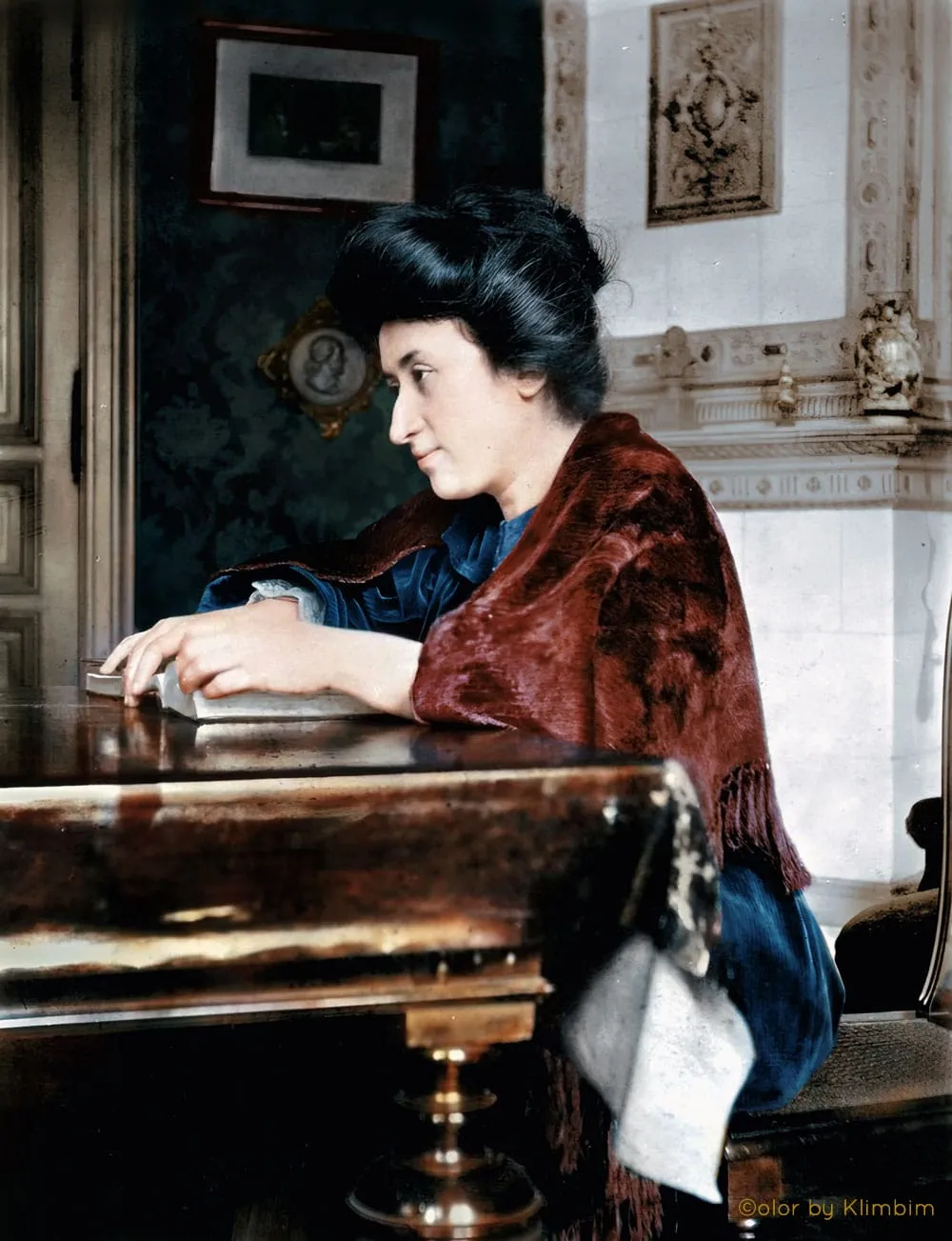
With even greater sharpness, Lenin exposes Kautsky and his attempts at unprincipled reconciliation of the Bolsheviks with the Mensheviks in the article "Wrathful Impotence".
Lenin writes: "Bitter words, attempts to create a "third something", neither Bolshevik nor Menshevik, will not help matters, but will only introduce greater confusion.. ... Let bitter words be resorted to by German Social-Democrats, who, like Karl Kautsky, have, in the main, learnt of the split in the Party from biased sources. Their ignorance may be pardoned, though their claims to judge things they know nothing of are, of course, unpardonable. Russian Social-Democrats must at last learn to despise those whose only recourse is to bitter words, who chop and change, hold forth on the subject of "peace", but reveal their impotence when it comes to doing something real for the cause of peace" [23].
II. Lenin vs. Trotskyism and the Liquidators
Following the defeat of the 1905 Revolution, Menshevism opened a new chapter in its history, giving rise to liquidationism. The emergence of this party of “Social-Democratic Octobrists”, as Lenin characterized liquidationism in one of his articles, was by no means accidental, but rather a completely predictable phenomenon stemming from the entire history of Russian opportunism and from the opportunist nature of Russian Menshevism. “It was only the propaganda of 1894-95 and the strikes of 1895-96 that established firm and inseverable ties between Social-Democracy and the mass working-class movement. And immediately an ideological struggle commenced between the two trends of Marxism: the struggle between the Economists and the consistent Marxists or (later) Iskrists (1895-1902), the struggle between the Mensheviks and Bolsheviks (1903-08), and the struggle between the Liquidators and the Marxists (1908-14)” [24].
The Liquidators, who were a direct consequence of ‘economism’ (1895-1902) and a result of Menshevism (1903-1908), represented “a branch of the liberal-bourgeois party, whose aim is to instil into the proletarian midst the ideas of liberal-labour policy” [25].
Bolshevism waged a life-and-death struggle against the Liquidators, for “the dispute does not concern the organisational question (how to organise the Party?) but the question of the existence of the Party” [26].
While fighting against liquidationism, the Bolsheviks simultaneously waged a resolute campaign against “reverse liquidationism” (recallism, ultimatism), which, like liquidationism, was a manifestation of bourgeois influence on the proletariat.
It is absolutely clear that a two-front struggle, a decisive and merciless struggle against those who sought to reconcile the Bolsheviks with the Liquidators, the decisive elimination of liquidationism and its complete defeat were a necessary prerequisite for the successful resolution of the tasks of global significance that history had placed upon the shoulders of the working class.
What role did Trotsky play in this irreconcilable struggle between the Bolshevik Party and the Liquidators?
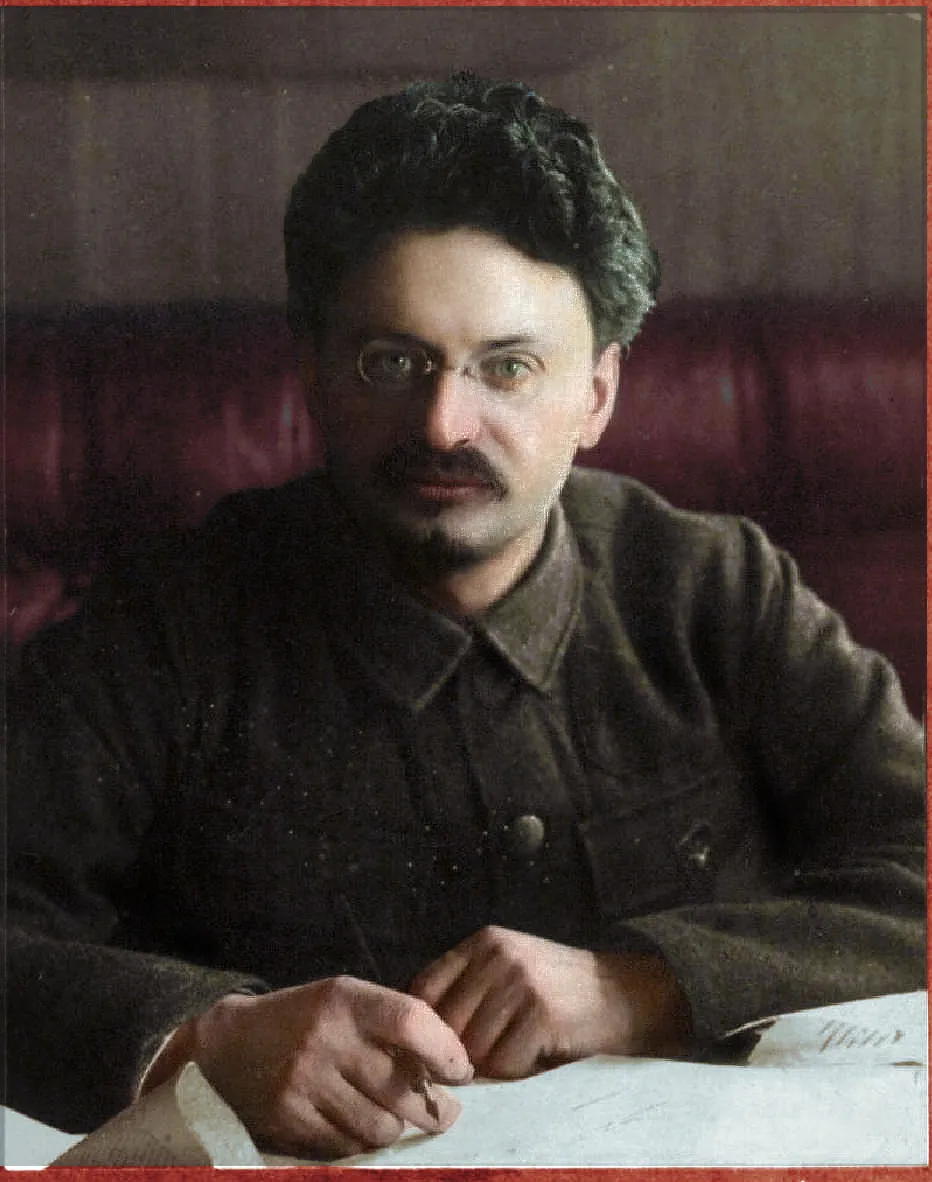
It is well known that Trotsky saw his mission in this struggle as reconciling the Bolsheviks with the Liquidators, liquidating the Bolshevik, Leninist Party and subordinating it to the Liquidators – in short, subordinating proletarian interests to those of the petty bourgeoisie.
Trotsky carried out in Russia the same role that Kautsky had played as the leader of centrism in the international labor movement. Trotsky represented the agents of international Kautskyism within the Russian labor movement.
This made Trotskyists the main and primary group imposing centrism in Russia - “an ideology of accommodation, an ideology of submitting the interests of the proletariat to those of the petty bourgeoisie within a single, unified party” [27].
Describing Trotskyism during the struggle against the Liquidators, Lenin wrote:
"People like Trotsky, with his inflated phrases about the R.S.D.L.P. and his toadying to the Liquidators, who have nothing in common with the R.S.D.L.P., today represent “the prevalent disease”. They are trying to build up a career for themselves by cheap sermons about “agreement” – agreement with all and sundry, right down to Mr. Potresov and the otzovists... Actually they preach surrender to the Liquidators who are building a Stolypin labour party” [28].
In other place: “Hence it is clear that Trotsky and the “Trotskyites and conciliators” like him are more pernicious than any liquidator; the convinced Liquidators state their views bluntly, and it is easy for the workers to detect where they are wrong, whereas the Trotskys deceive the workers, cover up the evil, and make it impossible to expose the evil and to remedy it. Whoever supports Trotsky’s puny group supports a policy of lying and of deceiving the workers, a policy of shielding the Liquidators. Full freedom of action for Potresov and Co. in Russia, and the shielding of their deeds by “revolutionary” phrase-mongering abroad — there you have the essence of the policy of “Trotskyism” [29].
It is quite obvious that the irreconcilable struggle of Lenin (the Bolsheviks) against Trotsky and Trotskyism, which was an example for all left groups in the West, meant an irreconcilable struggle against Kautskyism, whose agency was Trotskyism, a struggle against international centrism, with which Trotskyism was ideologically and organizationally linked.
III. German Social Democracy as a Model for Trotsky
The launch of Trotsky's centrist newspaper “Pravda” was met with a highly favourable attitude by the Second International.
“Vorwärts” dedicated a special greeting to the publication of the first issue of the centrist “Pravda”. “Vorwärts” particularly emphasized the merit of the Trotskyist paper in that it "stands alongside the existing factions in order to bring to the fore that which unites and binds, in the struggle of opinions and the disputes of factions" [30].
Trotsky, in his editorial article, characterizes this statement by “Vorwärts” as the starting point of “Pravda's” entire direction, alongside Kautsky's indication in his letter to the Stockholm Congress in 1906 that "the unity of party actions, even with less successful tactics, is ultimately more fruitful for the class development of the proletariat than organizational disarray".
How touching the unity of views was among the centrist – Trotsky and Kautsky – regarding the state of affairs in the RSDLP and the tasks facing Russian centrism as an agency of Kautskyism, is evidenced by Trotsky's completely frank statement of his solidarity with Kautsky's thoughts, set out in the latter's letter to the Capri School, published in Appendix No. 5 to the Trotskyist newspaper “Pravda” dated April 30, 1909.
In his letter, Kautsky writes: "It would be gratifying if Russian Social Democracy could finally cope with the factional divisions that weaken it. Even if these divisions were inevitable, I consider it necessary, in any case, that in organization and propaganda, those views and assertions that promote unity of action be brought to the fore, and those disagreements that are not of a practical but of a philosophical nature be temporarily set aside from practical propaganda".
To this letter, Trotsky makes his addition: "We note with joy the complete coincidence of Kautsky's views on the tasks of our party policy with the position taken by our “Pravda".
Under the guise of calls for unity of action, Trotsky and Kautsky here advocate not only in favour of liquidationism but also in favour of the open revision of Marxist philosophy by the otzovists (Kautsky quite openly defended mechanism in a letter to "Comrade Benidanidze" (“Der Kampf” No. 10, 1909, p. 451, 4-32). Lenin characterizes the views expressed by Kautsky as erroneous, especially regarding Russian Machism [31].
(Regarding the opportunist distortion of Marxist philosophy by Kautsky and the “Neue Zeit” edited by him, Lenin wrote in a letter to Gorky: "Materialism, as a philosophy, was everywhere pushed into the background by them. “Neue Zeit”, that most sober and well-informed newspaper, is indifferent to philosophy, was never a zealous supporter of philosophical materialism, and of late has been publishing the empirio-critics without a single reservation" [32]. – Author's note).
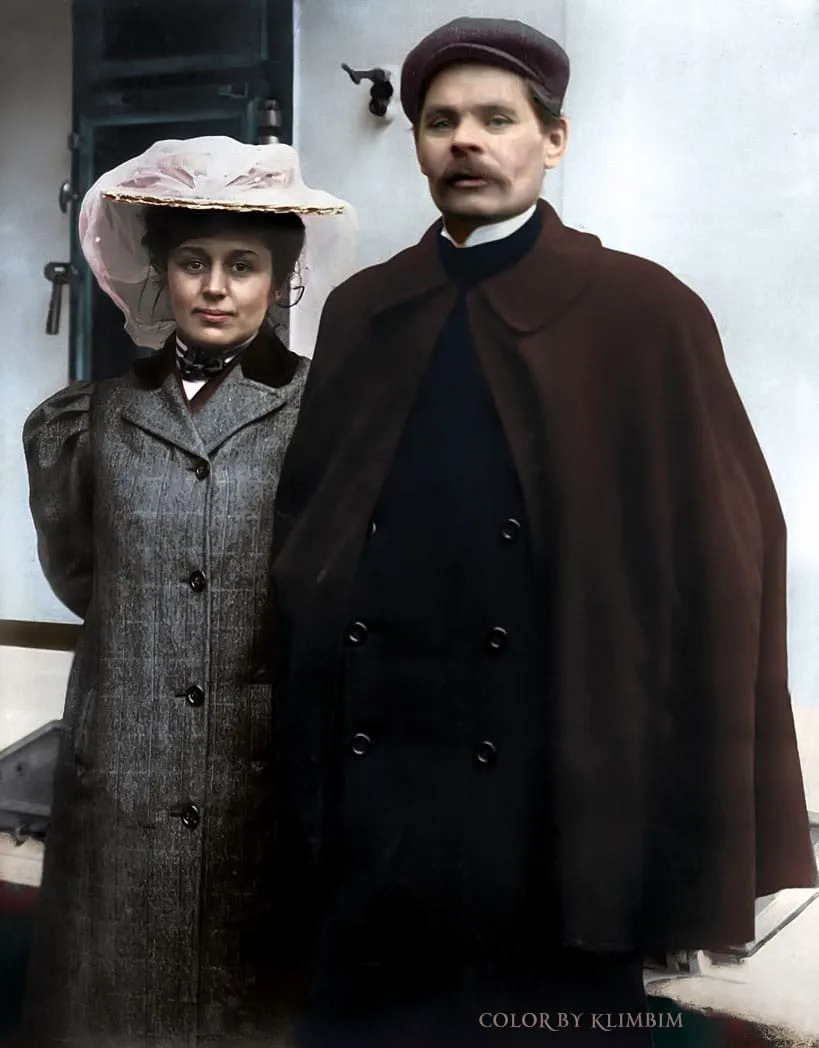
If for Trotsky and Kautsky philosophical disagreements had no practical significance, for Lenin (the Bolsheviks) the philosophical struggle was one of the forms of the development of the class struggle.
In the article "Those Who Would Liquidate Us" Lenin wrote:
"It is not by mere chance that the period of social and political reaction, the period when the rich lessons of the revolution are being “digested”, is also the period when the fundamental theoretical, including the philosophical, problems are of prime importance to any living trend. … the controversy over the question as to what is philosophical materialism and why deviations from it are erroneous, dangerous and reactionary always has “a real and living connection” with “the Marxist social and political trend” – otherwise the latter would not be Marxist, would not be social and political, would not be a trend. Only narrow-minded “realistic politicians” of reformism or anarchism can deny the “reality” of this connection" [33].
The disagreements between the Bolsheviks and the Liquidators were considered by Trotsky and Kautsky, as was characteristic of centrists, to be of no significance and, like the disagreements between the opportunist and revolutionary wings in German Social Democracy, "not great enough to justify organizational separation and mutual contradictions" [34].
“In German Social Democracy”, Kautsky writes in a letter to Trotsky: "the logic of facts reduces all extremes, both from the right and the left, to purely academic questions having no practical significance". In Russia, from Kautsky's point of view, "the disagreements are in essence significantly smaller, and the logic of facts is precisely breaking through in the practical questions of parliamentarism, making joint work possible even more quickly" [35].
The centrist Kautsky, whose mission in Germany consisted of subordinating the left wing to the opportunist wing within the ranks of German Social Democracy, transferred this practice of his to Russian soil as well, fighting for the liquidation of the Bolshevik party.
It was precisely for these purposes that Kautsky considered the unification of all currents, groups, and trends, regardless of their views, to be the central task of Russian Social Democracy.
Kautsky wrote to Trotsky: "In the struggle of currents in Russian Social Democracy, one of these currents may hold the view that the other current has a pernicious influence. But the worst consequences that one current can expect from the policy of another opposing current cannot be compared with the actual harm caused to the workers' movement in Russia by the split, fragmentation, and internal struggle in Russian Social Democracy".
Trotsky fully and completely solidarized himself with this characterization of the internal party situation in German and Russian Social Democracy and with these calls for unity. In his article "Kautsky and Our Disagreements", sympathetically quoting Kautsky's cited thoughts, Trotsky writes:
"But perhaps Kautsky demands unity only for those who consider themselves Social Democrats; perhaps Kautsky does not include the so-called Liquidators in this unity? Oh no, comrades, Kautsky, as befits a spiritual leader of the proletariat, is first and foremost an honest thinker; he does not play with words, he does not engage in sophisms, he does not pass off disagreement as unity; he demands from us the unity of Social Democracy comprising all its currents... Kautsky therefore excludes no one, as is done so often and light-heartedly here. No, he demands the creation of a common party law for all currents and shades occupying their place in the workers' movement. That is why his words seem so convincing, so irrefutable" [36].
Even the liquidator Fyodor Dan considered this glossing over of differences to be “profoundly erroneous” on the eve of the Brussels Conference (while at the same time demanding, despite the differences, a unity that would provide the Liquidators with the opportunity to crush Lenin’s party within the framework of a single Social Democracy), but considering the opinion about the absence of significant differences between the Bolsheviks and the Liquidators to be mistaken, he avoided, however, naming the supporters of this opinion by name.
Lenin writes: "Mr. F. D. calls this point of view “profoundly erroneous”, without, however, naming its advocates (Trotsky, Kautsky, and all the “conciliators” in general). The veil of convention and bashfulness must have prevented Mr. F. D. from mentioning the well-known names of the supporters of this “profoundly erroneous” idea! But actually concealment of the truth benefits only the opponents of the working class!" [37].
To the monolithic nature of the Bolshevik party, to the Leninist intransigence of the Bolsheviks in the struggle against opportunism and centrism, Trotsky counterposed the model of internal party relations in German Social Democracy.
Trotsky wrote in the article "On German Social Democrats": "In Germany, the party is bound together by its program and the decisions of its congresses. But within these frameworks, there still remains room for serious political disagreements generated by the different levels of development of professional occupations, provincial peculiarities, personal character, etc., etc. And the great strength of German Social Democracy rests on the fact that it knew how, and still knows how, to bind all this inexhaustible diversity of temperaments, points of view, and moods with the unity of political action" [38].
In our country, from Trotsky's point of view, such touching unity was hindered by the immaturity of the proletariat.
Russian Social Democracy had to, in Trotsky's opinion, take an example from German Social Democracy, about which "everyone knows what broad and noble tolerance reigns in this million-strong political family".
These examples of internal relations in Western European parties, representing a "bloc of proletarian and petty-bourgeois interests" (Stalin), Trotsky kept returning to in his articles.
Thus, in an obituary dedicated to P. Singer [39], Trotsky sets Singer's ability to work together with opportunists in one party as an example for the Bolsheviks: "An extreme opponent of opportunism, he [Singer] knew how to work even with opportunists within the framework of an all-party organization, which was bound not by mechanical discipline, but by a moral bond".
Trotsky continues: "And in this area, for us Russians, who still have yet to work out our party morality, Singer will remain a beautiful moral model".
Trotsky, in his own words, dreamed of working out such a "new party type" that would cultivate qualities like "the feeling, that without self-restraint, without personal and organizational agreements and compromises, no party can exist". These very same ideas Trotsky tried to impose on the party much later in his speeches as the leader of the internal opposition of 1923.
IV. Trotsky, the Mensheviks, and the Centrists against the Bolshevik Party
A typical example illustrating Trotsky’s centrist ideology and his connection to Kautskyism is his article “The Marxist Center”, published a few days before the Brussels Conference in 1914, in the Trotskyist “non-factional” magazine “Borba”.
In this article, Trotsky explicitly advocates for the coexistence of revolutionary and opportunist tendencies within a single party, considering them, along with Kautsky, to be “two legitimate trends, essential wings of the movement of one class” [40].
Within this unified party, which represents a bloc of proletarian and petty-bourgeois interests, Trotsky grants the most important role to centrism, which ideologically “overcomes” the centrifugal forces of the right and left wings.
Trotsky writes: “True unity can exist only if, in addition to its two sides, the party has a backbone – a Marxist center that would ideologically overcome the centrifugal tendencies of the right and left wings and become a bulwark of party public opinion and party discipline”.
Referring below to examples of internal party relations within the German Social Democratic Party again, Trotsky continues:
"German social democracy could never have preserved its unity if its opportunist wing (Bernstein, David, and others) had been pitted against the ultra-radical wing of R. Luxemburg and others. The bastion of unity and discipline within the German proletariat’s party is the Marxist center led by Bebel and Kautsky” [41].
Trotsky dreamed of establishing in Russia precisely this kind of party – one typical of the Second International – contrasting it with the monolith Bolshevik Party that Lenin had built.
Trotsky cited internal relations within the German Social Democratic Party as an example for the Bolsheviks, urging them on the eve of the Brussels Conference to reconcile with the Liquidators.
Naturally, all these attempts at domestic and international centrism were met with strong opposition by the Bolshevik Party.
Lenin (the Bolsheviks) fought against the opportunists and centrists who sought to reconcile the Bolsheviks with the Liquidators, with the same determination with which he rejected attempts to reconcile the Bolsheviks with the Mensheviks.
In a series of articles, Lenin repeatedly exposed the characteristic manner, the characteristic quality of centrists to gloss over the danger of growth of opportunism within the parties with “official-optimistic” phrases – the quality that had already taken a firm root within German social democracy in particular.
Lenin called on Russian workers to wage a resolute struggle against those, Trotsky in particular, who was attempting to carry this “amiable characteristic” onto Russian soil.
Lenin wrote in the article “What Should Not Be Copied from the German Labour Movement”: “...the more often the liberals and the Liquidators in Russia (including Trotsky, of course) attempt to transplant this amiable characteristic to our soil, the more determinedly must they be resisted” [42].
Lenin wrote: “What appeals... Trotsky is only the European models of opportunism, …”. [43].
Following exactly these examples, Trotsky proposed establishing a “Press Commission” modeled after the “Pressekommission” of the German Social Democratic Party, as one of the methods of eliminating the split. According to Trotsky’s plans, this “Press Commission” was to “closely monitor the entire Social Democratic press and resolutely repel any attempts to sow division within the labor movement” [44].
Given the specific conditions under which Russian social democracy existed, the system of control modeled on the European example that Trotsky proposed was, as Lenin characterized it, nothing more than deciding whether a newspaper should be liquidationist or not.
Lenin wrote: “Trotsky has prepared a perfectly European – yes, truly and perfectly European – plan for setting up a “press committee” as an “elected collective control body” of the workers for working-class newspapers . Trotsky probably even consulted “European Social-Democrats” about this and received their blessing as a gift – a blessing which he makes a great deal of” [45].
Axelrod wrote just as openly about the necessity of Europeanization of Russian social democracy. In his view, a party revolution was needed; it was necessary to “radically change the nature of Russian social democracy… and organize it on the same principles upon which the party structure of European social democracy is based” (ibid.).
Lenin saw “one of the main cornerstones of… opportunism” (ibid.) in this notorious Europeanization of which the Liquidators — Trotsky, Kautsky, Axelrod, Martov, and others — had dreamed and which meant a fundamental change in the character of Russian social democracy. Lenin repeatedly pointed out in his articles the futility of all these attempts to Europeanize Russian social democracy.
Lenin wrote: “And so, advocate a revolution in the Party ... Try to carry out a revolution in the Party, esteemed P. B. Axelrod! We shall see whether you and your friends will be more successful than those “revolutionaries” who only a short time ago tried to accomplish a “revolution” (against the republic) in Portugal. … The laughable result produced by Trotsky’s “European” plan for a “press committee” is also being produced by the “European plans of all the Liquidators” (ibid.).
The plan to Europeanize the proletarian party in Russia implied the elimination of the underground and the creation of a legal party adapted to the political conditions of the Stolypin regime.
It’s this exact legal party that Trotsky, Kautsky, and the Liquidators as a whole dreamed of.
In an article titled “The Tendency of the Development of Russian Social Democracy”, published in “Neue Zeit” on September 9, 1910, Trotsky stated the need to eliminate the “disharmony” between the old forms of party organization and the changed needs of the labor movement.
In the article “K. Kautsky and Our Disagreements” he declares his full solidarity with Kautsky’s views on the building of the Russian party, as outlined in a letter to the Stockholm Congress.
In this letter, Kautsky holds up the example of the establishment of German social democracy during the period of emergency laws to the Bolsheviks, when “the legal press and the legal economic organizations of the proletariat were supported by a clandestine apparatus and thus served to build the party”.
Thus, Kautsky considers the legal organization which is surrounded by a conspiratorial apparatus, to be the “foundation” of the party.
By twisting the actual history of the Russian labor movement and mistaking his wishes for reality, Trotsky believes that “through a tortuous path of misunderstandings, mistakes, clashes, and extremes, all conscious workers have in fact arrived at the organizational forms and relationships that Kautsky outlined in his letter”.
Lenin exposed the opportunistic nature of all these statements by Kautsky and Trotsky in his article “The Anonymous from Vorwarts” which was aimed against Trotsky.
Lenin writes: “...an open legal party in Russia is out of the question, and only opportunist intellectuals can speak about such a party. The type of our Party organisation may to a certain extent, of course, be compared to the German type of Party organisation at the time the Anti-Socialist Law was in operation: a legally functioning group in Parliament, all sorts of legally existing workers’ associations, as an indispensable condition, but with the illegal Party organisation as the foundation” [46].
Here Lenin reveals the full depth of the disagreements between the Bolsheviks and Trotsky and Kautsky, who supported the Liquidators, because the question of what should be considered the basis – a legal or an underground organization – meant the question of the existence of the party.
“A difference of this kind is one that affects the Party’s very existence and… there can be no “conciliation” here. It is impossible partly to abolish the “underground” and partly to substitute a legal party for it” [47].
Trotsky, Kautsky, Martov, and Axelrod, like all other Liquidators in general, did not limit themselves to merely attempting to transfer the models of relations within and the structure of West European social-democratic parties to the Russian soil. They sought to instill in the Russian labor movement everything that was opportunistic in the tactics of the West European social democratic parties.
The Trotskyist “Pravda” encouraged Russian workers to learn how to fight “on the basis of the current interests of state life” [48].
In his welcoming speech at the Jena Party Congress of the German Social Democratic Party, Axelrod stated that “during the pre-revolutionary period, Russian Social Democrats put the ideas of scientific socialism into practice in a primitive manner. Now Russian Social Democracy must be based on the fundamental tactical principles of international Social Democracy. German Social Democracy must provide assistance to it on this path” [49].
This assistance in the Europeanization of the tactical methods of Russian social democracy was provided to Trotsky and the Liquidators when they proposed a petition campaign, which Lenin characterized as an opportunistic attempt of the “intellectuals to defend themselves against the Khvostovs and Makarovs by producing a letter of recommendation from MacDonald and Jaurès, from Bissolati and Bernstein, from Kolb and Frank!..” [50].
V. Lenin vs. the Second International
As always in the struggle against the Bolshevik Party, Trotsky once again turned to the prominent leaders of the Second International, seeking their blessing. Trotsky's "Pravda" published responses to a special questionnaire that Trotsky sent to Kautsky, Victor Adler, Otto Bauer, Adolf Braun, and Franz Mehring [51].
Trotsky's calculation that the Second International would support the deeply opportunist opposition campaign was correct.
V. Adler, Otto Bauer, Adolf Braun fully sided with Trotsky in their responses, considering the petition campaign one of the main means of struggle of the Russian proletariat against monarchy (ibid.).
In his response, Adler pointed out that the attention of the working class and Russian social democracy should be focused on the struggle for freedom of coalition. Adolf Braun expressed confidence that the petition campaign "gives the Russian proletariat new strength".
Braun wrote about the petition campaign: "Russian workers can look at this means of struggle with a clear conscience, as a weapon against the modern state and social system...".
Otto Bauer responded to Trotsky's questionnaire: "No principled doubts can prevent the workers of Russia from putting forward in the form of a petition on the Duma's agenda their demands for the most important of proletarian rights — the right of coalition; this proletarian Magna Carta".
As always, and this time too, Trotsky found support from Kautsky in his fight against the Bolshevik Party.
Kautsky's support for the petition campaign was connected not only with his opportunist position in German social democracy, particularly on issues of the general strike (simultaneously with the Liquidators' speech against "strike fever", Kautsky published, as it is known, an article opposing the general strike as a method of class struggle. Lenin wrote to Plekhanov on this matter: "With Kautsky it turns out to be a pledge against a revolutionary mass strike. This is inadmissible both from the Russian standpoint… and from the general European standpoint" [52] – Author’s note), and stemmed not only from his desire to transfer the tactical methods of European social democracy to Russian soil (which effectively meant the liquidation of the revolutionary Bolshevik Party), but was also conditioned by Kautsky's Menshevik disbelief in a new upsurge of revolution in Russia.
In his letter to Plekhanov, Kautsky wrote:
“I do not believe in a speedy renewal of revolution in Russia – unless completely unexpected circumstances arise. I think that our Russian friends should arrange things so as to develop the movement under the given conditions, no matter how difficult it may be. It is important to find forms in which the proletarian movement could exist and develop under the given conditions”.
In Kautsky's view, this is such a practical question “that it should be possible to discuss it without rancor” [53]. Kautsky saw these new forms, “in which the proletarian movement could exist and develop under the given conditions”, in the struggle for partial, separate demands.
Kautsky responded to Trotsky's questionnaire: "Russian social democracy currently has no more important task than the struggle for such separate demands".
Thus, not the preparation of revolution based on the uncompromised revolutionary slogans, but an appeal to the Third Duma — such was, from the point of view of domestic and international opportunism, the main task of Russian social democracy.
Kautsky used his response to the questionnaire to once again emphasize the need for party unification involving all currents, factions, and groupings. He wrote: "As long as social democracy remains in this internal disorganization and hostility, it becomes a direct obstacle to any mass activity, and the greater an obstacle, the stronger its influence remains. The unification of various factions for joint action thus becomes a precondition for any successful action, becomes the most important political task of our Russian comrades".
Kautsky, like all leaders of the Second International, provided every possible support to the entire tactical line of the Liquidators. During the elections to the Fourth Duma, Kautsky spoke out in defense of the Liquidators, stating that he saw no principled differences between the Bolshevik platform and the liquidationist platform. Obscuring the profound differences between the revolutionary and liquidationist platforms, which expressed the struggle between representatives of the liberal bourgeoisie and the proletariat, Kautsky, in his answer to Trotsky's question about the tasks of the election campaign, once again raised the question of "unity", the question of the liquidation of the Bolshevik Party and its subordination to the Liquidators.
He demands the creation of this "unity" by subordinating the minority to the majority, which "has force, of course, under all conditions, regardless of whether the majority consists of Mensheviks or Bolshevik-Leninists or liquidationists". For Kautsky, by his own admission, what is important is not which currents will be represented in the Duma, but how many social democratic deputies are elected to it [54].
These thoughts of Kautsky were fully and unconditionally shared by Trotsky, who quoted them sympathetically in his article.
The differences between the Bolshevik and liquidationist platforms were considered "childish" too by the chairman of the Second International, Emile Vandervelde.
After returning from his diplomatic trip to Russia as an emissary of the ISB, Vandervelde wrote: "In practice, the difference of views, consisting in the fact that some want to organise legally and demand the right of association, while others want to secure the immediate proclamation ... of the "pillar" . . . and the expropriation of the land. – this difference seems quite childish" [55].
Is it worth proving that the Bolsheviks' struggle against the liquidationist platform was a struggle against the international opportunism and centrism that supported it and those methods which constituted the basis of the entire tactics of the West European social democratic parties?
In his article "Methods of Struggle of the Bourgeois Intelligentsia Against the Workers", Lenin wrote that reading a statement such as Vandervelde's “will evoke a “rather good-natured” smile from class-conscious workers in Russia” [56].
“If “some” “want to organise legally”, that is, if they stand for an open, legal party, then it is obvious that others challenge this point, not by referring to the “pillar” or “pillars”, but by defending the “underground” and categorically refusing to take part in the “struggle for a legal party”. A difference of this kind is one that affects the Party’s very existence and – our highly esteemed comrade E. Vandervelde will forgive our saying so – there can be no “conciliation” here”. (ibid.).
In the struggle with Trotsky, Kautsky, and others, Lenin exposed the class roots of the deepest principled differences between the Bolshevik and liquidationist platforms, making it clear that the struggle of various platforms expresses the struggle of the bourgeoisie, represented by its liberal leaders, against the proletariat.
Lenin replied to the various Kautskys and Trotskys that the attempt to paper over the differences "does not remove the greatest political fact, which determines the entire social and political situation in present-day Russia. That fact is the struggle between the reformist and the revolutionary Social-Democratic platforms; it is the pronouncement of the bourgeoisie, as represented by its liberal party leaders, against the need for a new revolution in Russia and in favour of purely constitutional “work”, in opposition to the revolutionary strike of hundreds of thousands of proletarians, which is a call to the masses to begin a real struggle for freedom.
To make one bow to the reformists and another to the revolutionary Social-Democrats does not do away with this objective political fact, does not weaken its force and weight in the slightest degree. Good intentions to smooth over differences arising from this fact… are powerless to alter the irreconcilably hostile political tendencies arising from the entire counter-revolutionary situation." [57].
“The Social-Democratic Party was either to perish or to rid itself entirely of these tendencies" [58].
A few days before the Paris Conference, Trotsky, on behalf of Kautsky, again appealed for the unification of individual currents, factions, and groupings into a single party.
Referring to Kautsky's response to the questionnaire on the petition campaign, in which the latter declared the unification of factions and currents as the most important task of Russian social democrats, Trotsky writes:
"The desire by hook or by crook to push the legalists (i.e., Liquidators – author's note) out of the party is madness and a crime...
This is not our 'Pravda' speaking to you, Russian workers — this is K. Kautsky speaking, the theoretical leader of the strongest and most principled German social democracy. Let these words become the guiding principle of your work. And let the upcoming all-party conference finally embody them in life" [59].
As is known, the conference convened by the Bolsheviks, which met in Prague in 1912, contrary to these recommendations and in struggle against Kautsky and Trotsky, finally expelled the Liquidators and their supporters from the party.
This final split, carried out by the Bolsheviks in the struggle against the opportunists and centrists, unprecedented in the history of West European social democracy, caused a significant intensification of attacks on the Bolshevik-Leninists from domestic opportunists and centrists, as well as from the Second International. The official notification of the decisions of the Prague Conference, written by Lenin, was accompanied in the editorial office of "Vorwärts" by an anonymous commentary, written by Trotsky, in which the Bolshevik Prague Conference was attacked with his characteristic reckless mud-slinging. In this article, Trotsky accused the Bolsheviks of usurping the party banner, etc. [60].
"Vorwärts", represented by the well-known R. Hilferding, refused to publish Lenin's response to Trotsky's libel, while nevertheless making its pages available for hostile articles from all anti-Bolshevik currents.
Lenin wrote: "In March 1912, the following united in the columns of Vorwärts to abuse us: the Liquidators, the Bund, the Letts, the Poles, the Trotskyists, and the Vperyodists ... But Vorwärts did not give us an opportunity of replying!!" [61].
After the Prague Conference, countless attempts were made by the leadership of the SPD and the Second International to reconcile the Bolsheviks with the Liquidators.
The board of German social democracy and the leadership of the Second International supported the proposal of the Latvians to convene a meeting of all currents and groupings to discuss questions of the election campaign and appealed to the Bolsheviks to send their representatives to this meeting.
This new attempt to reconcile the Bolsheviks with the Liquidators was, as always, met with decisive rebuff from the Bolsheviks.
Lenin wrote to the editorial board of the Bolshevik “Pravda”: “The German Vorstand has made an appeal to the 11 (sic!) Social-Democratic groups, factions and centres, suggesting a joint conference on the subject of “unity”. The so-called “Lenin trend” has replied with the most categorical refusal: what can be more ridiculous and unworthy than this playing at an agreement... No negotiations with them, no agreements with the Liquidators – such was the reply of the so-called “Lenin trend”.” [62].
After the failure of this conference, the board of German social democracy decided to provide material support to the Liquidators, allocating certain sums to the disposal of the Organizing Committee, elected by the August Conference in Vienna, at which the August bloc against the Bolsheviks was created.
This material support, in addition to the assistance of the German social democratic press to the "torrent of unheard-of slander against the Russian Party", represented, as Lenin wrote in a letter to the board of German social democracy, an attempt to form a new party hostile to the Bolsheviks and, through financial support, "galvanising that corpse – the defeated Liquidators". Lenin continued: "No financial assistance in the world can win the sympathies of the Russian workers for the Liquidators" [63].
The Bolsheviks' irreconcilable struggle against domestic and international opportunism for the creation of a new type of party ensured the Bolsheviks the sympathy of the vast majority of advanced workers in Russia.
This growth of sympathy for the Leninist party deepened the Second International's fears for the fate of the social democratic parties. The Second International could not help but fear that the Bolsheviks' irreconcilable struggle and their complete break with domestic opportunism might spread to other parties, and into the Second International itself.
At the end of 1913, the ISB, this time on the initiative of R. Luxemburg [64], again raised at the London session the question of liquidating the split and unifying the RSDLP.
This entire 'unification' campaign, initiated by the Berlin board of the Polish social democrats, as Lenin wrote about R. Luxemburg's proposal, had the aim of “supporting the Russian Liquidators” [65].
Even in her letter to Luise Kautsky, R. Luxemburg wrote about the necessity of convening a unified conference to create unity: "It would be possible to save party unity if both sides were forced to convene a conference jointly... It is necessary to insist on the convocation of only such an all-party conference, and in relation to everything else (i.e., disagreements — author's note), to close one's ears, eyes, and nose" [66].
R. Luxemburg insisted on the convocation of a unified conference at the London session of the ISB. With this proposal, supported by no one, she attempted to counter the proposal for a preliminary conference aimed at an “exchange of views”.
The successful outcome of the unification conference, according to the plans of R. Luxemburg and Tyszka, was to lead to the liquidation of the independent Bolshevik Party and the creation of the kind of intra-party relations characteristic of West European social democratic parties. R. Luxemburg and Tyszka placed their hopes on support from conciliatory elements among the Bolsheviks.
VI. New Attempts at Reconciliation of the Bolsheviks with Opportunists
In one of his letters, Tyszka anticipates a shift within the Bolshevik Party toward conciliatory views that will “put an end to the factional habits of the Leninists”. He wrote: “Conciliationism (party Bolshevism) will rise. This means, strictly speaking, the decline of the old Bolshevism and a new constellation within the party (instead of Bolshevism and Menshevism, there will be radical Marxism and opportunism in the West European form)” [67].
These efforts at reconciliation by R. Luxemburg, Tyszka, and others vividly revealed the semi-centrist tendencies of the left-wing radicals.
Instead of convening a unification conference, the ISB accepted the proposal by Kautsky, Molkenbuhr, and Ebert to convene a preliminary conference aimed at exchanging opinions. This proposal met no objections from the Bolsheviks: according to their plan, the preliminary conference was to serve as a forum for informing the international proletariat about the actual state of affairs in the Russian labor movement, about the profound class contradictions that make any reconciliation with the opportunists impossible and harmful.
It was perfectly clear to the Bolsheviks that, although the ISB resolution spoke only of a preliminary exchange of views, the leaders of the Second International had already predetermined the outcome of the upcoming conference in favor of the Liquidators and the liquidation of the Bolshevik Party. This was evidenced by the entire history of Lenin’s (the Bolsheviks’) struggle against international opportunism and centrism, for the Bolshevik Party, and, in particular, by Kautsky’s frank speech in defense of liquidationism, which Lenin characterized as an unacceptable “monstrous” error [68].
In his speech, Kautsky stated: “The old party had disappeared although old names had been retained, which, however, in the course of time had acquired a new content. Old comrades could not simply be excluded merely because their party did not bear the old name” (ibid.).
Referring to this statement by Kautsky, which was nothing more than a repetition of “the fairy-tales of their liquidator informants”, Lenin sharply emphasized that the Bolsheviks were fighting to preserve the “old” – that is, to preserve and strengthen the party that Lenin (the Bolsheviks) had built in a relentless struggle against Russian and international opportunism and centrism.
This “old” can be preserved only through the struggle against opportunists and centrists: “Unity means recognising the “old” and combating those who repudiate it” [69].
In a letter to Huysmans, Lenin once again pointed out the ideological and organizational link between domestic opportunism and international opportunism, as well as the utter futility of any attempts at unification: “Our differences with the Liquidators are the same as those between reformists and revolutionaries everywhere” [70].
The task was not to unite with opportunists and centrists, nor to allow the opportunist and revolutionary wings to coexist within a single organization – as is the case in Western European social democratic parties – but rather to separate from the opportunists and centrists and expel them from the party.
Lenin wrote to Huysmans: "Since we have in two years united the overwhelming majority of Social-Democratic workers’ groups in Russia, we claim recognition for our method of organisation. We cannot depart from that method" (ibid.).
The complete futility of the new conciliatory attempts of the ISB was indicated by all the resolutions of the Bolshevik organizations that responded to the decisions of the London session of the ISB on the Russian question.
“The unity of the workers – true unity based on uncompromised Marxist principles and achieved through the workers themselves, rather than the false unity of groups of intellectuals achieved through diplomatic envoys,” wrote the Bolshevik newspaper “Put’ Pravdy” a few days before Vandervelde’s arrival in Russia as the ISB’s ambassador.
A number of Bolshevik resolutions exposed the centrist nature of Kautsky’s proposal. The “Rabochy”, the Central Organ of the Bolshevik Party, described Kautsky as “an opponent of Lenin in many ways” [71]”.
The resolution of the Transcaucasian Marxists revealed with exceptional clarity the true meaning of the ISB’s decisions. The resolution emphasizes the ideological and organizational ties between the Liquidators and international opportunism and holds up the Bolshevik tactic of splitting with the opportunists and centrists as an example for the left-wing elements in West European social democracy. We read in the resolution: “Liquidationism, which represents a revival of the old economism, is in essence a current of the same order as German revisionism, French Jaurèsism, and Italian socialist reformism (‘Bissolatism’). But precisely for this reason, cooperation with the Liquidators is impossible for us, just as it is in Germany, France, and other countries” [72].
Just before the Brussels Conference, Lenin gave a speech at a party meeting in Paris about the ISB’s interference in the affairs of the RSDLP with the aim of unification, and he particularly emphasized the need to resolutely repel Kautsky’s attempts to bring about a merger between the Bolsheviks and the Liquidators. Lenin prepared special instructions for the Bolshevik delegates to the Brussels Conference, in which he summarized the struggle against Russian opportunism and again repeated the order to categorically reject the decision – which was entirely inevitable and natural for the Second International – to subordinate the Bolsheviks to the Liquidators.
On the eve of the Brussels meeting, Vandervelde visited St. Petersburg to assess the situation within the RSDLP.
Martov wrote in detail about his clear sympathy for the Liquidators in a letter to Axelrod. Martov stated that, in a private conversation with him (“he did most of the talking with us”), Vandervelde had said:
“You can surely guess that my sympathies lie with your faction, but I cannot express this openly” [73].
Martov informed Axelrod that he had answered Vandervelde's question affirmatively about arbitration and the unification based on the principles Vandervelde had developed. When the Liquidators asked whether he had discussed this with the Pravdists, Vandervelde replied:
“I am more sympathetic to your point of view, and that is why I decided to ask you such a direct question; I was afraid to ask them the same question, for they would have sensed or suspected that I wanted to corner them...” (ibid.).
This position of the representative of the Second International was only further proof of how correct was the Bolsheviks’ assessment of the prospects of the Brussels Conference and the formulation of the tasks that faced the Bolshevik delegates.
Lenin wrote in his instructions to the Bolshevik delegates to the conference: “Our foreign socialist comrades are sometimes most sadly mistaken when they think that the cause of unity can be promoted by inspiring the Liquidators with the hope that we will agree to co-operate with them even if they do not completely and radically change their conduct, and even if they do not submit to the will of the majority...” [74].
"We declare that to feed the working class of Russia with verbal assurances and promises that unity with the liquidationist group is possible and easy, means rendering very bad service to the cause, and passing off phrases for reality… We have been convinced of the correctness of our line on tactics and organisation primarily by our long years of acquaintance with the workers’ Social-Democratic movement in Russia, and by our participation in it, as well as by our theoretical Marxist convictions" (ibid.).
The Bolshevik delegation at the Brussels Conference, speaking through Inessa Armand, categorically rejected Kautsky’s resolution, which once again asserted that there were no substantial differences between the Bolsheviks and the Liquidators and called for the unification of all factions and currents into a single party.
The Bolshevik delegation’s vote against Kautsky’s proposal thus put an end to the last of the Second International’s numerous attempts to liquidate the Bolshevik Party and subjugate it to its Liquidators.
Conclusion
This summary overview of Lenin’s struggle against international centrism that we gave shows the fierce attacks the Bolsheviks had to withstand before the war in order to preserve and strengthen their party. This struggle was of the utmost international significance.
Trotskyism, which Lenin had fought resolutely even before the war as an agent of Kautskyism, returned after a brief respite to its ideological roots, transforming itself, like its European counterpart, into the vanguard of the counterrevolutionary bourgeoisie.
The Bolshevik Party, having weathered a heated dispute with the Second International prior to the war, proved to the entire international proletariat that “principles triumph, they do not compromise” [75].
"Our Party succeeded in achieving internal unity and unexampled cohesion of its ranks primarily because it was able in good time to purge itself of the opportunist pollution, because it was able to rid its ranks of the Liquidators and Mensheviks. Proletarian parties develop and become strong by purging themselves of opportunists and reformists, social-imperialists and social-chauvinists, social-patriots and social-pacifists. The Party becomes strong by purging itself of opportunist elements”. [76]
In the struggle for a revolutionary, monolithic party, the Bolsheviks proved themselves to be the sole guardians of the finest traditions of Marx and Engels’ struggle against opportunism.
In one of his letters, published in “The Political Testament”, Engels masterfully exposes those who shout about “unity”, characterizing them as distorters of the movement and accomplices of opportunism.
Engels wrote: “One must not allow oneself to be misled by the cry for “unity”. Those who have this word most often on their lips are those who sow the most dissension... Those unity fanatics are either the people of limited intelligence who want to stir everything up together into one nondescript brew, which, the moment it is left to settle, throws up the differences again in much more acute opposition because they are now all together in one pot (you have a fine example of this in Germany with the people who preach the reconciliation of the workers and the petty bourgeoisie) – or else they are people who consciously or unconsciously want to adulterate the movement. For this reason the greatest sectarians and the biggest brawlers and rogues are at certain moments the loudest shouters for unity. Nobody in our lifetime has given us more trouble and been more treacherous than the unity shouters... For the rest, old Hegel has already said: “A party proves itself a victorious party by the fact that it splits and can stand the split” [77].
Following this tradition, the Bolshevik Party turned out to be the only party revolutionary enough to break with the domestic opportunists and centrists. Unfortunately, the “leftists”, who did not think through their revolutionary slogans to their logical conclusion, did not follow this example.
As Lenin said: “Do we not know the history of the German party? And do we not know that the great misfortune of the working-class movement in Germany is that the break was not brought about before the war?” [78].
Sources:
[1] Joseph Stalin. Marxism and the National Question.
[2] Joseph Stalin. Once More on the Social-Democratic Deviation in Our Party. The Seventh Enlarged Plenum of the E.C.C.I. November 22–December 16, 1926.
[3] Vladimir Lenin. Imaginary or Real Marsh?
[4] Joseph Stalin. Industrialization of The Country And The Right Deviation in the C.P.S.U.(B.). Speech Delivered At The Plenum of The C.P.S.U.(B.). November 19, 1928.
[5] Joseph Stalin. Once More on the Social-Democratic Deviation in Our Party…
[6] Ibid.
[7] Vladimir Lenin. One Step Forward, Two Steps Back. Reply by N. Lenin to Rosa Luxemburg.
[8] Vladimir Lenin. Preface to the Collection Twelve Years.
[9] Vladimir Lenin. One Step Forward, Two Steps Back. Reply by N. Lenin to Rosa Luxemburg.
[10] Vladimir Lenin. Wrathful Impotence.
[11] Vladimir Lenin. Letter to August Bebel. February 8, 1905 (The 5th Russian edition of Lenin's Complete Works, and the 1974 English edition of Collected Works contain abridged text of the letter, omitting the fragment cited by the author. The text with the quoted fragment is provided from a draft of the letter in German published in the "Fifth Lenin Collection" (Ленинский Сборник V). As noted in the "Collection", the paragraph containing the quoted text was crossed out and was not present in the final text of the letter. – Politsturm).
[12] Reply to the German Comrades. Letter from the Bureau of the Majority Committees to A. Bebel. February 24, 1905. Quoted from: “Раскол на II съезде РСДРП и II Интернационал. Сборник документов” [The Split at the Second Congress of the RSDLP and the Second International: A Collection of Documents]. Moscow: Party Press, 1933. Pp. 105–106.
[13] The Third Congress of the Russian Social Democratic Labour Party (RSDLP). April–May 1905. Protocols. Moscow, 1959, pp. 57–58.
[14] Ibid. P. 312.
[15] Vladimir Lenin. The Third Congress.
[16] “Iskra”. No. 102.
[17] Vladimir Lenin. Open Letter to the Editorial Board of the Leipziger Volkszeitung.
[18] Vladimir Lenin. Keeping International Social-Democracy Informed of our Party Affairs.
[19] Vladimir Lenin. A Letter to the International Socialist Bureau. June 2, 1905.
[20] Vladimir Lenin, To: THE CENTRAL COMMITTEE OF THE R.S.D.L.P. July 12, 1905.
[21] Vladimir Lenin. To: THE CENTRAL COMMITTEE OF THE R.S.D.L.P. July 28, 1905.
[22] Vladimir Lenin. To the Secretariat of the International Socialist Bureau. July 24, 1905.
[23] Vladimir Lenin. Wrathful Impotence.
[24] Vladimir Lenin. The Ideological Struggle in the Working-Class Movement.
[25] Vladimir Lenin. How the Workers Responded to the Formation of the Russian Social-Democratic Labour Group in the Duma.
[26] Vladimir Lenin. Apropos of One Untruth.
[27] Joseph Stalin. Industrialisation of the Country and the Right Deviation in the C.P.S.U.(B.).
[28] Vladimir Lenin. Resolution Adopted by the Second Paris Group of the R.S.D.L.P. on the State of Affairs in the Party.
[29] Vladimir Lenin. From the Camp of the Stolypin “Labour” Party (September 4, 1911)
[30] "Pravda". March 27, 1909.
[31] Vladimir Lenin. Those Who Would Liquidate Us.
[32] Vladimir Lenin. To: MAXIM GORKY.
[33] Vladimir Lenin. Those Who Would Liquidate Us.
[34] "Luch". Kautsky's letter to Trotsky. March 20, 1913.
[35] "Luch". October 2, 1912; March 20, 1913.
[36] Trotsky's article "Kautsky and Our Differences". "Luch". March 20, 1913.
[37] Vladimir Lenin. The Liquidators’ Leader on the Liquidators’ Terms of “Unity“.
[38] "Luch", October 4, 1912.
[39] "Pravda". January 29, 1911.
[40] Vladimir Lenin. In The Servants’ Quarters.
[41] “Borba”. July 6, 1914.
[42] Vladimir Lenin. What Should Not Be Copied from the German Labour Movement.
[43] Vladimir Lenin. Disruption of Unity Under Cover of Outcries for Unity.
[44] “Pravda”. May 6, 1911. Also: “Zhivoye Delo”. N 16. March 11, 1911.
[45] Vladimir Lenin. How P. B. Axelrod Exposes the Liquidators.
[46] Vladimir Lenin. The Anonymous Writer in Vorwärts and the State of Affairs in the R.S.D.L.P.
[47] Vladimir Lenin. The Bourgeois Intelligentsia’s Methods of Struggle Against the Workers.
[48] "Pravda", No. 5. November 18, 1909.
[49] "Protokoll". Berlin, 1911, S. 181.
[50] Vladimir Lenin. The Platform of the Reformists and the Platform of the Revolutionary Social-Democrats.
[51] "Pravda", No. 23. December 10 (23), 1911.
[52] Vladimir Lenin. Letter to G. V. Plekhanov. November 17, 1912.
[53] "Emancipation of Labour" Group. From the Archives of G.V. Plekhanov, V.I. Zasulich, and L.G. Deutsch. Collection No. 6. – Moscow-Leningrad: State Publishing House. 1928. P. 282. [Группа "Освобождение труда". Из архивов Г.В. Плеханова, В.И. Засулич и Л.Г. Дейча. Сборник №6. – М.-Л.: Государственное издательство. 1928. С. 282.]
[54] "Luch", No. 14. October 2, 1912.
[55] "L'Humanité". June 21, 1914.
[56] Vladimir Lenin. The Bourgeois Intelligentsia's Methods of Struggle Against the Workers.
[57] Vladimir Lenin. The Platform of the Reformists and the Platform of the Revolutionary Social-Democrats.
[58] Vladimir Lenin. The Anonymous Writer in Vorwärts and the State of Affairs in the R.S.D.L.P.
[59] "Pravda", No. 23. December 23, 1911.
[60] "Vorwärts", No. 72. March 26, 1912. Addendum.
[61] Vladimir Lenin. Report of the C.C. of the R.S.D.L.P. to the Brussels Conference and Instructions to the C.C. Delegation.
[62] Vladimir Lenin. To: The Editor of Pravda. August 1, 1912.
[63] Vladimir Lenin. The Present Situation in the R.S.D.L.P.
[64] Letter from R. Luxemburg to the ISB ("Vorwärts". November 2, 1913).
[65] Vladimir Lenin. Would-Be “Uniters”.
[66] R. Luxemburg. Letters to Karl and Luise Kautsky (1896-1918). – Moscow: Krasnaya Nov. 1923. Pp. 137, 139.
[67] Letter from December 27, 1911.
[68] Vladimir Lenin. A Good Resolution and a Bad Speech.
[69] Vladimir Lenin. The Break-Up of the “August” Bloc.
[70] Vladimir Lenin. To Camille Huysmans. January 31-February 1, 1914.
[71] "Rabochy", No. 4. May 25, 1914.
[72] "Proletarskaya Pravda". No. 5. January 7, 1914.
[73] Letters of P.B. Axelrod and Yu.O. Martov. – Berlin: Russian Revolutionary Archive, 1924. P. 270.
[74] Vladimir Lenin. Report of the C.C. Of The R.S.D.L.P. to The Brussels Conference and Instructions to The C.C. Delegation.
[75] Joseph Stalin. Marxism and the National Question.
[76] Joseph Stalin. The Foundations of Leninism.
[77] Engels to August Bebel In Hubertsburg. London, June 20, 1873.
[78] Vladimir Lenin. The Third Congress of the Communist International.