

The world is engulfed in crises, inflation is eating away at people’s incomes, and social inequality is only getting worse. In an effort to find the causes, many are turning to Marxism. After all, it is precisely in the Marxist analysis of capitalism and class struggle where we can find the answers to questions about the nature of capitalism, the crises and wars taking place today, and the path to a better future for humanity.
But for anyone unfamiliar with Marxist theory, the question inevitably comes up: how to get started? Instead of turning to the classics — Marx, Engels, Lenin, Stalin — many end up reading superficial blogs, attending lectures, and consuming summaries in which Marxism is often twisted and adapted to serve the interests of the ruling elites.
Especially for those who are just beginning their study of Marxism, we have compiled answers to the most frequently asked questions. This text brings together frequently asked questions, a reading list, the pros and cons of each book, and recommendations. You can also share this material with people in your community who are interested in communism.
1. Why Spend Any Time at All (Which is Already in Short Supply) Studying Marxism? What is The Point?
Studying Marxism won’t bring you immediate financial gain, but it will give you something more valuable. First and foremost – an understanding of why the world is the way it is: why some live in luxury while others barely scrape by; why the labor of ordinary people is valued less and less; why prices are rising; and why the rich wield such immense power, while workers whose labor sustains society have no control over the way society is organized.
Marxism helps us see the mechanisms of human oppression and exploitation that are hidden from the naked eye, and understand who controls the lives of the majority of people and how.
Instead of endless questions like “Why do politicians do this and not that?”, “Why are such laws passed?”, “When will we have a decent life?”, and so on, Marxism provides a clear and precise understanding of who truly holds power over people’s lives, how not to be deceived, and what to do about it. At the same time, Marxist analysis exposes the lies and hypocrisy of employers, protects workers from their tricks, and provides them with the tools to defend themselves against arbitrary treatment.
2. What Will Happen if I Don't Study Marxism?
Without this understanding, people will remain victims of deception by the ruling elites, pawns in someone else’s game played in the interests of corporations and the ultra-rich. Those who do not understand how the world works, what forces drive it, and what lies behind politicians’ eloquent speeches and promises are easily manipulated.
Such a person will take part in someone else’s political game, accept yet another law that is hostile to them, and become a silent slave in yet another clash between the “great powers”. They will believe nationalist propaganda that distracts workers around the world from their true enemies, or the sweet rhetoric of the “opposition”, which promises to bring “good people” to power and pass “good laws”.
The ruling class has many ways of manipulating people, leaving them no chance to understand the true nature of the world.
Marxism, on the other hand, clears away the fog of capitalist propaganda and reveals the world as it really is: a world ruled by large multinational corporations and marked by a total class war between workers and capitalists.
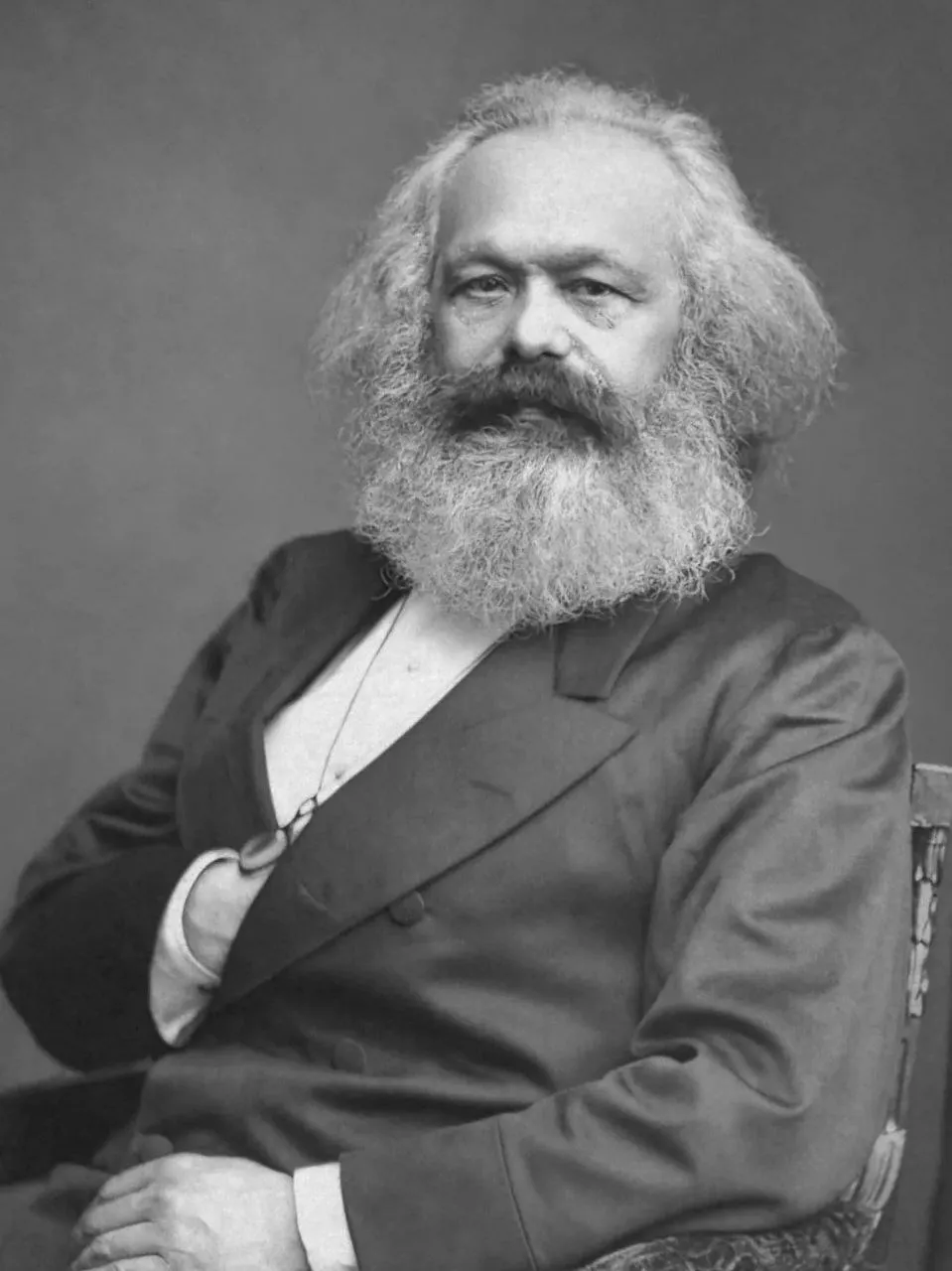
3. There is a Whole Range of Different “Marxist Theories”, “Schools”, “Currents”, and so on. What Exactly Should I Study?
Marxism-Leninism – the theory of Marx and Engels, developed and supplemented in practice by Lenin and Stalin. The appearance of diversity among the “currents” of Marx’s theory creates the misleading impression that Marxism is the foundational root, while other "schools" and "ideologies", supposedly equal in worth, are merely its offshoots. This is wrong: most of such schools represent various deviations and distortions of Marxism.
4. What is Leninism?
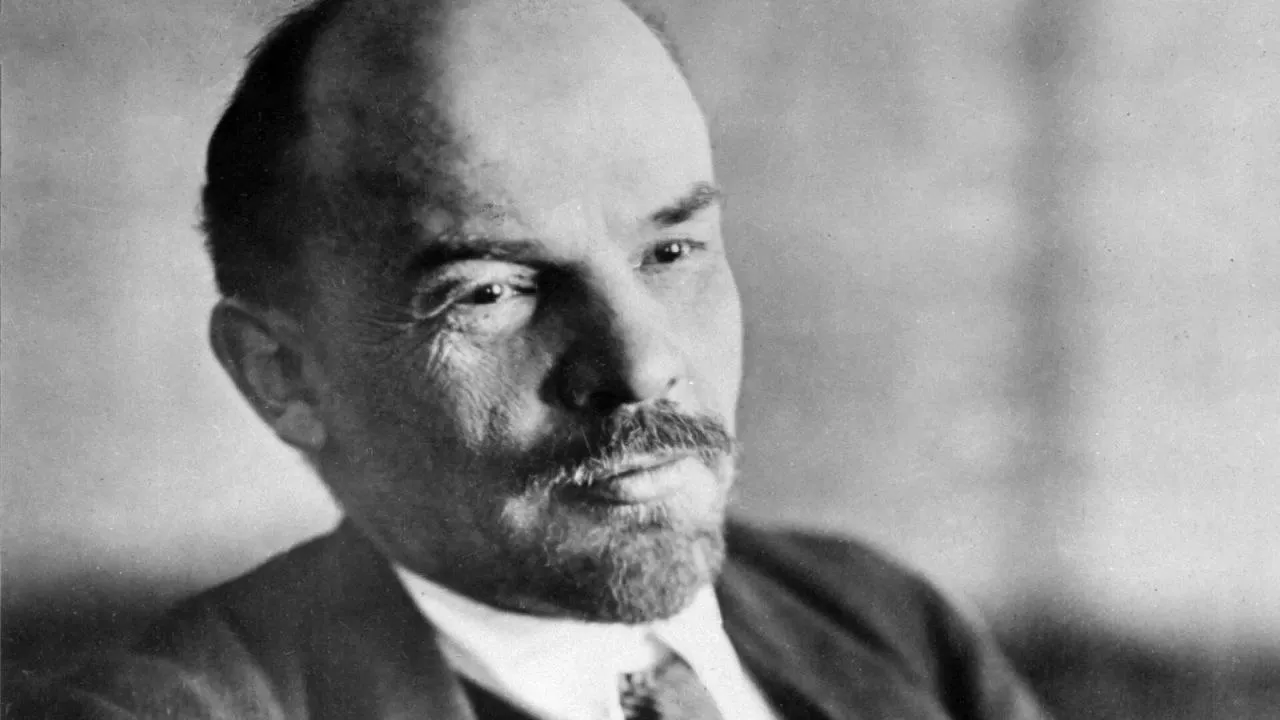
Leninism is the further development of Marxist theory in the context of the 20th century, a period when capitalism entered the stage of imperialism. Lenin retained the methodology of Marx and Engels but applied it to a new era – one dominated by monopolies, finance capital, colonial contradictions, and world wars over the redistribution of markets, the investment of capital, and spheres of influence. Leninism is the practical and theoretical development of Marxism in the era of imperialism, which continues into the 21st century.
Among the key theoretical achievements of Leninism, the following should be highlighted:
- The concept of a new type of party, the vanguard of the working class: a cohesive, disciplined organization, united in both theory and practice, built on the principles of democratic centralism.
- The alliance of workers and peasantry.
- The theory that the bourgeois-democratic revolution will develop into a socialist revolution, which explains that in underdeveloped countries, the capitalists are incapable of carrying out the tasks of abolishing autocracy and landlord rule; this must be done by the working class.
- The theory of imperialism: Lenin, based on a Marxist analysis, characterized imperialism as the highest and final stage of capitalism. This stage is characterized by the dominance of monopolies and finance capital, the predominance of capital exports over commodity exports, the formation of international monopolistic alliances, the completion of the division of the world among the major powers, the intensification of parasitism, and the decay of the capitalist system.
- The victory of socialism in one or more countries. Lenin demonstrated that, due to the uneven development of capitalism, socialism could initially triumph in one or more countries, after which it would gradually spread to other countries.
- The theory of the dictatorship of the proletariat (the rule of the working class), developed by Marx and Engels, was significantly expanded upon by Lenin. He applied it to the specific conditions of the imperialist era and revolutionary practice, establishing the Soviets as the form of the dictatorship of the proletariat.
5. Is Leninism Merely a Theory?
No, Leninism is directly connected with the practical tasks of the communist movement. Lenin not only theoretically substantiated all the principles he developed, but also put them into practice:
- The Bolshevik Party was built and led the October Revolution of 1917 and the creation of the world’s first socialist state.
- The alliance of workers and peasants forged by the Bolsheviks during the revolution secured the victory of Soviet power in the Civil War of 1917-1922.
- The Great October Socialist Revolution of 1917 became the foremost example of a successful proletarian struggle for a workers’ republic.
- The theory of imperialism became a tool for analyzing modern capitalism and the international situation, and for developing the strategy and tactics of communists.
- The experience of building socialism in the USSR became the first confirmation in world history of the possibility of socialism initially achieving victory in a single country.
- Working-class power was established in the USSR in the form of Soviet power.
Marxism-Leninism is the only theory that not only explained the laws governing the development of capitalism, but also led to its actual overthrow and the establishment of workers’ power.
No other “left-wing” doctrine that sought to “improve” Marxism, either before or after Lenin, has contributed anything to communist theory and practice remotely comparable in significance. On the contrary, many such doctrines have only given rise to deviations harmful to the communist movement.
6. What are Deviations? What Harm Do They Cause?
In Marxism, a deviation is an unjustified departure from Marxist-Leninist theory that distorts its theoretical principles and leads to errors in practice. Depending on how they distort Marxism, deviations are divided into right and left deviations.
At first glance, deviations may appear to be harmless differences in the understanding of socialism, the role of the working class, or methods of organizing the workers’ movement. To those who are just beginning to study Marxism, it may seem that these disagreements are not so serious as long as all the so-called “leftists” share a common goal: the just transformation of society in the interests of working people.
However, every deviation, despite its apparent insignificance, poses a threat to the workers’ movement. Both left and right deviations inevitably contain elements of divisiveness, a departure from the genuine interests of the working class, and, ultimately, its defeat.
7. What is the Difference Between Right and Left Deviations?
Right deviations are expressed as a striving for compromises with the ruling class. In practice, they lead to passively following the capitalists, abandoning an independent revolutionary line, and embracing reformism. They are called “right” deviations because of their adaptation to the interests of the ruling class and their refusal to take genuine action in the interests of working people.
Left deviations, by contrast, are characterised by excessive “maximalism”, “radicalism”, and an “ultra-left” agenda. They are called “left” not because of some supposed “genuine revolutionary spirit”, but because, instead of Marxism-Leninism, they rely on a collection of striking slogans and impulsive actions, seeking to maximize the “revolutionary” line “here and now”.
These characteristics reflect the typical worldview of the petty proprietor (petty bourgeoisie), oriented toward personal gain, fear of instability, and a desire for a “quick result”.
8. How Do Deviations Manifest Themselves In Practice?
Right deviations (for example, social democracy and Eurocommunism) replace the class struggle with attempts to reform capitalism. Their followers limit themselves to demanding a series of reforms that have little real impact: “fair elections”, expanded parliamentary rights and social welfare, “society’s control” over the state. They barely address the issues of private property and exploitation – the foundations of capitalism. Such a course is convenient for the ruling class: it diverts the attention of the masses from the class struggle and promotes the illusion that capitalism can be “humanized”.
Another manifestation of right deviationism is social chauvinism, the position of defending the interests of “one’s own” bourgeois government in conflicts between capitalist states. Social chauvinism fundamentally contradicts the principle of proletarian internationalism – the unity of workers of all countries in the struggle against the capitalists of all countries.
Left deviations (for example, anarchism, Maoism, Trotskyism, and others) reject such key principles of Marxism-Leninism as centralized party leadership, a consistent and coherent political strategy and tactics, a scientific definition of socialism, Lenin’s type of party, and so on.
Instead, their followers rely on spontaneity and various kinds of adventurism. At the same time, they ignore the real conditions and needs of the present moment, in particular the need for a disciplined communist organization with a unified line.
Today, left deviationism often manifests itself in the form of useless and dangerous activism, political adventurism, and a “broad left” strategy – cobbling together the amorphous and broadest possible coalitions of people with different views.
9. Trotsky, Mao, Kim Il Sung, Tito... – Are They All Communists Too? Should They Be Read In the Course of Marxism-Leninism Studies?
No, they are not communists, because their views and activities do not correspond to the fundamental ideas of Marxism-Leninism. Despite each of them using Marxist terminology and symbolism, each pursued a line in theory and practice that represented a deviation from the principles of Marxism-Leninism.
Trotsky repeatedly revised the theory of Lenin's type of party, seeking to turn it into an amorphous coalition with factions, like the one he himself had once created (the so-called “August Bloc”). He repeatedly drifted toward an ultra-left deviation: denying the possibility of socialism in one country, intensifying the policy of “War Communism”, militarising socialism, and so on.
Mao Zedong, Kim Il Sung, and Pol Pot were petty-bourgeois revolutionaries who distorted the definition of socialism in the spirit of peasant utopian socialism. They persecuted communists and, instead of building socialism, engaged in ultra-left experiments. Tito was likewise a petty-bourgeois revolutionary, but he followed the path of right deviation, syndicalism (the so-called “Yugoslav self-management socialism”), and cooperation with capitalist countries against the USSR.
All these figures, as well as a number of others, cannot be regarded as communists or adherents of Marxism-Leninism. They should be studied not for mastering Marxist theory, but only as examples of opportunism and revisionism.
10. What are Opportunism and Revisionism?
Opportunism is a theory and practice that contradicts the genuine interests of the working class, pushes the workers’ movement onto a path that benefits the bourgeoisie, and involves adapting to current conditions for ends alien to the working class and for personal interests, inevitably playing into the hands of the ruling class. It is often accompanied by a revision of Marxist theory.
Revisionism is an unjustified revision of the fundamental principles of Marxism-Leninism under the guise of their “creative development”. By disguising itself as an “updating” of theory, revisionism attempts to revise its fundamental propositions that have been confirmed by practice. Revisionism weakens Marxist theory and hinders workers in their struggle, and is therefore beneficial to the ruling capitalist class and constitutes a form of opportunism.
11. Can Marxism Be Studied Through Interpretations? For Example, an Article, Blog, or Video That Retells the Essence of Marxism?
Articles, blogs, lectures, videos, and similar materials can be used to study Marxism, but only as supplementary material to help understand context or clarify complex points. They cannot replace the independent study of classic works.
Be especially cautious with popular retellings like “Marxism in 10 Minutes” or “Communism in Simple Words”. Most such materials are created by people who have not studied Marxism and are far from understanding its essence, and therefore often oversimplify and distort it.
Working with primary sources is the best method of studying Marxist-Leninist theory.

12. Why Is It Necessary to Read Primary Sources?
Studying Marxism is not merely becoming acquainted with a set of ideas, but the gradual formation of a coherent materialist worldview. Above all, the works of the classics (Marx, Engels, Lenin, Stalin) fully reveal the logic and structure of Marxist theory, its method, and the wealth of Marxism's achievements in studying and transforming society.
By relying on the original works of the classics, the student forms a solid materialist worldview, free from most distortions. Having mastered the basics of Marxist theory and method, a person will be able to navigate the material independently and distinguish Marxism from various deviations and revisionism.
13. What Should Be Read, and in What Order?
We have divided the main works of the classics into sequential steps: from the simplest basic texts to more complex works.
Step 1. Basics
The most important things about how the world is structured and why it must change.
- Manifesto of the Communist Party (K. Marx, F. Engels, 1848). A brief and lively exposition of the foundations of Marxism. Provides a basic understanding of communist theory.
- Principles of Communism (F. Engels, 1847). The basics of the theory in a question-and-answer format. A simple and structured text, the predecessor of the Manifesto.
- The Three Sources and Three Component Parts of Marxism (V. I. Lenin, 1913). A brief and systematic overview of the origins of Marxism.
- Karl Marx (V. I. Lenin, 1914). The essence of Marxist theory in a single article.
- Socialism: Utopian and Scientific (F. Engels, 1880). How dreams of justice became an exact science.
Step 2. Economics and the Modern World
From the essence of exploitation and social inequality to the causes of world wars.
- Wage Labour and Capital (K. Marx, 1849). The essence of the mechanism of exploitation in the capitalist system.
- Value, Price and Profit (K. Marx, 1865). The destruction of bourgeois myths about the life of the wage worker.
- Imperialism, the Highest Stage of Capitalism (V. I. Lenin, 1916). A key text for understanding modern capitalism. It explains how the era of free competition was replaced by the power of monopolies, and why global wars for markets are inevitable.
Step 3. Power and Dictatorship
To whom the state actually belongs.
- The State (V. I. Lenin, 1919). Simply about how the machine of suppression works for the ruling class.
- The State and Revolution (V. I. Lenin, 1917). The main work on power. Why the dictatorship of the proletariat is needed, and why the old system cannot simply be “repaired”.
Step 4. How to Act
From theory to action. How to build a party and win.
- Where to Begin? (V. I. Lenin, 1901). A short but important text on the first steps of the workers' movement toward creating an organized force.
- What Is to Be Done? (V. I. Lenin, 1902). How to create a party of a new type, which will become the vanguard of the working class.
- One Step Forward, Two Steps Back (V. I. Lenin, 1904). On inner-party struggle against opportunism and discipline. Lenin shows how the struggle against Menshevism laid the foundations of Bolshevism.
- A Great Beginning (V. I. Lenin, 1919). What the society of the future looks like, and conscious labor in practice.
- Foundations of Leninism (I. V. Stalin, 1924). A systematization of Leninist thought. Gives a holistic understanding of Marxism-Leninism.
Advanced Theory
For those who have mastered the basics and are ready to study the subject in greater depth .
- Dialectical and Historical Materialism (I. V. Stalin, 1938). The basics of dialectics in brief form.
- Dialectical Materialism (M. Cornforth, 1953-1956). A three-volume accessible exposition of the philosophical foundations of Marxism. Explains dialectics, materialism, key concepts, the method of cognition, the nature of consciousness, and the connection of cognition with practice.
- Political Economy (K. V. Ostrovityanov, 1954). A Soviet textbook that systematically reveals economic laws from primitiveness to socialism. Special attention is given to the analysis of capitalism, surplus value, and crises. A fundamental course in Marxist political economy.
We also recommend viewing our video, which explains in detail which works are best to begin studying Marxism with, and why.
14. Should I Immediately Read “Capital”?
“Capital” is a fundamental work of Marxism, Marx's greatest work, in which he most fully revealed the essence of the capitalist system. However, it is not recommended to begin studying Marxism directly with Capital.

First, it is an extremely complex, theoretically dense work that requires an already formed materialist worldview and an understanding of the basic categories of political economy. Marx himself took decades to write “Capital” – through philosophical and economic research, and analysis of history.
Second, without prior acquaintance with the more accessible works of the classics, the meaning and logic of “Capital” may seem incomprehensible and confusing, which often leads to a loss of interest or a misunderstanding of the essence of the book.
Therefore, “Capital” is recommended for study later, after mastering the basic propositions of Marxism.
Nevertheless, if a beginner has managed to get through “Capital” and has understood its content – this is a commendable achievement. But such a path is not suitable for everyone.
15. What Should I Not Read?
Do not read opportunists and revisionists. Literature created by representatives of various varieties of opportunism and revisionism deliberately contains distortions of Marxism that undermine its theoretical foundation.
For a beginner who has not mastered the basics of Marxism, acquaintance with opportunist and revisionist concepts at the beginning of their path is harmful. Such texts can confuse for a long time and distort one's understanding of social processes, the theory and practice of communism, direct one in the wrong direction, and lead to opportunism.
16. How to Read Marxist Works?
Studying theory is demanding work, not recreational reading. Read thoughtfully. Do not skim. Read slowly, step by step – one idea, one chapter at a time. Your task is to follow logic and reasoning.
Take notes as you read. Write down the author’s key theses, ideas, and chains of reasoning; briefly summarize them in your own words. Make a list of questions about passages you do not understand, and seek answers in other works by the classics of Marxism, the Great Soviet Encyclopedia, and other educational literature.
Clarify the historical and theoretical context. Underline and mark unfamiliar terms; you can look them up in the Great Soviet Encyclopedia.
The best way to study Marxism is in a Marxist study group, through collective discussion and in connection with practice.
17. Why is a Marxist Study Group the Best Place to Study Theory?
A Marxist study group is a collective form of theoretical study in which participants learn Marxism not in isolation, but through joint analysis of texts, discussion, and the practical application of what they have learned. In a study group, theory ceases to be “reading for its own sake” and becomes a tool for practical work.
Marxism is difficult to master alone; it is best studied through direct exchange, discussion, analysis, and practical activity. Collective study helps prevent individual errors, superficial understanding, and distortions, while jointly assessing how well the material has been understood makes learning systematic and effective.
18. Has the Marxist Study Group Become Outdated as a Concept?
No. The tasks of a study group today are the same as they were a century ago, in Lenin’s time: to educate and train qualified members of the Communist Party and to unite scientific communism with the workers’ movement.
A study group is not a “club for people with shared interests”, but a group in which participants study theory, develop discipline, and prepare to take part in organizational work. To fulfil these tasks, however, the study group must be part of a communist organization.
19. Must a Study Group Be Part of an Organization?
Yes. Outside a communist organization, a study group turns into empty discussion: at best, a theoretical seminar; at worst, a gathering of people with no common purpose.
Likewise, Marxism studied “for oneself” as a form of “leisure” is dead knowledge. Only a study group operating under the leadership of a communist organization can ensure the connection between theory and practice, preparing and educating communists rather than merely people who “know the theory”.
The organization sets the study group’s direction, teaching methods, and practical tasks, making the study of Marxism a living part of communist work.

20. Which Study Group Should I Join to Study Marxism-Leninism?
Join us.
We teach contemporary Marxist–Leninist theory, help expose revisionism and opportunism, and show how to recognise theoretical and practical distortions of Marxism. Above all, we connect theory with practice.In our organization, your studies will be directly linked to building a communist organization party. You will become part of this process, making a real contribution to the struggle for socialism.
Complete an application form to join the organization, and our comrades will contact you. If you have any questions, write to us at politsturm.inter@gmail.com.