

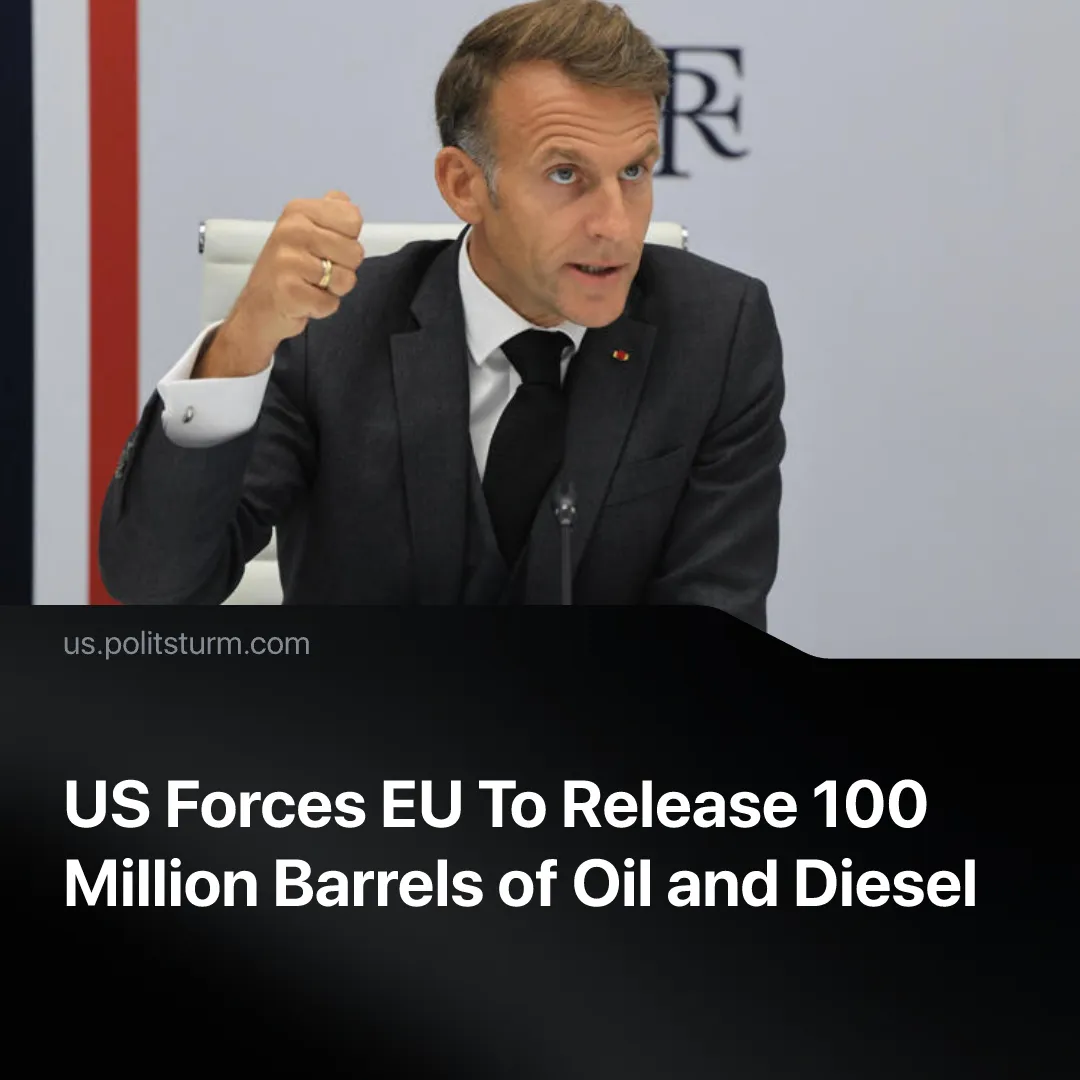
Trump forces G7 to release 100 million barrels of oil and diesel from its reserve through threats of an export ban, which the EU had earlier said “undermine” their “trust in the United States”.
Details. European G7 leaders – an intergovernmental political and economic forum which includes the UK, France, Germany and Italy – announced plans to release 100 million barrels of oil and diesel to the market. The stated goal was to “stabilise energy supplies, build resilience in supply chains and shield households and businesses from price shocks”. The release will proceed gradually within 4 months, with a possibility of additional releases “as necessary”.
► This follows President Trump's threats to ban diesel exports to the European Union unless reserves were released. The ban would have temporarily lowered diesel prices domestically while soaring the prices in Europe, which relies heavily on US exports. Trump later claimed that he had no actual intention of imposing the ban. The combined G7 statement confirmed that no export restrictions will be placed between partners.
► The EU initially said it “fully rejects any ban” and that this would “undermine [their] trust” in the US. However, the bloc was independently considering a release of 50 million barrels of diesel – which covers a mere 3% of its annual consumption.
► US oil industries and manufacturers also urged against the ban, writing in a letter that it would lead to reduced fuel production and subsequent price rises.
► Market analysts warn that the release is only a temporary measure. Whilst it may provide a temporary relief, strategic reserves exist to buffer future price spikes. Depleting them now leaves the market without a safety net if prices rise again – a critical risk given there are no signs for the oil market to improve in the future.
Context. As an imperialist alliance, the EU is attempting to solidify and stand as an independent bloc amidst growing inter-imperialist contradictions, as reflected in its militarisation efforts. However, the bloc ultimately adopts positions which serve US interests, including purchasing US weaponry to transfer it to Ukraine, and has been unable to fully detach.
► Following drone attacks, Saudi Arabia temporarily shut down one of the Middle East’s largest oil refineries. Under similar threats, half of Russia's major refineries were forced to cut back or halt output. As Russia and Saudi Arabia play a central role in the international oil market, these developments have driven diesel prices to record highs.
► In March this year, the 32 member countries of the International Energy Agency (IEA) had already agreed to release 400 million barrels of oil from emergency stocks amid the Middle East conflict. The European contribution comprised 108 million barrels, with 40 million yet to be released.
► The rising oil – and consequently diesel – prices, have inflated the costs of essential goods due to its critical role in shipping, construction, agriculture, etc. Trump's push to suppress prices is tied to the upcoming midterm elections as the cost of living is one of the main reasons for his unpopularity.