


What do Vladimir Lenin, Karl Kautsky, Mao Zedong, and Kim Il Sung have in common with modern British, Swedish, or German social democrats? They are all commonly classified as “left-wing”.
Does this mean that they all shared the same views and pursued the same goals? Absolutely not. In practice, the term “left” is used as an extremely broad and vague category that includes everyone from anarchists and social democrats to certain currents of liberalism and “cultural activists”. Communists are not synonymous with all of them and differ fundamentally in their theory, practice, goals, and organizational principles.
Nevertheless, the differences between communists and the “left” are deliberately blurred by representatives of the various “left-wing” currents themselves. They appropriate the term “communist” and turn it into an abstract label devoid of theoretical specificity and practical direction. As a result, the substance of the concepts of “communism” and “communists” is lost, while Marxist-Leninist theory dissolves into a general “left-wing agenda”.
This blurring of concepts conceals the distinction between communism itself and opportunist currents, undermines the organizational unity of the working class, and plays into the hands of the ruling class. Therefore, it is important to draw a clear distinction: communists are not simply “left-wing”, but a specific political current based on Marxism-Leninism.
I. Who Are the “Leftists”?
The key problem with the concept of “the left” – its vagueness. Things become even worse when broad generalizations such as “left-wing ideas” or “left-wing thought” enter rhetoric. The extremely blurred boundaries of who should be considered “left-wing” and how “leftism” should be defined make it possible to place mutually exclusive movements and systems of thought in the same category.
As a result, people who, during their lifetimes, not only disagreed with one another but were irreconcilable opponents end up in the same corner of the “political spectrum”.
Marx saw the Paris Commune as a practical example of working-class rule, the first attempt at the revolutionary transformation of capitalist society into a socialist one. Bakunin, as an anarchist, criticized the Commune for its “Jacobinism”, its attempt to create a new state system instead of abolishing the state as such.
Lenin, in describing the system of monopoly capitalism (imperialism), argued for the inevitability and necessity of the socialist revolution. Karl Kautsky, analyzing the same system, derived from it his theory of “ultra-imperialism”, denying the necessity of the proletarian revolution and predicting a new “peaceful phase” of capitalism in the form of a single worldwide monopoly.
Stalin continued the course of Leninism at preserving the unity of the party and advocated building socialism in the USSR through the creation of large-scale mechanized agriculture and the implementation of industrialization. Trotsky formed factions, openly fought against party unity, and vacillated from war communism and “militaristic socialism” to the rejection of socialism in one country.
The same applies to attempts to “squeeze” Mao Zedong or Kim Il Sung into a common “left-wing framework”, placing them on the same level as Stalin. While the Soviet Union was building a socialist society on the basis of the theory of scientific socialism, planning, industrialization, and the eventual elimination of commodity production, China and Korea were carrying out ultra-left experiments in the spirit of peasant utopian socialism. The ideas held by Chinese peasants as far back as the time of the Taiping Rebellion (1850-1864), which regarded equalization as the pinnacle of social progress, are thus placed on the same footing as the Five-Year Plans and the State Planning Committee.
As for social democracy, today it has nothing in common with the ideas of socialism, communism, or a workers’ republic. Social-democratic parties in most countries advocate the preservation of capitalism and go no further than extremely limited reforms that do not affect in any way the foundations of the domination of big capital over labor.
Yet for contemporary “political science”, all of these are the left. In the language of that same political science, this is called a false generalization.

The term “leftists” is problematic and has no clear definition. Moreover, its meaning has changed repeatedly throughout history:
- The term emerged during the French Revolution, referring to opponents of the feudal order and absolute monarchy and to supporters of free capitalist development.
- The most radical supporters of the republic in the struggle against the absolute monarchies of Europe were called left-wing, regardless of their views on questions of economics or social organization.
- With the development of capitalism in the 19th century, the term came to be applied to supporters of various currents of socialist thought and critics of the capitalist order.
- In the parliaments of different countries, a broad spectrum of political forces is classified as “leftists”: from consistent communists to moderate reformers.
- Not everyone who can be called “leftists” opposes capitalism in the defense of the workers’ class interests. A good example of this is the Second International, the majority of whose member parties supported their national governments in the First World War in 1914; they would later adopt a hostile position toward the October Revolution in Russia.
The concept of “leftists” remains vague to this day and has no clear definition. This can be easily seen in the attempts of contemporary political science to formulate a definition of the left.
Some authors proceed from economic categories, others from cultural ones, while still others rely on the idea of “equality”. In any case, the result is confusion of the kind found in the definition given by S. Otjes, a professor at the University of Groningen in the Netherlands:
The left prefers a more egalitarian (i.e., equal) distribution of income and more active state intervention in the economy.
Or else we get philosophical statements that mean nothing at all, such as the one offered by N. Bobbio, a member of Italy’s oldest Academy of Sciences:
The left regards people as “more equal than unequal” and believes that most inequalities are social in origin and can be eliminated.
Needless to say, such “definitions” do not actually define anything.
It is also worth noting separately the active use of this term as a political label of stigma by right-wing politicians from Europe to America. In their rhetoric, accusations of being left-wing sound almost like accusations of “sympathizing with communism” or seeking to “destroy democracy”.
One need only recall how actively Donald Trump uses this tactic, suddenly announcing every few months a left-wing threat coming either from the Democrats or from critics of immigration policy.
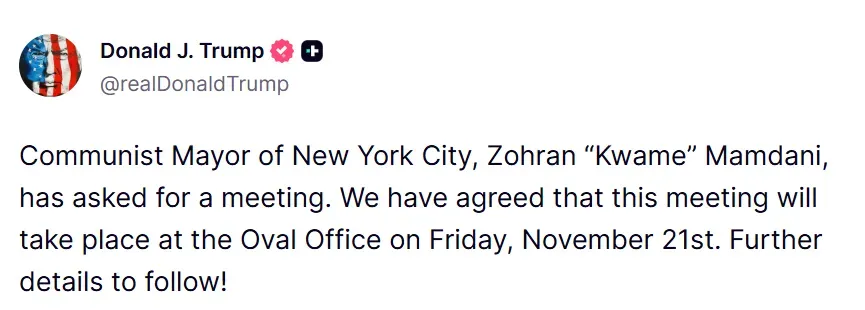
The same category includes all his attacks on Kamala Harris during the election campaign, which went as far as direct comparisons between the August 2024 Democratic National Convention and a communist party congress. In exactly the same way, the European far right often uses the terms “left-wing” or “left-liberal” when criticizing European Union policies.
To sum up, the result is this: the left includes economic reformers as well as radicals who hate “the past”; philosophers of equality and opponents of traditions; militant anarchists and relatively “respectable” social democrats.
Existing definitions are so vague that they deprive the term of any meaning. The formulations are so general that forces and factions that have nothing whatsoever to do with the left can easily fall under them.
Meanwhile, leftists are constantly surprised to find themselves suddenly placed alongside yet another liberal politician who has displeased American or European fascists.
For these reasons, it is impossible to provide a precise theoretical definition that would describe the contemporary left-wing movement in its entirety while at the same time not encompassing the right-wing movement.
We can only identify the most approximate criteria for classifying someone as “leftist”: a demand for the expansion of bourgeois-democratic rights, social support for the population, and an orientation toward improving the living conditions of the working class. These criteria do not include, for example, the question of society’s socioeconomic system: capitalism or socialism. Including this parameter immediately excludes the lion’s share of the “leftists”.
But even those who do not meet these criteria can often still be classified as “leftists”. The matter is further complicated by the fact that within the contemporary “right” there is its own “left”, which in one way or another challenges some of the foundations of right-wing discourse while agreeing with it as a whole. In exactly the same way, the “left” has its own “right”.
Several currents that are usually included in the category of the left:
— Social democracy and Eurocommunism. They are oriented toward expanding social welfare and rights by reforming the existing system;
— “cultural” liberalism and movements associated with it. They shift the focus from economic and class issues to questions of identity, representation, and the recognition of “oppressed groups”;
— opportunist and revisionist currents within Marxism. They formally appeal to Marxist theory but in practice revise it in the interests of the ruling class;
— finally, communists.
II. The Difference Between Communists and “Leftists in General”
Communists belong to the left movement and, along with certain others, are most often classified as so-called “radical leftists”. Such a classification is superficial and has a bourgeois-academic nature, glossing over fundamental differences among these currents.
Historically, it was the communists who were the main revolutionary force in the workers’ movement of the XIX-XX centuries. It was they who brought the critique of capitalism to its logical conclusion: the practical abolition of the bourgeois order and the building of the world’s first socialist society. All other left-wing currents either confined themselves to reformism or lapsed into utopianism, and in the end surrendered to capital.
Although communists belong to the left, the differences between them and the various left-wing currents far outnumber the similarities. These differences are not secondary, but of fundamental and class-based nature.
1. Theoretical Foundation
- Leftists: There is no single, universally accepted theoretical foundation. They draw on a motley assortment of philosophical, economic, and sociological traditions, united by abstract slogans of equality and social justice. In most cases, these are social democracy, left liberalism, anarchism, and isolated “snippets” of Marxism.
- Communists: Their theoretical platform is Marxism-Leninism: the theory created by Marx and Engels, developed and supplemented in practice by Lenin and Stalin – a coherent body of knowledge tested by history. Any deviations are not merely rejected but also consistently exposed.
2. Class Position
- Leftists: The class approach is often deliberately blurred and replaced with talks about “society as a whole”, “citizens”, “minorities”, and “oppressed groups”. In fact, leftists are oriented primarily toward disparate strata of small proprietors, the intelligentsia, and the labor aristocracy. Slogans about the “good” of the working class are often proclaimed, but in reality they do not express its interests, since their entire discourse does not touch the foundations of capitalist production.
- Communists: They proceed from the proposition that the history of all societies that have existed up to now, beginning with the disintegration of primitive communal society, has been a history of class struggle. The working class is a class deprived of ownership and has no control over the means of production, thus compelled to sell its labor power in order to survive and therefore objectively interested in abolishing capitalism. Communists orient themselves, as a matter of principle, toward the working class, the wage workers who are the only consistently revolutionary force of the present day.
3. Definition of Socialism and Communism
- Leftists: Socialism is often interpreted as “a fairer capitalism”, an expanded welfare state, redistribution of income, and high taxes on the rich. The ideas of communism are either ignored, declared to be an unattainable utopia, or distorted by reformist ideas.
- Communists: Socialism is defined as a transitional stage from capitalism to communism, characterised by social ownership of the means of production. Communism is presented as the outcome of the development of socialism, consisting of the disappearance of classes, the state (as a class apparatus of violence), exploitation, and commodity production.
4. Understanding of the Ways to Achieve Socialism
- Leftists: They place their hopes in parliamentary reforms, pressure on the bourgeois state, “evolutionary changes”, and compromises with capital.
- Communists: Socialism can be achieved only through the establishment of working-class power. Communists reject the reformist illusions that capitalism can peacefully “grow over” into socialism.

5. Attitude Toward the USSR and the Experience of Socialist Construction
- Leftists: The USSR is assessed through the lens of bourgeois clichés. It is declared to be a “mistake”, a “totalitarian state” and a “dictatorship”. Any achievements of socialism are devalued, while errors are exaggerated and used to reject the very idea of socialist construction altogether. Some “leftists” even claim that the USSR built some sort of “state capitalism” rather than socialism.
- Communists: The USSR is regarded as the first historical experience of a state built and controlled by proletarians, which managed the construction of socialism while being encircled by capitalist countries. Its achievements – industrialization, the eradication of illiteracy, victory over fascism, an exceptionally high level of social welfare, and scientific and technological progress are recognized as objective facts and the natural result of the socialist economy. Errors and defeats are analyzed from class positions with the aid of Marxist-Leninist theory, without capitulating to anti-communism.
6. Understanding of the Party
- Leftists: The party is seen as an instrument for taking part in elections or as a temporary political alliance of like-minded people. Joining it is often a formality, while serious ideological disagreements are considered permissible and even natural.
- Communists: The communist party is the vanguard of the working class, its most conscious and organized part. It is created not to take part in elections but to lead the class struggle, carry it through to the end, and make the transition to socialism, and then – to lead socialist construction. The party’s theoretical unity is an indispensable condition of its existence.
7. Organizational Principles
- Leftists: Leftists have no common organizational and disciplinary principles, as they have developed a cult of “self-organization”. Alongside this, there is a certain fetishization of democracy – formal democratic procedures are made absolute and are placed above effectiveness and unity of action.
In practice, this leads, at the very least, to an inability to implement party decisions promptly and in full, and, at worst, to the party or organization splitting into separate groups and factions. Simultaneous membership in another organization or party is permitted. - Communists: The party is built on the principles of democratic centralism. Democratic centralism ensures free discussion within the party to formulate decisions. Decisions adopted by the majority are binding on all, ensuring unity and coordinated action.
Iron discipline is regarded not as the suppression of the individual, but as the basis for effective party activity. Dual membership is ruled out, since belonging to several organizations inevitably dilutes the political line and discipline.
8. Attitude Toward Opportunism and Revisionism
- Leftists: Opportunism is justified as “realpolitik”, and revisionism – as “adapting theory to the present day”. As a result, theory becomes filled with harmful concepts divorced from reality, while practice is reduced to maintaining the capitalist order.
Such acceptance of opportunism and revisionism generally stems from denying the socialist character of the USSR and systematically opposing the Bolshevik principles of party organization, the dictatorship of the proletariat, tactics, and strategy.
By refusing to acknowledge the historical experience of actually building socialism, such currents also reject the very possibility of a consistent struggle for socialism, replacing it with endless “corrections” to the foundations of Marxism to suit the prevailing circumstances. - Communists: Opportunism and revisionism are regarded not as abstract “errors”, but as expressions of the bourgeoisie’s class influence on the workers’ movement. Above all, opportunism is the penetration of bourgeois ideology and interests into the proletarian milieu, an attempt to confine its struggle within the bounds of the existing order.
From this follows the subsequent degeneration of Marxist theory and practice: the erosion of the principle of the dictatorship of the proletariat and the replacement of class struggle with parliamentarism and class collaboration.
The struggle against them is a necessary condition for preserving the revolutionary character of the party and the movement as a whole.
For this very reason, the confrontation between communists and opportunist leftists cannot be regarded as an internal political dispute within a single camp; it is a specific form of class struggle, its ideological aspect.
The struggle against opportunism and revisionism is not an abstract polemic, but a necessary struggle by the proletariat for its own independent politics and for freedom from bourgeois influence within its own movement.

9. Attitude Toward Capitalism
- Leftists: For “leftists”, capitalism appears to be merely an “unfair model of distribution” that can be improved. As a result, the question of abolishing capitalist relations is deliberately set aside, and the working class is urged to fight not against the system of exploitation itself, but only for more favorable conditions within it.
- Communists: Communists proceed from the view that capitalism is historically limited. It arose at a particular level of development of the productive forces and must just as inevitably be eliminated when those forces enter into an irreconcilable contradiction with capitalist relations of production.
Crises, unemployment, the impoverishment of the masses, and imperialist wars are not “malfunctions” or “isolated injustices”, but necessary forms of capitalism’s existence at its mature stage. For communists, therefore, the question is not how to “fix” capitalism, but how to abolish it as a system.
10. Definition of Socialism
- Leftists: For “leftists”, socialism is a vague, abstract concept without clear economic or class features. It is reduced to an expanded set of social guarantees, regulation of market relations, “fair” taxation, and so on. Under this approach, the basic capitalist relations remain: private ownership of the means of production and wage labor.
Such an interpretation fundamentally sets aside the question of power. Socialism appears not as the dictatorship of the working class, but as a compromise between classes allegedly possible within the bourgeois state. - Communists: Communists understand socialism as the first, lower phase of communist society. Socialism is a concrete historical stage characterized by the abolition of private ownership of the means of production, the establishment of the dictatorship of the proletariat, the planned organization of the economy, and the abolition of the exploitation of man by man.
11. The Question of Strategy and Tactics
- Leftists: “Leftists” generally proceed from the belief that the bourgeois state can potentially be “reprogrammed”. Hence their orientation toward parliamentary struggle, participation in elections as an end in itself, reformism, actionism, and the like.
Tactics often replace strategy. Individual successes such as the adoption of “good” laws, the expansion of rights, successful actions – are presented as progress toward socialism, although capitalist relations themselves remain untouched. - Communists: Communists regard the bourgeois state not as a mechanism standing above classes, but as an organ of capital’s class rule. The central strategic objective is to build an independent, organized, and theoretically equipped workers’ movement under the leadership of the communist party.
Communist tactics are subordinate to strategy and cannot conflict with it. Participation in elections, trade union struggle, and agitation are employed only insofar as they serve to develop class consciousness and organize the working class.
Thus, the conflict between communists and “leftists” in general is neither terminological, stylistic, nor tactical. It concerns fundamental philosophical and class struggle issues: the nature of capitalism and socialism, the ways to achieve socialism, the role of the working class, and the nature of the party and the socialist state.
That is why the opposition between communists and leftists is not artificial. It reflects a real divide within the workers’ movement – between revolution and reformism, between Marxism and its distortions, between the working class and the capitalists.
III. Concept Substitution
3.1 Why Are Communists Being Called “Leftists”?
Blurring the distinctions between communists and various left-wing groups benefits left-wingers themselves above all, for a number of reasons.
1. The Appropriation of Reputation of Communism
By blurring the concepts of “communism”, “communists”, and “communist ideas”, “leftists” are able to claim for themselves the historical and political authority of communism. It was the communists in the 20th century who not only succeeded in creating a coherent theory of the working class’ liberation but also put it into practice. They broke down the old forms of exploitation, organized the working class as an independent historical force, established socialist states, and played a decisive role in defeating fascism.
This historical experience has shaped a certain “political asset” of the international communist movement – authority, recognition, and the trust of the masses. By blurring the line between communists and the “leftists” the latter gain the opportunity to benefit from this asset without being obligated to adhere to the ideological and organizational principles of the communist movement. In this way, they can appeal to its historical authority while freely promoting their own revisionist interpretations of Marxism-Leninism.
2. A Cover for Opportunism
Blurring the distinctions between concepts conveniently serves as a cover for one’s own opportunism or theoretical ignorance. Under the blanket term “leftism”, one can avoid tough questions: about the dictatorship of the proletariat, the irreconcilable nature of the class struggle, the definition of socialism, and tactics and strategy.
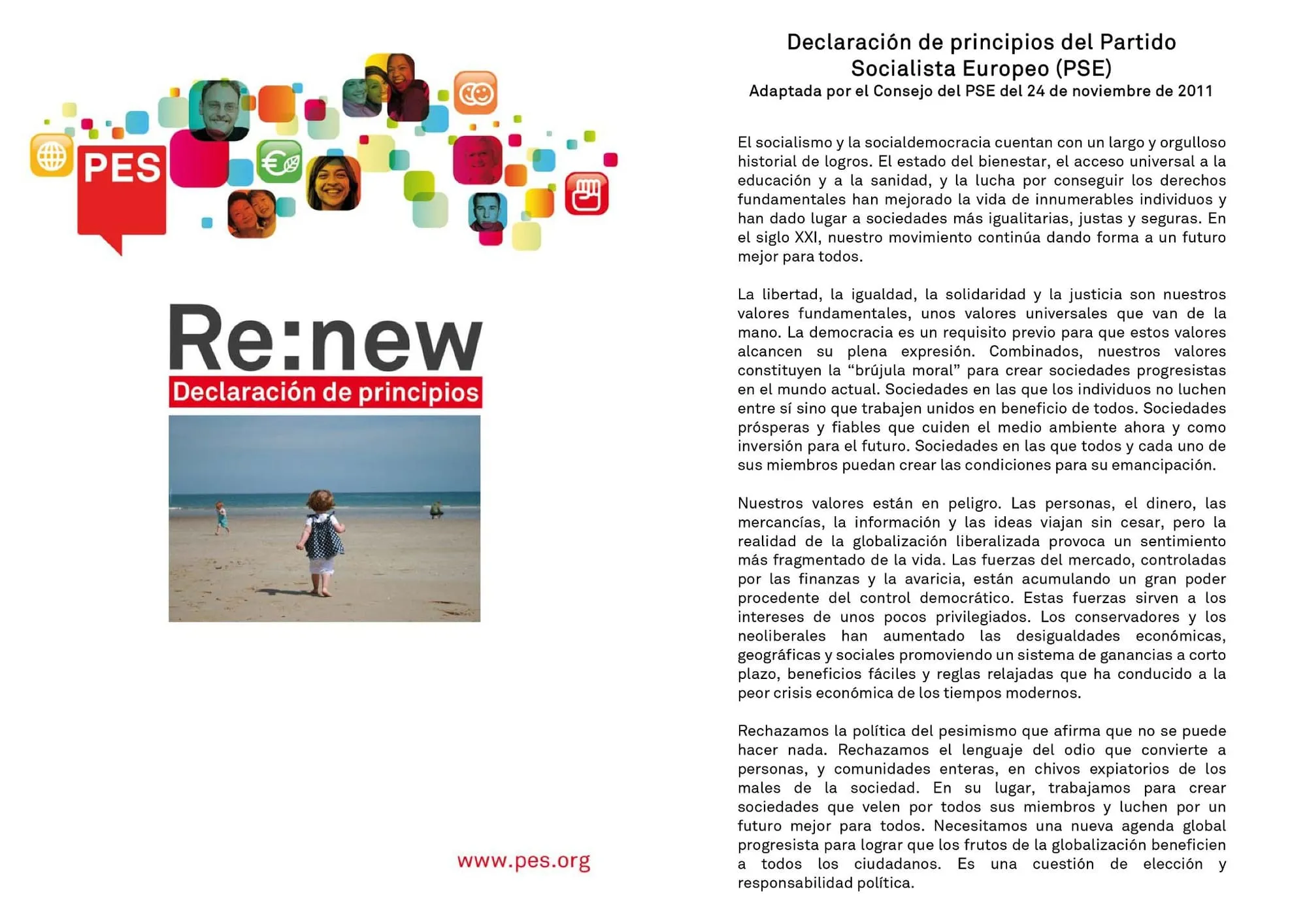
Instead, under the guise of being “fellow Marxists”, various leftists promote a set of vague ideas about “justice”. “equality”, “progress”, “democracy”, and so on, which do not threaten the fundamentals of capitalism.
3. The Widest Possible Audience
A clear declaration of identity as a communist organization requires a distinct program, discipline, consistency, and a commitment to the ideas of Marxism-Leninism. Under current conditions, with opportunism widespread, this inevitably narrows the scope of potential supporters and alienates some members of the petty-bourgeois strata.
In contrast, the very vague ideological contours of “leftist ideas” make it possible to attract a broader audience. This audience includes disillusioned small business owners, the intellectuals, the masses of spontaneously left-leaning students, and the petty-bourgeois-minded segment of the working class – none of whom are required to demonstrate discipline or an understanding of Marxist theory.
As a result, such broad-based left-wing organizations gain greater reach on social media, more potential votes in elections, and greater “media visibility”. All of this is significant, including for securing grants and preferential treatment from the ruling class or its agents.
By pursuing their own goals in twisting the true meaning of the terms “communists” and “communism”, the left is objectively benefiting the ruling class. Through the process of replacing communist theory with a general mixture of “leftist ideas”, views and trends, the ruling class erases the legacy of the actual communist struggle: for the organization of the proletarian party, for advanced theory, for the victory of the October Revolution, and for the creation of socialism.
The strength of the working class has always lain in its solidarity and organization, which cannot be achieved without a consistent proletarian theory - Marxism-Leninism. The dilution of this theory amid the chaos of “left-wing ideologies” undermines the organizational unity of the working class.
Without a clear political program and the awareness of their class interests, the proletariat remains divided, incapable of decisive action, and doomed to play a subordinate role in bourgeois politics.
It is in the bourgeoisie’s interest to water down Marxist-Leninist theory in a purely propagandistic sense as well. This allows them to reduce any criticism of the foundations of capitalism to abstract questions of “social justice”, which easily fit within the boundaries of bourgeois reformism and do not require radical changes.
Public attention is drawn away from the economic basis of capitalism: the exploitation of wage labor and private ownership of the means of production. Meanwhile, the working class is distracted by lesser issues: morality, minority rights, cultural debates, identity. Social contradictions are no longer depicted as class-based but rather as disagreements within a united society, which can, supposedly, be resolved through dialogue or elections.
As a result, the working class is being led astray, while the bourgeoisie maintains its dominance by disguising it as “democracy” and “pluralism of opinion”. The substitution of concepts thus becomes one of the tools for the ideological neutralization of the working class, helping the preservation of the capitalist system.
Meanwhile, it doesn’t matter at all whether the leftists themselves realize what’s going on. Their agenda of broadly defining who is a communist and what “leftist ideas” mean just plays into the ruling class’s agenda one way or another. It is in the capitalists’ interest to have a diverse array of left-wing groups within the labor movement, which they widely support. This support takes various forms:
1) Allocation of parliamentary seats.
In the current European Parliament (2024-2029), the left-wing groups “The Left” and “S&D” collectively hold 175 of 720 seats (25%). Moreover, S&D is the third-largest group overall, and until 1999 it was the largest group in the Parliament.

The situation is similar in the State Duma of the Russian Federation: the “left-wing” factions of the Communist Party of the Russian Federation (CPRF) and the “Just Russia” Party (SR) rank second only to the ruling party in terms of the number of seats.
In the United States, the Democratic Party, which most Americans associate with “left-wing” politics, is, in fact, one of the country’s two ruling parties.
2) State funding of political parties. Most countries provide some form of direct or indirect state funding for political parties: regular subsidies, campaign financing, etc. Established “left-wing” parties, which exist in most countries, are also included in receiving this funding.
In the European Parliament, political groups and the parties that are part of them receive funds from the EU budget to cover the costs of their structures, administrative staff, and political activities. Consequently, groups such as “The Left” and “S&D” are, in fact, financed by the very same state administration that represents the interests of European capitalism.
A similar situation exists in Russia. The parties represented in the State Duma receive substantial funding from the federal budget in proportion to the number of votes they received in the elections. Thus, both the CPRF and JR factions exist largely thanks to state funding.
In practice, the bourgeois state not only tolerates the existence of systemic “leftists”, but also supports their political organizations.
3) Funding through NGOs and Foundations. Various foundations and NGOs play an important role in supporting the “left” by funding educational programs, research projects, labor union initiatives, media outlets, and activist networks.
A classic example is the “Rosa Luxemburg Foundation”***, a political foundation associated with the German parliamentary party “Die Linke”. It is financially supported by the German state budget and operates as part of a system of so-called “party funds” that assist parliamentary parties in their activities. In 2024 alone, the foundation received 71.2 million euros from the German government.
Through its network of offices and programs, the foundation funds conferences, research projects, activist training, labor union initiatives, and various “left-wing” media projects. Its activities extend far beyond Germany’s borders.
Another foundation that actively sponsors “left-wing” narratives is the “Open Society Foundation”***, established by American billionaire George Soros. It funds American left-wing forces and organizations, protest movements, “progressive” civil servants, the media, and so on. The Soros Foundation’s activities are often linked to support for so-called “color revolutions”, the financing of protests, and the promotion of political groups loyal to the interests of Western capital.
There are dozens and hundreds of such organizations around the world. Among them are: the National Endowment for Democracy***; the Heinrich Böll Stiftung***; the Friedrich Ebert Stiftung*** the Ford Foundation***; the Rockefeller Foundation; and the Carnegie Endowment***.
4) Limited political support. In addition to direct funding, the ruling class provides “leftist” forces with selective political support exactly to the extent that it does not pose a threat to the system but allows them to be used for its own interests.
Thus, the existence and widespread popularity of modern “leftist” movements are not a sign of weakness on the part of the ruling class or of its “concessions” to the working class. On the contrary, they are the result of a deliberate policy aimed at dividing and weakening the communist movement.
Through a series of supportive measures, the bourgeoisie tolerates the existence of a left-wing opposition that erodes the position of communism within the labor movement and replaces Marxism-Leninism with broadly interpreted leftist ideas that theoretically disarm the labor movement. Such movements are not antagonists of capitalism, but its natural allies.
That is precisely why the ruling class is willing to tolerate, finance, and even encourage the “left” – as long as they do not cross the line and raise the issue of power, property, and the rule of the proletariat.
For the bourgeoisie, Communism remains a fundamental and irreconcilable enemy – an enemy that cannot be bought off with grants, co-opted into parliament, or neutralized through a cultural agenda.
3.2 How Communists Get Replaced by “Leftists”
Dissolution into “Leftism”
The mechanism of this substitution is that specific, theoretically loaded concepts, “communists”, “communism”, are replaced by broader and more vague “leftists”, “leftism”.
The concept of “leftists” gradually blurs the content of key issues of fundamental importance for the working class. The themes of class struggle, attitudes towards ownership of the means of production, and the understanding of socialism and communism as the only alternative to capitalism are blurred or completely ignored.
Concepts that in communist theory are unambiguous are turned into abstractions or rejected as “too radical”, “outdated”. As a result, communism begins to be perceived not as a holistic and harmonious theoretical system, but as one of the many directions of “leftist thought”.
In public and academic discourse, one can observe that a range of diverse and sometimes contradictory positions are grouped under the general term “left”. The term thus functions as an umbrella category, encompassing a broad variety of ideas and political positions.
When used this way, “leftism” ceases to be a term for a specific theoretical tradition. It begins to serve as a euphemism, allowing one to avoid directly calling it socialism or communism. Ideas that are related in content to a communist analysis of capitalist relations are presented as simply “leftist”, which makes them politically less clear and ideologically safe for public use.
Thus, communist and socialist positions lose their proper names and dissolve in the general category of “leftism”, which does not imply either theoretical rigor or programmatic certainty.
2. “Leftists” Who Call Themselves Communists
“Leftists” often declare themselves communists, regardless of their actual views and practices.
The Democratic Socialists of America (DSA) are an illustrative example of this tendency. This organization directly proclaims as its goal a peaceful transition from capitalism to socialism through reforms. This alone puts it beyond the boundaries of communist theory and practice.
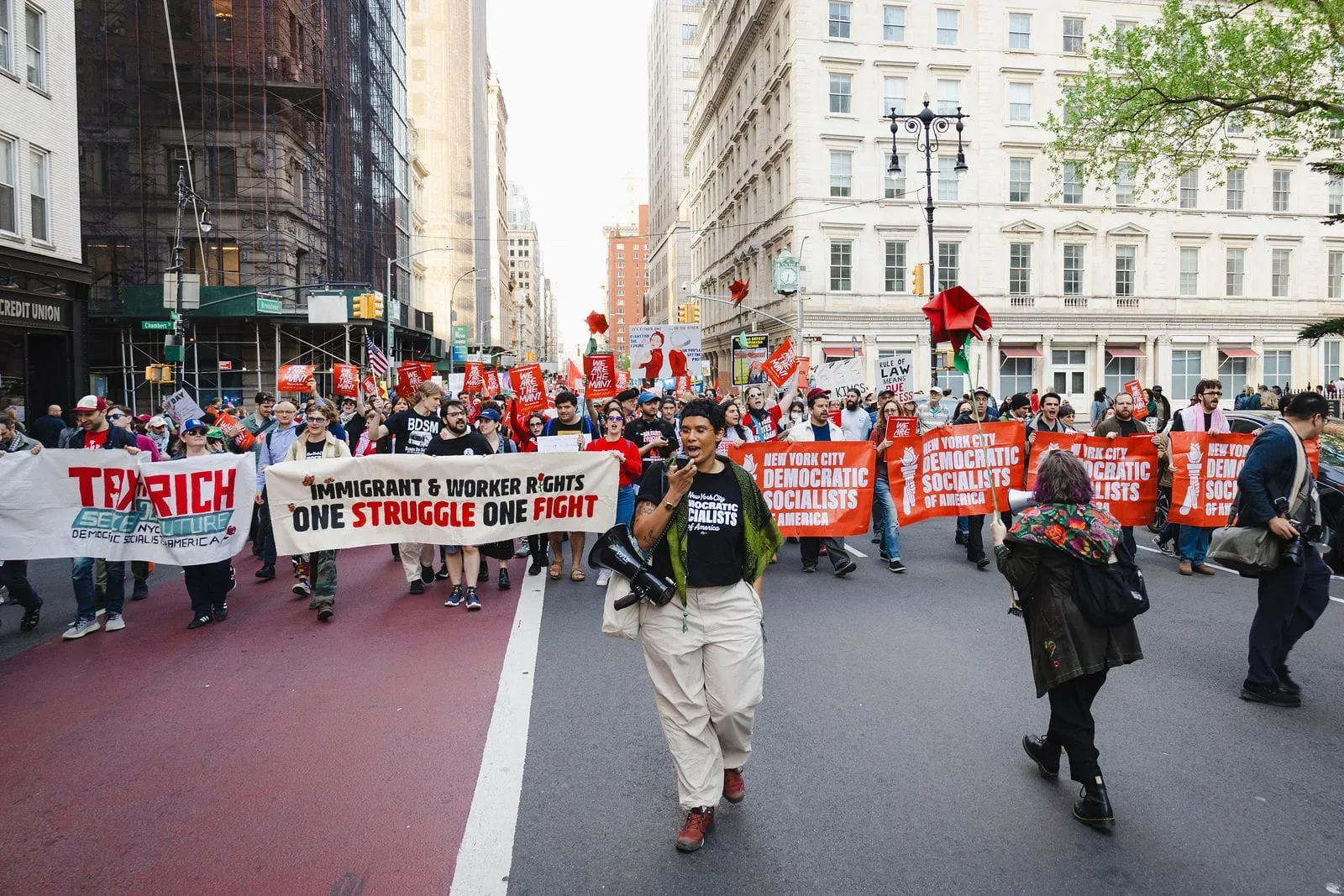
However, despite the proclaimed main course, there is a faction within the DSA that calls itself “communist”.
In practice, we are talking about people who calmly coexist in a broad-left coalition, recognize reformism as acceptable, and replace class politics with a set of local initiatives like the so-called “tenant councils”. They use the word “communist” not as a term linked to a communist position, but as a tool designed to give the movement weight and historical depth, which it does not have.
Juggling of terms is also a problem in Western Europe. There are even now parties from the Cold War era that retain the word “communist” in their names, but in content they are typical social-democratic reformist or broad-left associations. Their activities are limited to useless street activism, work in the bourgeois parliament, populism, and symbolic actions.
Marxism-Leninism is either openly rejected in these organisations or declared “one approach among many”. Instead of class struggle, environmentalism, feminism, anti-racism, and identity theories are brought to the fore.
In Russia, the “left’s” exploitation of the term “communism” is particularly widespread due to the Soviet legacy: the concept is familiar, associated with a certain image, and is easier to hear. This is why most Russian “leftists” refer to themselves as communists, which they are not.
A classic example is the Communist Party of the Russian Federation (CPRF). While formally appealing to the communist legacy, this party has long since become part of the current political system of Russian capitalism. However, its “leftist” orientation is rather arbitrary, given the views and sympathies of the party leadership.
What is the bottom line? Confusing “leftists” with communists destroys the very meaning of communism as a theory and practice.
First, communism ceases to be a meaningful position in the eyes of society. If anyone who is generally “against capitalism”, “for social justice”, or “for all that is good” declares themselves a communist, then the word itself loses its meaning.
Secondly, the line between reformism and class struggle gets blurred. When those who, in practice, limit themselves to parliamentary reforms or a critique of capitalism from the standpoint of philistine morality call themselves communists, the illusion is created that communism is compatible with the preservation of the capitalist system.
Thirdly, such practice discredits communism in the eyes of the masses. People judge ideas by their proponents and the results of their actions. When political forces that don't wage class struggle and don't raise the question of a workers' republic operate under the name of communism, the inevitable failures and compromises begin to be perceived as “failures of communism”.
3. Discrediting and Denying Communism by the “Left”
Along with the substitution of terms, another process plays an important role: the direct discreditation of the very concept of “communism”.
While in some cases opportunist currents attempt to appropriate communist symbols and terminology, in others they, on the contrary, seek to present the terms “communism” or “Marxism-Leninism” as outdated, discredited, or useless, and therefore should be abandoned.
Framing the issue this way amounts to a direct call to surrender to bourgeois ideology. Changing the terms in itself will change nothing: the new names will sooner or later be subject to the same discrediting that benefits the ruling class.
Rejection of the term “communism” would signify a de facto break with the theoretical and historical tradition of Marxism-Leninism. Furthermore, if we abandon the concepts of “communism”, “Marxism”, “dictatorship of the proletariat”, and “class struggle”, the language used to formulate the goals and objectives of the workers' movement would disappear. As a result, the theory itself would become blurred and disarmed.
Another example is the activity of various opportunist currents that discredit communism in the eyes of workers through their own theoretical errors and political practices. This refers to the petty-bourgeois radicalism of certain Trotskyist groups, prone to adventurist tactics and high-profile but futile campaigns of actionism.
This also includes the activities of various “activist” projects of left-liberal ideals. For such initiatives, political activity is reduced to symbolic actions, cultural gestures, and Internet campaigns.
Such practices not only fail to bring the labor movement closer to solving its problems, but also create in the public consciousness a caricature of “communist politics” as a set of outrageous speeches, scandals, or empty radicalism.
The inevitable failures of such initiatives, their theoretical helplessness and political inconsistency, are then used by bourgeois and liberal propaganda as “proof” of the frivolity and utopian nature of communist ideas.
As a result, the activities of opportunist movements fit neatly into the overall context of the anti-communist struggle. Their rhetoric and practices are easily adopted by liberal media and political opponents of communism, as they already contain the necessary elements of caricature, ridicule, and discreditation.
Thus, opportunism, regardless of the subjective intentions of its representatives, actually fulfills part of the tasks of anti-communist propaganda.
IV. Why Should You Be a Communist?
The question of choosing a position is a question of which theory and which organization are actually capable of leading the working class to power and building a socialist society.
The so-called “leftists” with their opportunism, endless distortion of the fundamentals of Marxism, ideological eclecticism, and organizational impotence, have historically proven incapable of either creating a stable, disciplined organization or party of the working class, or developing an effective and consistent strategy for struggle.
Their ideological eclecticism, which attempts to combine mutually exclusive positions, leads to theoretical confusion and the abandonment of the fundamental principles of Marxism. Their organizational forms collapse at the first serious test. Such forces cannot lead the proletariat, are incapable of preventing peoples from being drawn into imperialist wars, and are even less capable of bringing about the transition to socialism.
Historical experience shows that only communists, those who stand on the principles of Marxism-Leninism, can accomplish these tasks. In this context, communism is not an abstract ideal, but a concrete theoretical and organizational line based on a Marxist analysis of society, recognition of the dictatorship of the proletariat, the theory of scientific socialism, and a centralized party organization.
Unlike the “leftists”, which operate with a collection of contradictory concepts, communists rely on a coherent theory that corresponds to objective reality. Marxism-Leninism is not limited to a moral critique of “injustice”; it reveals the laws governing the development of capitalism, explains the mechanism of exploitation, the nature of imperialism, and the inevitability of class struggle. This theory has repeatedly proven its validity in practice.
The difference between communists and abstract “leftists” is manifested above all in their results:
- Marxism provided a scientific explanation of class struggle and capitalist exploitation.
- Leninism revealed the essence of imperialism as the highest stage of capitalism and created the Bolshevik Party.
- Under the leadership of the communist party, the October Revolution of 1917 was carried out – the first successful break in the chain of imperialism.
- Socialist construction in the USSR under Stalin’s leadership demonstrated the possibility of abolishing private ownership of the means of production, carrying out rapid industrialization, providing mass education, radically improving the living standards of the masses, and creating a powerful scientific and technological base.
- Victory over fascism in the Second World War was not only a military but also a socioeconomic result of the socialist system built by the communists.
Wherever vague “left-wing” concepts prevailed:
- The workers’ movement either became absorbed into parliamentarism;
- Or suffered defeat;
- Or degenerated into an auxiliary force serving bourgeois politics.
Therefore, the choice between communism and abstract “leftism” is a choice between a coherent scientific theory and ideological vagueness; between an organized force and organizational helplessness; between a real prospect of socialism and endless stagnation within the confines of the capitalist system.
To make a genuine contribution to the cause of the working class, bring about the socialist transformation of society, and liberate humanity from wars, crises, and exploitation, one must be more than simply “left-wing.” One must be a communist – stand on the principles of Marxism-Leninism and consistently apply them in both theory and practice.
Move from words to action.
Join our organization. We provide a fundamental foundation in Marxism-Leninism and connect Marxist theory with real political practice. We teach contemporary Marxist-Leninist theory, expose revisionism and opportunism, and connect theory with practice. You can become part of this process.
_______________________________
* – designated as a foreign agent.
** – organization designated as a foreign agent.
*** – designated as an undesirable organization in the territory of the Russian Federation.
List of Sources
1. Cambridge Dictionary — Left
2. Springer Nature — What’s Left of the Left–Right Dimension? Why the Economic Policy Positions of Europeans Do Not Fit the Left–Right Dimension — February 8, 2017.
3. Everand — The Meaning of Conservatism — April 30, 2020.
4. The Daily Signal — The True Aim of Leftism — June 20, 2023.
5. The University of Chicago Press (PDF) — Left and Right. The Significance of a Political Distinction — 1996.
6. European Parliament — The Political groups of the European Parliament — July 16, 2024.
7. The State Duma of the Russian Federation — Factions
8. International IDEA — Political Finance Database
9. Soctovarishestvo (Telegram) — Post from April 14, 2024 .
10. RosaLux Saar** (YouTube) — Video from July 20, 2023.
11. Fox News — Soros nonprofit drops massive 8-figure donation to super PAC bankrolling left-wing groups — April 16, 2024.
12. Axios — George Soros' foundation to invest $220 million in racial justice efforts — July 13 2020 .
13. The Washington Times — George Soros has funded 75 pro-criminal prosecutors to the tune of $40M — April 17, 2023 .
14. Oxford Academic — Assessing the International Influence of Private Philanthropy: The Case of Open Society Foundations — December 13, 2021 .
15. SSRN — What Does the Term "Left" Mean in American Political Discourse Today? A Note on Contemporary Political Rhetoric — October 8, 2024 .
16. Democratic Socialists of America — official site
17. Libcom — Interview with the DSA Communist Caucus — February 12, 2018 .