

War has been a constant companion of class society since its inception. It has accompanied humanity in all socio-economic stages of development based on private ownership of the means of production. Capitalist society has been no exception. Because of the antagonistic contradictions inherent in this system, wars are an integral part of capitalism. Contrary to popular myth, capitalism does not eradicate wars but takes them to a new and more destructive level. There is no capitalism without wars.
In the first part of our material, we looked at the causes of wars and their role in the historical development of capitalism. In this part, we will talk about how bourgeois scientists propose to overcome war, why it is impossible without the destruction of capitalism, and why war is so profitable for capital.
1. The theory of "democratic peace"
Over time, bourgeois journalism offered a recipe for eliminating the tragedy of wars - the so-called theory of democratic peace. It became popular in the second half of the 20th century and is often used to explain the absence of long-term conflicts in Europe and between Western powers in general. However, the theory is based on a mixture of obscurantism and idealism, which turns into a reactionary and shameless justification of the robbery of weak countries by a group of advanced capitalist powers.

The main claim of the theory is that liberal democracies do not fight each other and are more peaceful regimes than non-democratic ones. When considering such a “progressive” thought, a number of questions immediately arise:
1) What is the definition of these liberal democracies?
2) What is meant by wars?
3) What is the basis for this claim?
One suggested definition of democracy is:
"...democracy means a liberal democracy in which those in power are chosen in competitive elections by secret ballot and by universal suffrage (broadly defined to include at least 2/3 of adult males); in which there is freedom of speech, religion, and association; and in which there is a constitutional framework of laws to which the government is subject and which guarantees equal rights." [1]
And now, here is the trick. This definition is applied to the period from the beginning of the 19th century to the present day. A list of wars is compiled, and then countries that formally meet the requirements of "democracy" are selected to fit this "Procrustean bed". Then, an assertion is built on the grounds that there have been no wars between such “democratic” countries. If there have been, then one of the countries is declared to have made a sharp turn from democracy to "non-democracy". After it the conclusion is drawn: liberal democracies do not fight among themselves. If critics are providing uncomfortable examples proving otherwise, the concept of "democracy" can just be extended or shrunk, as needed, until the problem and controversy disappear. Likewise, using the number of deaths, the theorists can simply decide if this given conflict can be classified as war or if it is just another “armed” conflict.
Another definition requires that "liberal regimes" adhere to a market or private property economy, that their policies are internally sovereign, that they have citizens with legal rights, and that they have representative governments. Either 30% of adult males had the right to vote, or any male could acquire the right to vote by acquiring sufficient property [2].
According to the logic of bourgeois theorists, the existence of private property does not differentiate people by class, does not allow the rich to use the law in their interests, but, on the contrary, creates a democratic order.
For the professors detached from reality, declaring rights in a society based on exploitation is the same as having real rights for the entire population of a country. If a fraction of men with the right to vote can buy votes, what kind of "internally sovereign" politics can we speak of? What prevents the aristocracy under feudalism or the monopolists under imperialism from suppressing or using the parliament, securing a majority in the representative bodies, enforcing the laws they want, and restricting the so-called "legal rights" of the workers?

In fact, if we do not consider the state system in isolation, the law is the legalized will of the ruling class, i.e., the owners of the means of production. Democracy is nothing but democracy for a particular ruling class. When this class pursues a policy of territorial seizure and plunder within the country, it is of no consequence what representative institutions the people have at their disposal, no matter what legal rights they proclaim. In moments of crisis, the ruling class continues this policy in the form of armed violence.
Moreover, all the criteria of a democratic system proposed by theorists, such as wide suffrage, civil liberties, rule of law, equality before the law, legislative control, etc., are relative in nature, depending on the historical period and socio-economic system. The fact that these attributes can be expanded or reduced in different conditions of bourgeois democracy and change with the development of society does not cancel the fact that under capitalism, they do not reflect the real situation of the citizens and the level of true democratization.
Under monopolistic capitalism, where contradictions are particularly pronounced, bourgeois rights and freedoms become a cover for intensified exploitation of the workers, become obsolete, and rot along with capitalism. They must be adapted to the economic base, as they always have been, and as they always will be, in the transition to a new social order. It is therefore unhistorical to apply the same criteria to countries over a period of two and a half centuries.
Underlying all arguments about the democratic character of a regime is the assertion that in a democratic state, with a duly elected government and a certain level of "guaranteed" legal rights, the will of the people determines state policy. According to this logic, it is as if one were to assume that because wars are an objective disaster for thousands and millions of people, the population of "democratic" countries would prefer to solve the problem peacefully and through compromise [3]. Wars, it is concluded, are inimical to democracies and therefore impossible under a "democratic" (in the bourgeois sense) system.
For example, to justify the change in Italian policy during World War I, one of the authors of democratic peace theory wrote:
«Another interesting feature of World War I is that before Italy entered the war, it was allied with the Central Powers (Germany and Austria-Hungary). This meant that Italy, which had an elected government at the time, was allied with many other elected governments. However, even before it entered the war, public sentiment turned so strongly against the alliance that it was broken, and Italy eventually entered the war on the side of the other elected governments. Germany and Austria-Hungary had governments with some elected functions prior to World War I, but they could not be considered elected governments as outlined in this study. Germany had an elected Reichstag, but the emperor, a hereditary ruler, had more powers, such as choosing a chancellor.» [4]
Thus, it was not the haggling and disputes over Austrian lands and North African colonies, nor Italy's economic weakness, or in other words, objective material reasons that caused Italy to bide its time, waiting for a turning point in the war and the identification of a future victor, but a change in the "public mood" that pushed it in the direction of the "correct" democracies.
In fact, the country's final turn toward the Entente came after the Central Powers failed to meet Italy's demands for territories and colonies that would have gone to her if she had entered the war. Instead of the city of Trieste, she was promised part of the Austrian coast; instead of the province of South Tyrol, she was promised a smaller region of Trentino (which was considered to be Italian ancestral lands); Tunisia was even questioned and could only be annexed after the war. The Entente countries were not stingy and promised Italy all these territories in case of victory, plus Dalmatia, Antalya in Turkey, the port of Valon, and other North African colonies.
On April 26, 1915, Foreign Minister Sidney Sonnino, without the approval of the Italian Parliament, signed the Pact of London, which obliged Italy to enter the war on the side of Great Britain. In May 1915, Italy declared war on the Austro-Hungarian Empire.
During the Mexican-American War of 1846, after the annexation of Texas, the Mexican government refused to recognize the Treaties of Velasco of 1836, signed by the freely elected President Santa Anna and entered into a confrontation with the United States. In this case, the democratic body openly advocated war against another democracy.
The bourgeois professors consider the countries and their politics separate from the historical conditionality, separate from the politics of the ruling classes, and separate from their socio-economic structure. They propose a certain universal "standard" of state structure, the establishment of which will guarantee peace between countries.
This "model" of democracy implies that the law written in the constitution of the state is binding and unquestionably enforced by all citizens of the state, regardless of the class to which they belong and their material interests. The use of such formal criteria for the structure of the state, with which the causes of wars between states are allegedly connected, itself destroys the concept of "non-warring liberal democracies".
Theorists who argue that "liberal democracies do not fight" like to count the number of "democratic countries" in each historical period [5]. In the late 18th and early 19th centuries, for example, it is claimed that there were only three (Switzerland, the French Republic, and the United States of America). By 1850, there were 13, and by the end of the 20th century, there were about fifty. Instead of studying each war, its material conditions, and class politics, the academic nincompoops calculate correlations between percentages of the voting population and wars. Arguing or refuting on such grounds is pointless since no valid scholar would fit real wars into an artificial framework. However, some examples of the inconsistency with the reality of such a position can be given.
The French Republic and the American States, both recent bourgeois revolutions and recognized by "scholars" as democracies, were engaged in a naval war with each other in 1798. France, even under the Directory, was still formally a republic; the monarchy had not yet been restored. America, on the other hand, was one of the most democratic countries of the time. However, the war between them and its cause was not the "will" of the citizens, but the general European policy, the trade contradictions, and the debts to the French crown.
The same is true of the Anglo-American War of 1812, which is ignored by theorists because, according to them, Great Britain was not "democratic" enough [6].
Moreover, after the end of the Napoleonic Wars, there were no wars in Europe until 1854. This was not because the European "Great Powers" suddenly became recognized democracies, but because of the system of agreements between completely undemocratic, reactionary monarchies that created the so-called Holy Alliance. Does it follow that an alliance of "non-democracies" can also lead to a lasting peace?
In the propaganda of the Entente, the First World War was declared a holy campaign against the "Prussian dictatorship". Yet Germany formally retained civil rights, the rule of law and equality before the law, a freely elected parliament, and competing parties. It was the first country since the French Republic to introduce universal and equal male suffrage under the Constitution of 1871. Germany had the largest Social Democratic Party in Europe, which participated in the Reichstag and supported the war.
The Kaiser could appoint chancellors, who, however, in practice usually resigned (Bismarck, Bülow, Caprivi) if they lost votes in parliament on key issues. In this, Kaiser's Germany gave a lesson in “democracy” to Great Britain, with its powerful House of Lords and class-based promotion, and the United States, where some states had one-party rule and a disenfranchised black population. In Prussia, votes in local elections were counted based on property until 1918, and in the southern states of the US, the role of discrimination was played by the per capita tax.
There are also other conflicts that do not fit the democratic peace theory:
- The Spanish-American War of 1898;
- The Venezuelan Crisis, a dispute between Great Britain and the United States in 1895;
- The Fashoda Crisis between France and Britain in 1898;
- The French occupation of the Ruhr in 1923;
- The Six-Day War between Egypt and Israel in 1967, etc.
The key question is: what is the special peacefulness of liberal democracies? Democratic peace theorists answer this question as follows:
«.... the (social) field is the gestalt of a spontaneous society in which people are largely free to act as they see fit or as they desire. We have an idea of this type of society in the economic realm, which is the free market. This is an area that is specific to the spontaneous division of labor and the free production of goods and services. It should not be strange to generalize this to society as a whole. The social field is a social free market in which individuals spontaneously pursue their own interests, mostly constrained by the interests of others and by abstract rules that have evolved to facilitate interaction. This is actually what we usually mean by a free society or nation, and what I call an exchange society. Within such an exchange society, that is, a social field, individuals and groups freely learn about and adapt to each other's interests, and expectations are formed that evolve and extend to society as a whole" [1].
Consequently,
"...where people are free, they create a society of exchange consisting of overlapping groups and multiple centers of power that control each other. Such a society develops a culture of negotiation, tolerance, and sharing of differences. In addition, free people develop an in-group orientation toward other similar societies, a sense of shared norms and ideals that oppose violence against other free societies" [7].
The conclusion is simple: when the free market and private property prevail, the actions of individuals are subordinated to their interests and limited by the interests of other individuals. In this "civilized" and proper market, rules of compromise, concession, and understanding are developed that, through trial and error, lead to equilibrium and peace. This is the liberal ideologue's understanding of peace.
In fact, this is an extremely naive perversion of the real situation. It hides the fact that capitalism is based on profit-seeking and fierce competition, which gives rise to huge international monopolies interested in war; countries that destroy millions of people in their competition for colonies, markets, spheres of influence, and raw materials.
It is not mutual understanding and "feelings of norms and ideals" that rule under capitalism, but the desire to oppress, rob, destroy the competitor, reduce costs by increasing unemployment, and increase exploitation. There is no "mutual understanding" between capitalists themselves, just as there is none between workers and capitalists. This is not a question of mutual understanding, but a question of the wealth for the few and the poverty for the billions, a question of the existence of the imperialists and the capitalist system itself. And when the choice is between resolving the accumulated social contradictions through war or overthrowing the whole system of exploitation of wage labor, the capitalists choose war.
The fact that the wars of the nineteenth century were not so numerous and large-scale is not due to the goodwill of the people of the "enlightened" democracies, but to the lower concentration of production and capital, insufficient monopolization of industry, and special historical conditions. The wars of pre-monopolist capitalism could not draw into their orbit such a number of countries as is characteristic of the world wars of imperialism, due to economic disunity. The advanced countries of that period were still able to open and shamelessly plunder colonies and confine themselves to local conflicts.
At the same time, the theory of "democratic peace" shifts the responsibility for national liberation wars of dependent countries and colonies against oppressors to the oppressed countries themselves at the moment when the robbery of the country crosses all borders. Such wars, according to the theorists, belong to the group of wars waged by democracies against "non-democracies". After all, if the peoples of the colonies were not so backward and underdeveloped, if they had a "democratic" system, there would be no reason for war. For example, the democracies of Europe would have refused to rob China in the second half of the 19th century and would have started equal cooperation with it, if only it was democratic.
For a long time, the plundering of the colonies delayed the clash between the advanced powers. This lasted until the era of monopoly capital, and the violent redistribution of the world began. Uneven economic development and interdependence, the desire to subjugate the weaker countries and their economies, the intensification of exploitation - this is what drives the developed "democratic" regimes to war. And the fact that at the beginning of the World Wars, there was a Kaiser in one country, the House of Lords in another, and Republicans and Democrats in a third, has nothing to do with the causes of those wars.
According to the logic of the bourgeois ideologists, suppressing popular uprisings, interfering in the affairs of other countries, provoking conflicts, sponsoring wars of third countries, plundering their natural resources with the hands of others, curtailing democratic norms in times of war - all this is a democratic manifestation of the will of the citizens. It does not shake their concept of a "democratic world" in any way.
Now the liberal democracies, united in the North Atlantic and Pacific blocs, are preparing for a new struggle with the "non-democracies" in the framework of a new world war. And if the participation of a country in the "democratic" world is an excuse for constant invasions of weak states, exploitation of the workers of Asia, Africa, and Latin America by the monopolists, and a new world war, then such a "democratic world" is not worth a penny.
The theorists of capitalism can no longer come up with qualitatively new concepts to justify the existing order of things. Their science, like the entire ideological superstructure, has long since rotted away. Unprecedented pseudo-scientific and sophistical things are elevated to the category of scientific theories developed by hundreds of departmental professors.
In response to the waving of charts with the number of wars of "democracies" and "non-democracies", Marxism gives a historically grounded scientific analysis based on the class approach to the consideration of the causes of wars.
2. Why are wars profitable?
“War is a “terrible” thing? Yes. But it is a terribly profitable thing.” – Vladimir Lenin [8].
The material interests of the monopolistic trade unions and the policies of the governments of the warring countries before, during, and after wars destroy any professorial demagogy about the "disadvantages" of wars. What is death, impoverishment, cruelty, and dehumanization for millions of people becomes the source of huge fortunes for a few corporate owners.
The seizure of markets and enterprises, state financing and contracting, tax breaks for "close" companies, the suppression of rivals, and the intensification of exploitation - all serve to enrich the capitalist class during wars. This is an inevitable consequence of the main economic law of capitalism - profit maximization. War does not stop the operation of this law, it only intensifies it, providing world imperialism with resources inaccessible in peacetime.
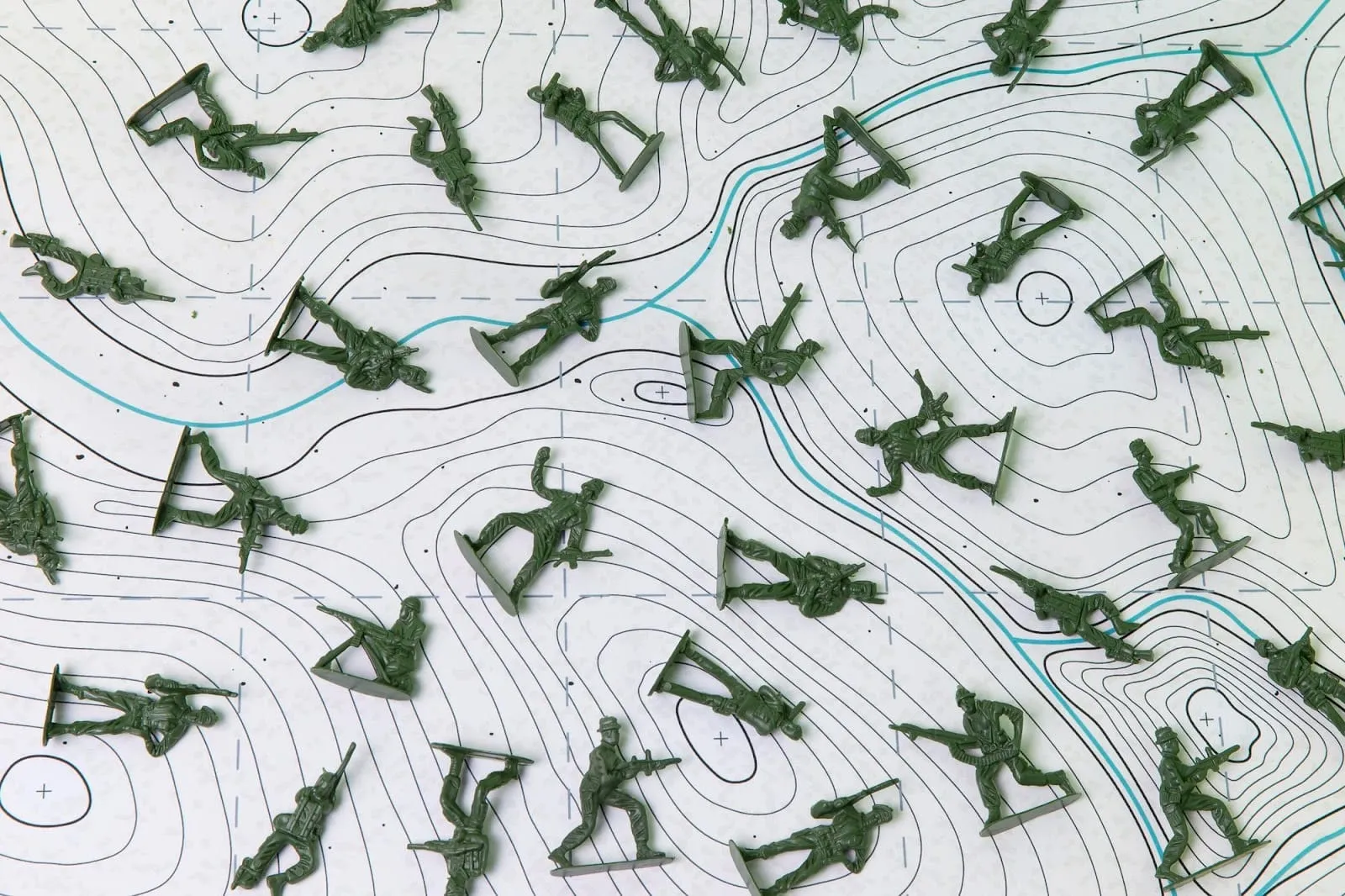
2.1 Mobilization of the economy
With the establishment of capitalism, wars have become not only a special driving force of industrial production but also a sure way to postpone economic crises. The production of means of destruction stimulates the development of all related sectors of the economy - metallurgy, machine-tool building, hi-tech industries, extraction of raw materials, etc. In the period of preparation and during the war itself, practically the entire economy of the countries is subordinated to the interests of the continuation of the war.
Before the First World War, more than 7500 industrial enterprises in Germany were transferred to the production of military products within the framework of the "Hindenburg Program".
In 1916. 45% of the total production of the Russian industry was allocated to the military sector. If we take into account the fact that the orders of the state authorities and public organizations were related to the needs of the war, the restructuring of the economy affected 2/3 of industrial production [9]. In 1916, the cost of equipping all private military enterprises in Russia approached 1 billion rubles, although before the war, the amount did not exceed 100 million rubles [10]. The mobilization of the civil industry affected a wide range of industries.
In the conditions of anarchy of capitalist production, the military mobilization of industry is always free and consists of the capture of the largest share of state orders by the largest monopolies. Since the competitive struggle between the monopolistic unions and between them and the small and medium enterprises has not disappeared, the adaptation of industry to military needs takes place not so much in the interest of the front as in the interest of maximizing profits.
2.2 Government orders and profits
The First World War opened up enormous opportunities for profit from the arms trade. The dominance of monopolies, monopoly prices, and excessive profits was particularly evident during the war, which provided the opportunity for additional exploitation of labor (including women, children, and prisoners of war) and more favorable conditions for the sale of products under military contracts.
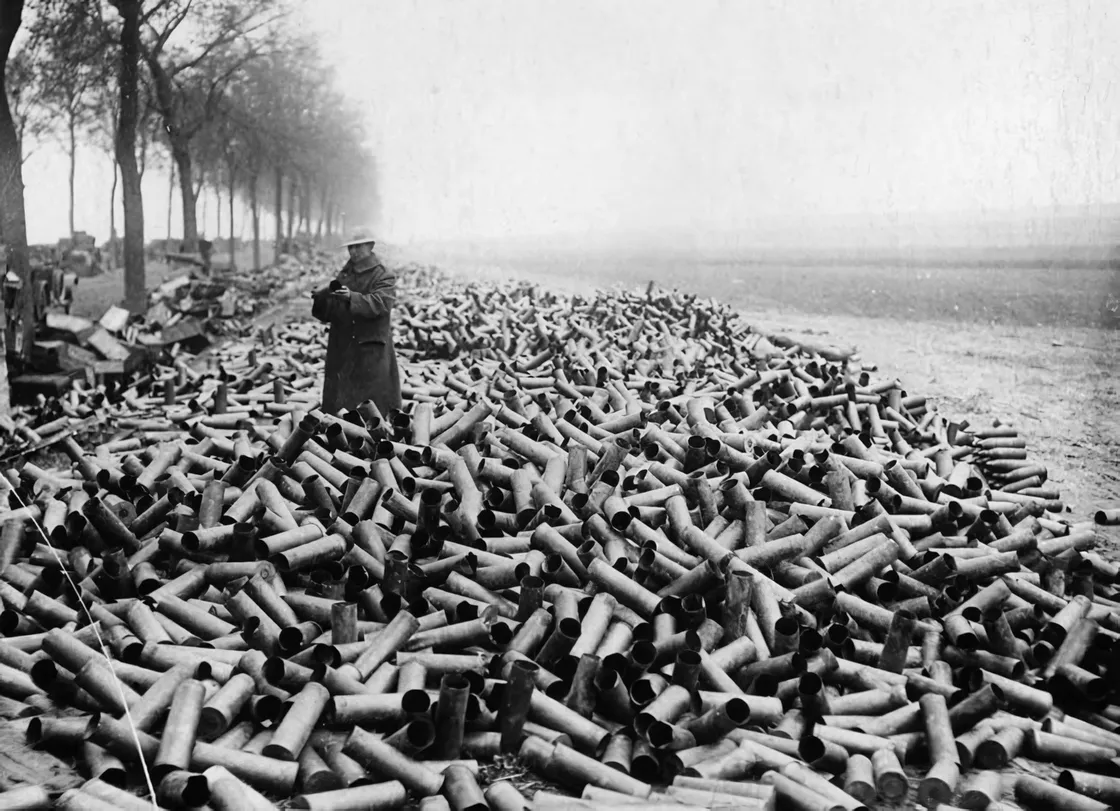
The Krupp group, for example, increased its profit from 33.9 million marks in 1913 to 86.4 million marks in 1914, while workers' real wages were halved by 1915 [9]. The average rate of profit in the main "war industries" increased only from 1914 to 1915: chemicals - from 19.2 to 31.1% and metallurgy - from 12.6 to 23.2% [11].
Huge profits were made by the American company DuPont, whose net income rose from 4.8 million dollars in 1914 to 82.1 million dollars in 1916. In 1914-1916, the net profits of the 9 largest monopolies increased 8.5 times and reached almost 840 million dollars [12]. "Anaconda Copper" from 1914 to 1916 increased its profits 6 times (up to 52 million dollars), and "Bethlehem Steel Corporation" - 5 times [11].
The military profits of English companies increased. "Anglo Persian Oil Company" increased its net profit from 86 to 2011 thousand pounds, and "Baku Russian Petroleum" - from 28,3 to 63 thousand pounds for the period from 1914 to 1915. Vickers earned on deliveries from 1915 to 1919 - 4.494 million pounds sterling. Multiple steel, shipping, chemical, and textile companies, such as the Workington Iron Steel Company and the Royal Mail, increased their net profits many times over [11].
Steamship companies, due to the need to transport equipment and cargo, also increased their profits many times over. Steamship companies in Holland, Sweden, Norway, and Denmark increased their net profit 4-16 times [11].
According to the largest all-Russian representative organization of the bourgeoisie - the Congress of Representatives of Industry and Trade - 791 joint-stock companies in Russia increased their gross profit from 351.7 million roubles in 1913 to 692 million roubles in 1915. For some joint-stock companies, the profit exceeded the total share capital [13]. At the same time, the private enterprises of the most powerful monopolistic unions not only received the most favorable orders but also charged much higher prices than the state enterprises. If a piece of shrapnel costs 9 rubles in a state factory, it costs 15 rubles in a private factory. Thus, during the war, the tsarist government overpaid arms suppliers about 16 billion rubles (40% of all military expenditures) - an amount exceeding the cost of all wars waged by the tsarism in the XVIII-XIX centuries. [9].
This is what Lenin wrote about it:
«The war is now costing Russia fifty million rubles a day. These fifty million go mostly to army contractors. Of these fifty, at least five million daily, and probably ten million or more, constitute the "honest income" of the capitalists, and of the officials who are in one way or another in collusion with them. The very large firms and banks which lend money for war contracts transactions thereby make fantastic profits, and do so by plundering the state, for no other epithet can be applied to this defrauding and plundering of the people "on the occasion of" the hardships of war, "on the occasion of" the deaths of hundreds of thousands and millions of people.» [14]
The world wars, on the one hand, accelerate the concentration of capital to an even greater extent, and, on the other hand, stimulate an even greater intertwining of the tops of the monopolistic trade unions with the state apparatus. The first tendency is manifested in the accelerated creation of new joint-stock companies [9], and the second in the creation of industrial representative bodies of the bourgeoisie.
For example, in 1915 in Russia, the "Central Military-Industrial Committee" was created, which coordinated the actions of the military committees in all branches of industry and related unions of zemstvos and cities ("zemgor"). Its responsibilities included the distribution of military orders, control over production, and forced syndicates.
There was also a governmental "Special Meeting on Defense," which included representatives of the capitalists. The Special Meeting could, in the interests of the biggest monopolies, remove and appoint board members of enterprises, demand that they accept military orders, and provide any production information of interest. The big bourgeoisie used their stay there to distribute particularly profitable contracts and to obtain scarce fuel and means of transportation. By 1916, almost all of the large industries of the Russian Empire, which employed at least 2/3 of the country's workers, were included in the sphere of activity and influence of the "Special Meeting on Defense" [9].
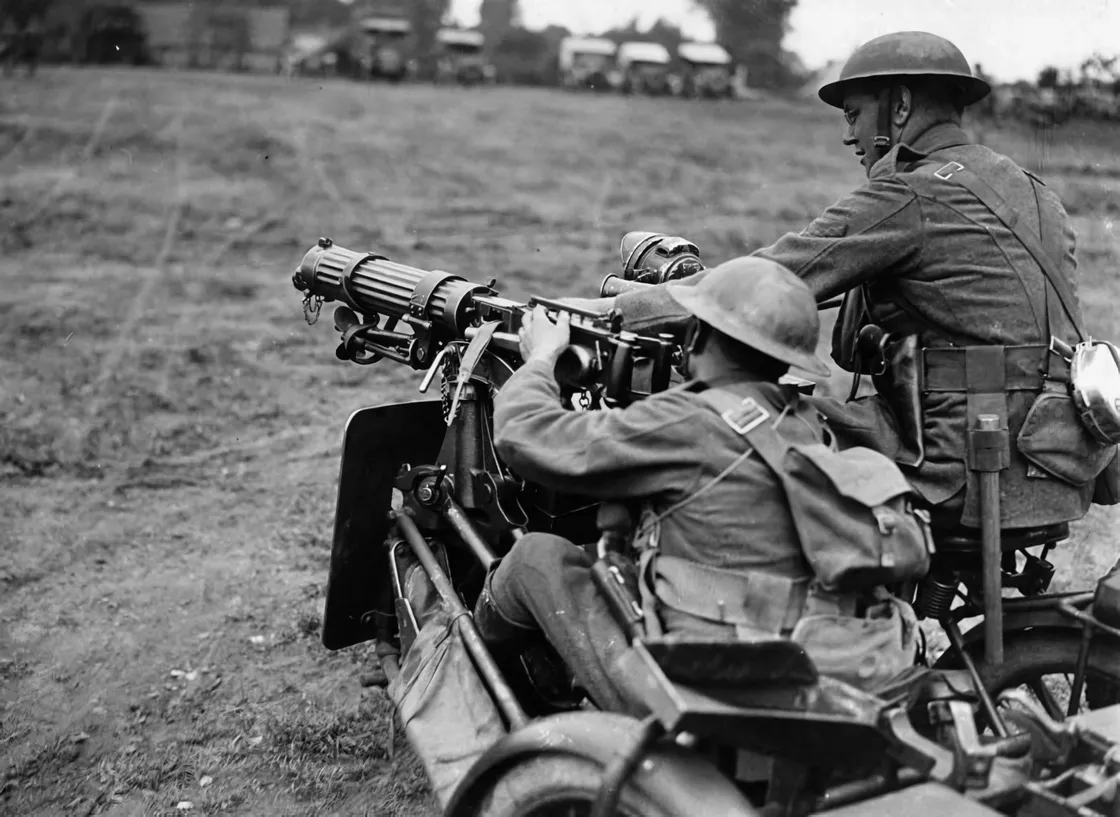
The profits of the banks increased, and they undertook to finance not only large but also small military enterprises. According to the reports of the 8 largest Petrograd joint-stock commercial banks, their turnover increased by 49.4% (94.9 billion rubles) from 1915 to 1916. Participation in joint-stock companies allowed large banks to make huge initial profits. For example, from 1913 to 1916, the profits of the largest Russian banks doubled and amounted to 154 million rubles. In addition, they received additional interest (from 16 to 18% of the total cost of military orders) for their guarantees to industrial enterprises that received state military orders [13].
This was also the case in the Second World War. Since 1933, there has been a forced syndication in Germany, which involved the forced consolidation of non-monopolistic companies. This led to a huge concentration of capital during the war - by 1942, 2% of the super-large corporations owned almost half of all national capital. It was these unions of monopolists that profited from the new world war: Hermann Goering Werke, IG Farbenindustrie, Vereinigte Stahlwerke, and the industrial conglomerates of Krupp, Thyssen, and others.
The taxation of German workers from 1938 to 1943 increased twofold, but the profits of the monopolies also increased: the net profit of "IG Farbenindustrie'' in 1939 was 363 million marks, and in 1943 it was already 822 million marks [19]. At the same time, in comparison with other imperialist countries, such as England and the United States, the amount of taxes on military profits in Germany was negligible - 15% [21]. This ridiculous percentage was established under the pressure of the masses more for demagogic purposes than for anything else.
In Germany, in order to control military production and redistribute military orders, labor, and raw materials, representatives of the largest monopolies were included in the state bodies for industrial management. In fact, it was they who headed such bodies as the Ministry of Armaments and War Production and the Central Planning Board, created in 1942. F. Kessler (from Bergmann Borzig), W. Zanger (from Mannesmann), W. Werner (from the Krupp, Rechling, and Junkers factories), etc. were members of the Armament Board. This kind of "control" and "regulation" was carried out to maximize the profits of the monopolies.
But Nazi Germany was not the only country where the war favored the monopolistic upper classes. By accelerating the export of raw materials from its colonies, England expanded and concentrated the production of armaments and capital in the hands of a few unions of monopolists. The "Imperial Chemical Concern" in 1943 received a net profit of more than 6.4 million pounds sterling, and the "Vickers" concern in the same year achieved a return on equity of 22%, which was several times higher than the pre-war level [22].
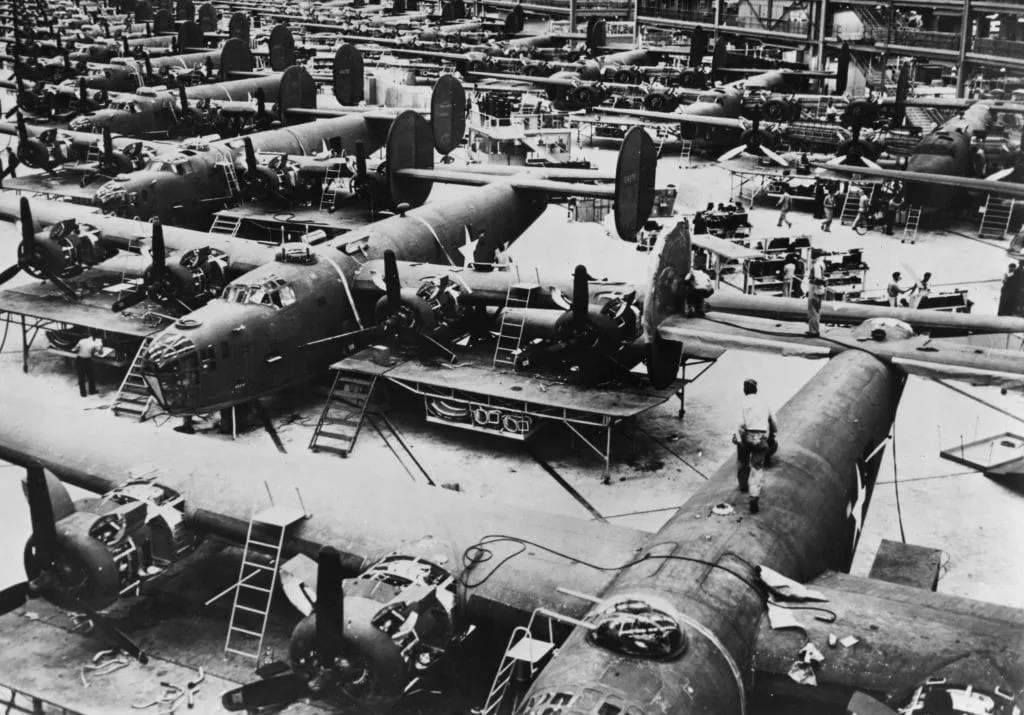
The huge cost of the war was paid for by increasing taxes on workers. For example, from 1938 to 1943, only direct taxes on workers tripled, while the profits of the monopolies increased almost 2.5 times in the same period [22]. At the same time, the British monopolies did not shy away from various machinations and included taxes on excess military profits in the price of military orders - in 1944, out of all profits (2376 million pounds sterling), only 510 were contributed to the budget in the form of taxes, leaving themselves a huge balance in the form of net profits [23]. The lion's share of the expenses covered by taxes fell on the shoulders of the workers: in the USA, 43% of the budget expenses, in England, 48.5% [23].
The majority of state military contracts went to a limited number of companies. For example, the Ministry of Aviation gave 80% of all orders to only 50 enterprises, while components for them were produced by 15 thousand enterprises. This privileged position was achieved by the forced closure of 2,700 companies by 1943 or their subordination to the military giants [24]. In this way, large corporations gained control over hundreds of companies.
The forced concentration of production turned small enterprises into dependent appendages of giant factories, which did not allow them to escape the role of subcontractors even after the war. High war profits are also explained by the unlimited demand for war materials during the war. The huge demand for homogeneous products allowed companies to specialize production more and more, thus reducing production costs while lowering real wages for workers.
The main beneficiary of the profits of the Second World War was the United States. As in Germany, the members of the Economic Defense Administration, which centralized defense efforts, were representatives of big capital, such as D. Nelson, W. Nadsen, and N. Rockefeller. For example, the head of the Lend-Lease Administration was the vice president of General Motors, and the head of the Foreign Economic Administration was the chairman of the Standard Gas and Electric Company.
The increased share of large firms, including through the absorption of small companies, contributed to the fact that by 1942, the 100 largest military contractors received 76% of all military contracts issued after 1940. [20]. The 5 largest of them increased their profits by more than 100 times (before taxes) in 1942 compared to the pre-war years [25]. The same 5 companies received one-third of the $20 billion in contracts [24]. These were mainly General Motors, Curtis Wright, and United Aircraft.
In 1943, the revenues of all U.S. corporations peaked for the entire war at $27.9 billion, up 20% from the previous year [22]. In the six years from 1940 to 1945, monopoly profits totaled $117 billion [23]. To finance war production, a system of war loans was developed that increased the national debt by 4.5 times, which became a source of enrichment for U.S. state and commercial banks [23].
The Second World War also enriched the monopoly capital of fascist Italy (the trusts and companies of Montecatini, Ilva, Fnat, Ernesto Breda and many others [30]) and militarist Japan (Mitsui, Mitsubishiyo, Kawasaki Juko, Sumitomo and others [22]), which ruthlessly exploited China and Manchuria. Many of the parasites who initiated and profited from this bloodshed on a global scale escaped punishment.

Military supplies continued to be a source of wealth after World War II. Wars and local conflicts in the second half of the 20th century brought huge profits to defense corporations. During the Iran-Iraq war, for example, Iraq imported $30 billion worth of weapons from 36 countries by 1987, while Iran imported $10 billion. The Iraqi economy accumulated debts of $5.6 billion to the main supplier, France, by 1984, and $2 billion to Israel by 1986. At the same time, the U.S. sold weapons to both countries, the scandal known as the "Iran-Contra affair". In total, Iraq borrowed $95 billion in foreign loans and grants, mostly from Western countries, leaving the country in a semi-dependent state.
Western capital is not the only one making money from military supplies. From 2007 to 2016, arms exports from the Russian Federation grew from $7.5 billion to $15 billion. At the same time, the sharp increase in exports was a satellite of military tensions and military conflicts in some countries. Another round of arms deliveries was connected with the war in Syria, where small arms, military equipment, and S-300 air defense systems were supplied. By 2012, the volume of arms deliveries to Syria was estimated at $1.5 billion.
The war continues to generate huge amounts of money. This is now expressed in the continuous armament of the imperialist countries. The last decade is a clear proof of this. In preparation for a new world war, there is a fierce struggle for markets between the arms manufacturers. At the moment, the biggest arms exporters are the USA, Russia, France and Germany. At the same time, the first two control more than half of the market. According to the SIPRI report for 2017-2021, the distribution of major arms suppliers and buyers is as follows.
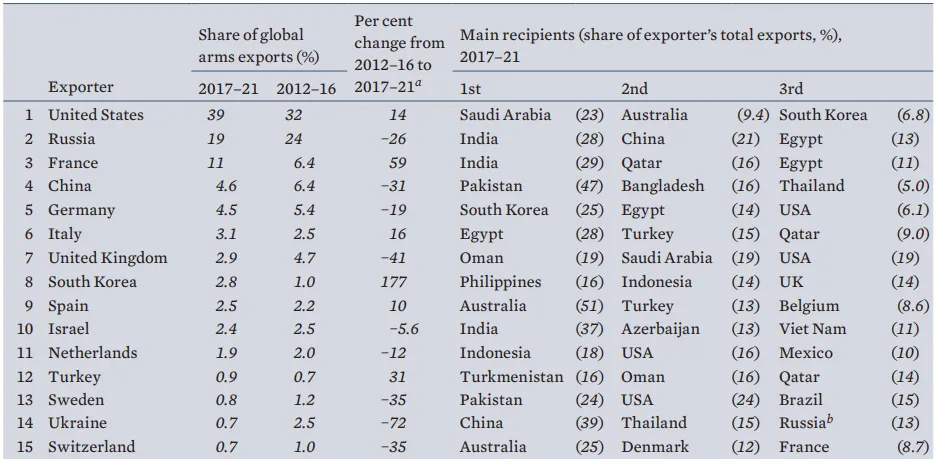
In 2014-2021, the package of export orders for arms and military equipment amounted to $781.25 billion, with only $625 billion worth of military products exported. This indicates the presence of orders "for the future". The USA had the most orders in this period, for 335.8 billion dollars, which corresponds to 53% of the global volume of orders [31]. At the same time, the actual maximum of military deliveries for the period was reached in 2021.
Each foreign policy event contributes to the increase in arms deliveries and brings direct benefits to defense companies. The still simmering conflict in Syria, the growing military hysteria in Europe and the Pacific, and hostilities in Ukraine allow for an increase in arms production. The Middle East region was the main importer before this conflict, accounting for about one-third of the world's supply. China's role as a major arms exporter and importer is growing - from 1989 to 2018, its military expenditure grew 12 times, which is higher than the growth rate of military expenditure in any other country in the world.
Global arms production is highly monopolized. In 2020. 41 companies from the United States, included in the list of the 100 largest manufacturers in the world, provided 54% of all sales [32]. The combined sales of 26 military campaigns from Europe corresponded to $109 billion, the seven largest British companies to $ 37.5 billion, and six French companies to $24.7 billion. The pace of militarization corresponds to a 7.2% increase in global military spending from 2010 to 2019, exceeding $1,900 billion in 2019. In 2022, it will reach a record high of $2240 billion.
Of course, the increase in defense spending has had an impact on the profits of major defense contractors. For example, the US companies Bechtel, Jacobs, and Fluor Corporation will increase their revenues from 2019 to 2020 by 35%, 18%, and 33%, respectively [33]. Lockheed Martin alone, which receives billions of dollars in contracts for the production of F-16s and M1A Abrams, saw its revenues increase by 42% year-on-year to $127 billion in 2022. By comparison, the giant's revenues in 2019 were $56.6 billion [33].
In the major arms-producing countries, monopolies are actively merging and taking over smaller companies. For example, the largest British defense company - BAE Systems - was created by the merger of British Aerospace and Marconi Systems. At the same time, the main sales market of the company is not the British Ministry of Defense, but the Pentagon. In September 2017, United Technologies Corporation acquired Rockwell Collins for 30.6 billion dollars. In 2019, the 26th largest defense company, Harris Corporation, merged with an even larger manufacturer, L3 Technologies. In 2020, the two largest aerospace and missile parts manufacturers, United Technologies Corporation (UTC) and Raytheon Company, merged to form Raytheon Technologies Corporation [33]. Such a strong concentration of capital and production, as in the periods before the two world wars, allows the monopolies to dispose more rationally of capital, raw materials, and labor resources.
2.3 Capture of resources and production capacity
The occupation and annexation of other countries' territories allow the warring parties to seize large amounts of the means of production. Entire industries and resource regions begin to serve the interests of monopolists from other countries. Any change in the position of the fronts can dramatically alter the balance of economic power between the belligerents.
For example, the Anglo-Boer War of 1899-1902 was fought over the possession of the diamond and gold-rich territories of the Boer republics in South Africa. As a result of the war, they became part of the British Empire. Having conspired with the Boer leadership, English finance capital began to exploit the subsoil even during the war. This was to strengthen England's finances and secure its position as the world's creditor. In 1900, the value of gold mined in South Africa reached $9.67 million - the lowest figure during the war. The British government seized the Republic's gold. By 1902, gold production in the Transvaal was six times higher than in 1901. In 1909, the profits of the gold producers in the Transvaal were double the pre-war level of 1898 and amounted to 4.85 million pounds sterling [35].
The Japanese occupation of Manchuria in 1931 gave the zaibatsu (財閥, "financial clique") a major source of raw materials, a market, and a place for capital. With 32 million acres of crops, 15 million head of cattle, huge fisheries, iron ore reserves of 1.26 billion tons, and a major producer of high-quality silk, and timber for construction. All the processing industries and resources were under the control of the Kwantung Army. Furthermore, it boasted a powerful railroad and the largest seaport, Dairen, after Shanghai. Japanese militarism's needs for coal, pig iron, non-ferrous metals, and ferroalloys were almost entirely met by exports from Manchuria and northern China.
The puppet government provided the best conditions for Japanese corporations. In the period 1932-1936, Japanese capital investment amounted to 1.2 billion yen, and in 1941 it exceeded 7.2 billion yen [36]. From 1932 to 1936, the output of the ten leading industries by value increased from 73.5 million yen to 159.5 million yen [37]. Most of the capital investment in the region throughout the 1930s was controlled by the "Mangyo" and "Mantetsu" corporations, which shared spheres of influence in Manchuria.
Moreover, almost at the beginning of the First World War, Germany seized iron and coal-rich areas with developed metallurgy - northern France and Belgium. Having lost its northeastern territories, France lost 64% of iron production and 54% of finished steel products [9]. Russia lost 1/3 of its industrial enterprises on the territory occupied by the German Reich. Germany captured the Dąbrowski Coal Basin in Poland, which produced 7 million tons of coal before the war, severely affecting the fuel supply for industry in tsarist Poland and the northwestern industrial region.
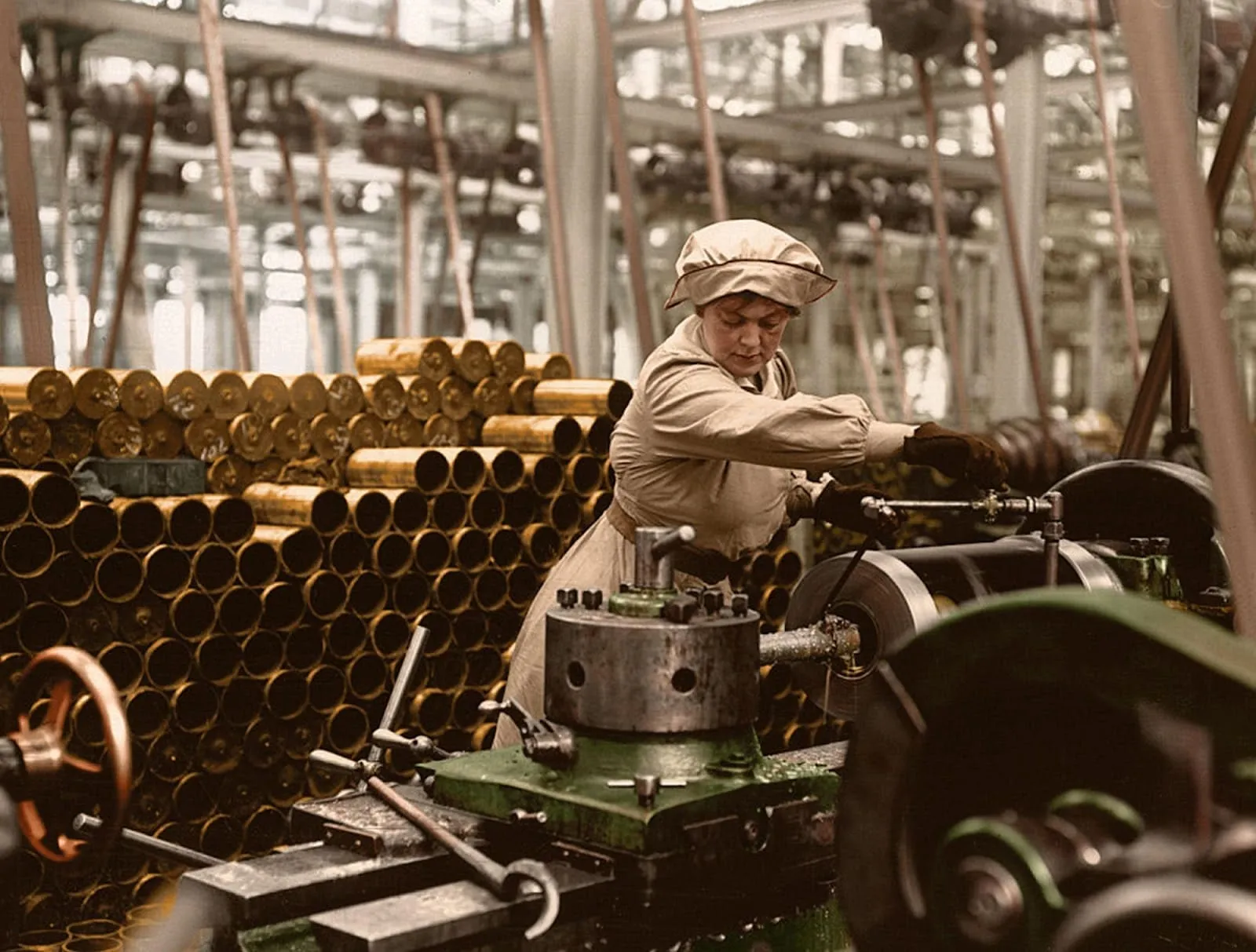
These seizures allowed German industry to maintain a constant level of coal production throughout the war. The German occupation of the Olkusz district deprived Russia of ¾ of all the zinc produced in the country. Of the 1,833 metal industry enterprises in German-occupied territory, 520 remained; of the 549 chemical industry enterprises, 121 were lost; and in the leather industry, 195 out of a total of 550 enterprises were lost [9].
Occupied territory during the war is always a source of brutal exploitation or outright plunder. After the German offensive in 1918, the Baltic states, Belarus and Ukraine were occupied. From the beginning of the occupation until October 26, 1918, 34,745 wagonloads of food and industrial raw materials were taken from Ukraine to Germany and Austria. During the foreign intervention, 3.5 million pounds sterling worth of raw materials were exported from the Soviet Republic to England, France, and the United States [18].
The Second World War did not and could not change the situation in which the bourgeoisie coped with the growing economic crisis at the expense of the misery of millions of people. Thus, the main initiator and aggressor, fascist Germany, took the path of a wide mobilization of its economy and the economy of the occupied countries. The most important industries of these countries were forced to work on the fulfillment of German military orders. For example, Romania and Hungary provided more than 90% of German oil imports, and Bulgaria - 47% of chrome ore [18][19]. The contribution of Czechoslovak industry to the production of tanks for the Wehrmacht is also known.
The army, the police, and the national currency, together with the system of non-cash payments ("clearing") favorable to the Third Reich and subordinated the economy of the occupied countries. Fascist Germany imported food, raw materials, and manufactured goods from the occupied European countries for only 4 billion marks in 1942 and 4.2 billion marks in 1943. Confiscation of the main production enterprises, creation of mixed joint-stock companies, and seizure of securities from the owners were often practiced. Frequently, European companies passed without any obstacles under the control of German joint-stock companies. This happened, for example, with the French engineering company Gutta in Paris and the largest chemical companies [19].
From September 1-st, 1940, to the same date in 1941, 70% of all German public expenditures were devoted to the war. Contributions from the occupied territories increased 2.5 times from 1940 to 1941. [20]. In 1944, the number of foreign workers from dependent and occupied countries in Germany reached 13 million - it was a huge source of cheap labor [19].
In 1998-2002, during the Second Congo War, the policy of seizing and exploiting areas rich in natural resources was particularly evident in the Republic of Congo. The inter-ethnic conflict, which turned into a struggle for the world's reserves of coltan, diamonds, gold, and valuable minerals necessary for the electronics industry, brought great profits to the imperialist countries and Congo's neighbors. For example, between November 1998 and May 1999, 3,000 tons of cassiterite and 1,500 tons of coltan were exported to neighboring Uganda with the help of warlords [38]. Diamond exports from neighboring Rwanda, itself free of diamonds, increased from 166 carats in 1998 to 30,500 carats in 2000, and Uganda's exports of gold taken from the Congo became the government's second source of export revenue [39].
British monopolies America Mineral Fields, Anglo American, Metalor Technologies, and Banro Resource, participated in the resource sharing [38]. Since 2004, transnational companies began to come to the Katanga region, which was separated from Congo: Canada's First Quantum Minerals, Belgium's Forrest Group, and Rand Merchant Bank. According to the UN Security Council Panel, 85 foreign companies were involved in the illegal exploitation of Congo's resources during the war.
2.4 Struggle for spheres of influence and market seizure
One of the first wars of the imperialist era, the Spanish-American War of 1898, was fought over Spain's colonial possessions. It brought the American capital to such resource-rich territories, densely populated markets, and strategic spheres of influence for economic expansion as the Philippines, Puerto Rico, Guam, and Cuba. Cuba's underdeveloped economy offered great opportunities for American planters; control of the island allowed them to gain control of the waters of the Caribbean.
In 1935, Fascist Italy began its aggression against Ethiopia. The result of the annexation was that the East African colony became a raw material appendage of the metropolis and a place of application of the Italian capital. The Italian government alone invested in the country between 1937 and 1941. 5 billion lire, private capital 2.7 billion lire, mainly in sectors that would serve the Italian industry. The Italian colonial company forced the purchase of agricultural products for export to Italy. Entire industries were brought under control by established corporations.
Starting in 1936, foreign companies were forced out of the colony, leaving it to Italian monopolies. By monopolizing the salt trade, the Italian administration siphoned off gold from Ethiopia, and Italian banks took out much of the country's foreign exchange. The seizure of Ethiopia accelerated the concentration of capital in Italy and the growth of profits - between 1931 and 1939, the 21 largest monopolies saw their capital rise from 6 billion lire to 11 billion lire, with profits reaching almost 10% of invested capital. From 1934 to 1937, Fiat's profits increased 2.3 times, Breda's 2.1 times, Montecatini's 1.6 times, etc. [40].
Given the historically established conditions, the United States should receive special mention for making huge profits in war. The USA became the main supplier of industrial goods to the Entente countries during the First World War. The sharp rise in the prices of metal products (three times from 1913 to 1917 [16]) and the increase in their exports (three times) brought huge profits to the US monopolies. U.S. exports in 1914-1920 amounted to almost 40 billion dollars, which is 5.3 times more than in the corresponding pre-war period [9].
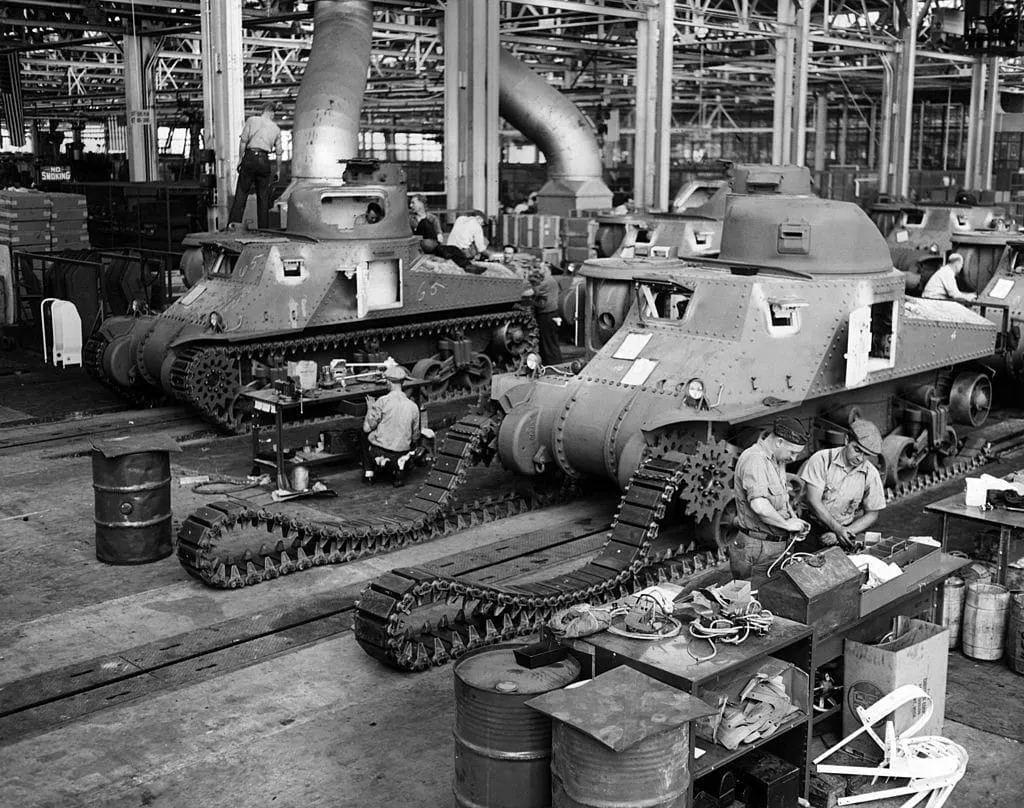
The export of goods was accompanied by the export of capital, turning the U.S. from a debtor into the main creditor of the Entente countries. By 1919, the debt of other countries to the U.S. amounted to a whopping $12.2 billion. Taking into account the fact that American banks usually granted war loans to the enterprises of another country only on the condition that they purchase equipment and goods in the U.S., the American bourgeoisie imposed double bondage on the factories of Europe [15].
In addition, the difficult situation in England and France allowed the U.S. to economically squeeze them out of their colonies. Imports of American goods to India and Japan increased, and exports from these countries to the American states increased. War conditions led to a redistribution of the trade power of certain countries, with the greatest benefits going to the main suppliers of goods to European countries: the United States, Japan, and Canada. At the same time, despite the mutual trade blockade of the warring countries, trade between them was conducted during the war through the Scandinavian countries, which acted as intermediaries [18].
Japanese monopolists took advantage of the reduction of trade between European countries and the Far East region and, without meeting competitors, quadrupled their exports to India and two and a half times to China. Not participating in hostilities, Japan expanded its influence in South America and Africa, and increased exports to the United States fourfold. In general, the country's income during the war years is estimated at an unprecedented amount for the country's economy: 3 billion yen. The paid-in capital of joint-stock companies grew from 234 million to 1413 million yen in 1913-1918, which indicates an extremely rapid concentration of capital [17].
During the war, the dependence of the Russian tsarism on foreign capital increased manifold. It received 8.5 billion roubles in foreign loans, which was about a quarter of the total public debt of the Russian Empire. The money was spent mainly on the purchase of logistic supplies for the army. The banks of England, France, the United States, and Germany enriched themselves with the colossal invasion of foreign capital into the Russian economy [13].
Along with the import of capital into Russia, the import of goods also increased. From 1913 to 1917, American exports to Russia increased 21-fold. The U.S. monopolies were thus able to sell surplus industrial equipment and make additional profits on military supplies at higher prices. Thus, by the fall of 1917, Russian orders in the U.S. amounted to a huge sum of 2.5 billion rubles [12].
The result of the First World War was a new redistribution of the world, which was expressed in the conquest of huge markets and raw material regions by the victorious countries. According to the Treaty of Versailles of June 28, 1919, the defeated Germany was deprived of 1/8 of its territory and all its colonies. France received coal mines in Saar and Alsace-Lorraine with the richest iron mines, which gave it 76% of iron ore, 64% of phosphatic slag and 26% of potassium ore. Poland gained parts of Poznan, Silesia with its coal, and Pomerania, which previously served as Germany's food base.
Colonies in Africa and the Pacific were divided among England, France, Belgium, Portugal, and others. In the hands of Great Britain was almost the entire east coast of Africa, all the space between Egypt and India was subordinated to it in one way or another, and under the control of England were many territories of Gejas, Yemen, Mesopotamia, and Arabia. German concessions in China and some islands in the Pacific Ocean were taken by Japan. Part of the European territory was taken from Turkey, and England received a mandate for Palestine, France for Syria, and Cilicia [11].
In the Second World War, US imperialism proved to be the most active predator for domestic and foreign markets and places of capital application. Lend-Lease played a huge role in the expansion of U.S. foreign trade. If in 1939 the U.S. exported goods worth 3.2 billion dollars, in 1944 it was 14.3 billion, 3/4 of which were lend-lease supplies [26]. Most of the supplies went to England, which in turn benefited from American grants for the production of equipment under Lend-Lease [27].
Raw materials for the growing American and British production were exported resources from dependent and colonial countries: uranium ore and metals from the Belgian Congo, oil from the Middle East and Venezuela, bauxite from Jamaica, and food from India. These countries were forced to provide American military equipment in exchange for valuable resources [26][28].
A special role was played by the construction of new factories at the expense of the state and the provision of entire factories, machinery, and credit to large monopolies. Before the war, there was a surplus of fixed capital in the U.S., so the capitalists did not dare to open new factories for military purposes, fearing that the war would be too short and the invested funds would not be recouped. Moreover, after the war, these enterprises would have to return to producing civilian consumer goods. At that time, all the costs of building new military enterprises were borne by the state. Hundreds of new plants, on which billions of dollars were spent, were transferred to the management of monopolies or leased [24].
However, even those enterprises built by private companies were often paid for by the state. Companies were given "certificates of necessity" to depreciate all fixed capital over 5 years. This allowed them to exclude from taxable profits a fraction of the cost or the entire cost of the plant built. By the end of the war, most construction costs were paid for by tax incentives [29].
Conclusion
So we have looked at war in two parts. What conclusions can be drawn?
War is first and foremost the continuation of the policies of the ruling classes in the form of armed violence. None of the more or less protracted conflicts of modern capitalism have been without material causes based on the economic interests of the ruling class. In some cases, they were colonial wars for the right to oppress another weak country; in others, they were imperialist wars - global or local - for the redistribution of markets, spheres of influence, and resources.
The law of uneven development of individual enterprises, industries, and countries under capitalism, as well as the constant desire of capital to expand spheres of influence, markets, and raw materials, make wars under capitalism inevitable. This is the objective, irresistible driving force of imperialism.
The wars of capitalism are not only the death of millions of people, hunger, humiliation, demoralization of the working class, and social and environmental disasters but also a source of huge profits for the bourgeoisie. The oligarchs of all countries are interested in the longest possible conflict through the production of weapons and the exploitation of other countries with loans.
War is the resolution of the overdue contradictions of imperialism at the cost of millions of lives; it is the convulsion of a long-standing, rotten world system of exploitation. No war under capitalism will ever bring lasting peace or solve the system's problems. All capitalist wars bring is colossal destruction, loss of life, and barbarism.
At the same time, wars weaken the imperialist powers and weaken the whole system of world imperialism. By repeatedly aggravating the class struggle within each country, they bring the moment of proletarian revolution closer.
The only way out and the only way to save humanity from war is to destroy the capitalist system itself. The international working class must end the very possibility of waging war for private profit. This can only be done by abolishing the system of exploitation of wage labor itself and establishing public ownership of the means of production. Only then will the working class move to a peaceful, creative existence and work for the benefit of all people. Socialism is the only liberation from war. Our future publications will return to this subject and show how socialism will help humanity to forget war once and for all.
Sources
1. Rummel R. J. Power Kills: Democracy as a Method of Nonviolence. New Brunswick, New Jersey: Transaction Publishers, 1997. 264 c.
2. Michael W. Doyle. Kant, Liberal Legacies, and Foreign Affairs // Philosophy and Public Affairs. 1983. 12. № 3. С. 205-235.
3. Rummel R. J. Libertarianism and International Violence // Journal of Conflict Resolution. 1983. 27. № 1. С. 27-71.
4. Dean V. Babst. Elective governments — a Force for Peace // The Wisconsin Sociologist. 1964. 3. № 1. С. 9-14.
5. Hobson C. Towards a Critical Theory of Democratic Peace // Review of International Studies. 2011. 37. № 4. С. 1903-1922.
6. Schwartz T., Skinner K. K. The Myth of the Democratic Peace // Orbis. 2001. 46. № 1. С. 159-173.
7. Rummel R. J. «Democratic Peace Q&A Version 2.0«: Freedom, Democide, War. // Freedom, Democide, War. 2005.
8. Lenin V. I. May day and the war. Lenin Collected Works, Progress Publishers, 1971, Moscow, Volume 36, pages 322-328.
9. Shigalin G.I. Military economics during the First World War (1914-1918). Moscow: Voenizdat, 1956. 332 p.
10. Golikov A.G. The First World War and Russian monopolies // Questions of history. 1981. No. 6. P. 103-114.
11. World War in numbers. Moscow, Leningrad :: OGIZ; State military publishing house, 1934. 128 p.
12. Seleznev G.K. Expansion of American imperialism into Russia in 1917 // Questions of history. 1954. No. 3. P. 55-73.
13. Mayevsky I.V. Economics of Russian industry in the conditions of the First World War. Moscow: Gospolitizdat, 1957. 391 p.
14. Lenin V. I. The Impending Catastrophe and How to Combat It. Lenin Collected Works, Progress Publishers, 1977, Moscow, Volume 25, pages 323-369.
15. Korotkov G.I. American militarism in wars. Moscow: Voenizdat, 1973. 304 p.
16. Belyavskaya I. A. State “regulation” of industry by American imperialists (1917-1918) // Questions of history. 1952. No. 2. P. 111-127.
17. Lif Sh. B. War and the economy of Japan. Moscow: Politizdat, 1940. 249 p.
18. Shifman M. S. War and economics: (Armed influence on the economy of the warring countries in the first and second world wars). Moscow: Voenizdat, 1964. 207 p.
19. Industry of Germany during the war of 1939-1945: /trans. with him. G. V. Smirnova and V. M. Shastitko. Moscow: Foreign Literature Publishing House, 1956. 295 p.
20. History of the Second World War. 1939-1945: In 12 volumes. / Ch. ed. commission A. A. Grechko (pred.) and others. T. 4. Moscow: Voenizdat, 1975. 536 p.
21. Goldshtein I. I., Levina R. S. German imperialism: under the general editorship and with a foreword by E. Varga. Moscow: Gospolitizdat, 1947. 488 p.
22. History of the Second World War. 1939-1945: In 12 volumes. / Ch. ed. commission A. A. Grechko (prev.) and others. T. 6. Moscow: Voenizdat, 1975. 536 p.
23. Alekseev A. M. Military finances of capitalist states. 2nd ed. Moscow: Gospolitizdat, 1952. 508 p.
24. Varga E. S. Changes in the economics of capitalism as a result of the Second World War. Moscow: OGIZ. State Publishing House of Political Literature, 1946. 320 p.
25. History of the Second World War. 1939-1945: In 12 volumes. / Ch. ed. commission A. A. Grechko (prev.) and others. T. 5. Moscow: Voenizdat, 1975. 536 p.
26. Shpirt A. Yu. Economic expansion of the United States in the allied capitalist countries during the Second World War // Questions of history. 1954. No. 10. P. 59-71.
27. Harrison M. The Economics of World War II: Six great powers in international comparison. Cambridge University Press, 1998. 328 c.
28. Shpirt A. Yu. On the use of resources of colonial and dependent countries in the Second World War // Questions of history. 1956. No. 5. P. 46-57.
29. Lumer H. Military economy and crisis: Translation from English. Moscow: Foreign Literature, 1955. 288 p.
30. Vishnev S. M. Military economy of fascist Italy. Moscow: Gospolitizdat, 1946. 139 p.
31. Yearbook. Statistics and analysis of the global arms trade: Center for Analysis of the Global Arms Trade (TSAMTO). Moscow, 2022. 19 p.
32. Egutkina A. S., Shilkov V. I. Problems of competition in the global market of weapons and military equipment in the conditions of economic sanctions // Spring Days of Science. 2022. pp. 506-510.
33. Boykova A. V. Analysis of the leading defense companies in the world // Journal of Applied Research. 2021. 3. No. 3. P. 47-53.
34. Lenin V. I. On the Slogan for a United States of Europe Lenin Collected Works, Progress Publishers, Moscow, Volume 21, pages 339-343.
35. Nikitina I. A. Capture of the Boer republics by England (1899-1902). Moscow: Nauka, 1970. 213 p.
36. Cohen J.B. Japan's military economy. Moscow: Foreign Literature Publishing House, 1951, 386 p.
37. Aleksandrova M.V. Japanese capital and its significance in the development of industry in northeastern China (late 19th century - 1945) // China in world and regional politics. History and modernity. – 2014. – T. 19. – No. 19. – pp. 336-358.
38. Turner T. The Congo wars: Conflict, myth, and reality. London, England: Zed Books; Bloomsbury Publishing, 2007. 243 c.
39. The African stakes of the Congo war. 1-e изд. New York: Palgrave Macmillan, 2004. 249 c.
40. Trofimov V.A. Italian colonialism and neocolonialism (history and modernity) / Rep. ed. G.L. Bondarevsky. M.: Nauka, 1979. 290 p.