

For a long time, Adam Smith’s phrase about the “invisible hand of the market” was very popular among the political elite. This metaphor was frequently used in speeches by politicians who advocated for free trade: Ronald Reagan, Margaret Thatcher, Bill Clinton, Barack Obama, and many others. The United States, the European Union, China, and the rest of the world adhered to policies of free trade and investment. The “invisible hand” became the rallying cry for market reforms in the countries of the former socialist bloc, and free trade was regarded as sacred and the foundation of the global economy.
However, starting in the mid-2010s, the world began to change. In 2016, Trump launched a trade war with China, which was continued by his successor, President Biden. Later, Trump started a full-blown tariff war with the rest of the world. China, in turn, shifted to a policy of “economic nationalism”. Protectionist measures are being implemented in the European Union. The “invisible hand” was quickly forgotten in the post-Soviet space as well: Russia began a policy of import substitution in 2014.
What has happened to the global economy? Has the world truly entered an era of “deglobalization”, as so many popular economists claim? Is this a sign of things to come for World War III?
I. The Global Market Is Closing
The world we knew in recent decades is rapidly changing. Not long ago, the slogan “Why produce our own when we can buy it cheaply abroad?” was popular, but now the import of foreign goods is not so simple.
Tariffs, duties, hidden barriers, and overt sanctions have become common political tools. “The national economy is under threat” – this phrase now justifies any protectionist measures. U.S. President Donald Trump, who unleashed a trade war between the United States and the rest of the world, is an example of a politician who embodies the spirit of this “change”.
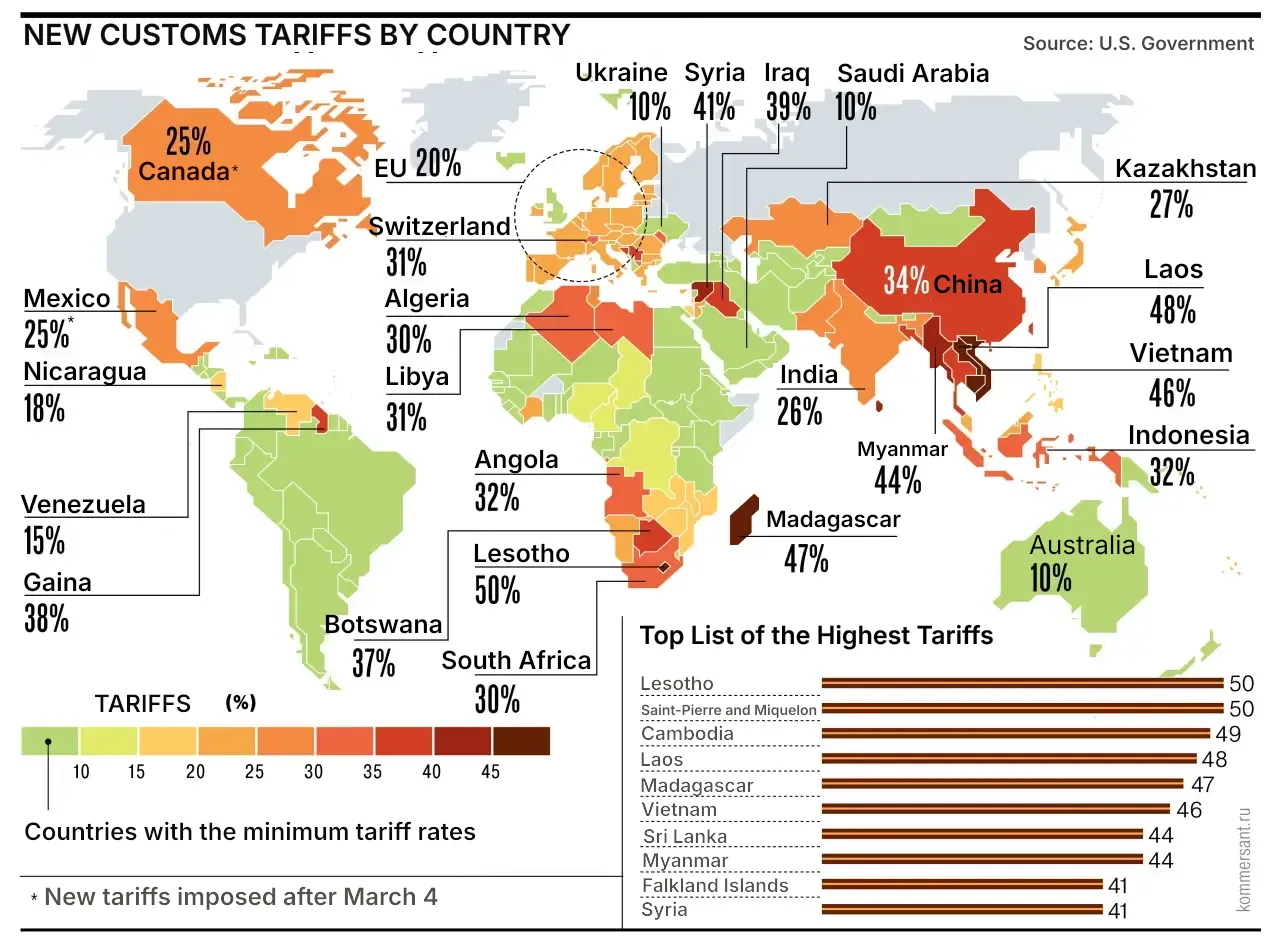
How Trump started the trade war and how it unfolded:
- In the spring of 2025, the Trump administration imposed 10% tariffs on all imports into the United States.
- Some countries were given higher rates: 20% for the European Union, 34% for China, and so on. The new tariffs caused panic in global markets.
- China faced the highest tariffs – in April 2025, Trump announced an increase in tariffs on all Chinese imports to 125%.
- China responded by raising tariffs on all U.S. goods to 125% and restricting exports of rare earth metals. At the same time, China filed a complaint with the World Trade Organization (WTO) against the United States over the said tariffs.
- This year, the United States launched a new round of the trade war, once again drawing the entire world into it: in February 2026, it imposed a blanket 10% tariff on all imports, promising to raise it to 15%, in response to tariffs from the European Union, Mexico, and Canada.
Trump’s actions were so harmful to the U.S. economy that on February 20, 2026, the U.S. Supreme Court overturned most of the tariffs that had been set, demanding the government to refund $159 billion to businesses from the federal budget. This ruling did not change the U.S. president’s policy. The next day, he raised the tariffs again, using a different legal mechanism, and declared the Supreme Court’s decision “extremely anti-American”. The course for continuing the trade war remained unchanged.
It is rather interesting that China is now the one accusing the “democratic” United States of restricting free trade and filing complaints with the WTO, established in the 1990s as an expansion tool for the American capital.
The balance of power in the global economy has shifted. American and European capital once exported massive manufacturing capacity to China, taking advantage of the local cheap labor and favorable regulations. Western countries, through their own actions, have nurtured their strongest rival. Now Chinese capital is actively taking over the entire world and squeezing out capital from Western countries, forcing them to actively defend their spheres of influence, including through tariffs and duties. We can see that free trade benefits only the strongest capitalist power, not the world as a whole.
But the U.S. and China are by no means the only countries waging trade wars.
- The EU and Russia have taken a number of protectionist measures against each other, as well as third-party countries. The European Union has raised tariffs on agricultural products from Russia by 50%;
- In July 2025, the European Union doubled tariffs on Russian fertilizers. The European Commission plans to increase the tariffs drastically: from the current €40-45 per metric ton to €315-430 by 2028;
- The EU tariffs also affected China, as the European Commission raised tariffs on electric vehicles imported from the country to 37.6%. Beijing responded by raising tariffs on European alcohol.
Tariff wars are also being waged among CIS countries. For example, in 2026, Kazakhstan imposed additional customs duties on the Russian and Belarusian automotive industries. This was in response to new “recycling fee” regulations in Russia, which caused prices for all imported cars to spike in 2025.
The trade war, like a whirlpool, is dragging more and more countries into its vortex. And it doesn’t matter at all whether countries (or blocs of countries) are rivals or “friends”.
- The European Union is imposing new tariffs on Russian products, aiming to weaken Russia’s economy for several years now, while at the same time imposing additional restrictions on the United States – its long-standing political and military ally.
- The United States has taken additional protectionist measures against both Beijing – which the U.S. identifies as its main threat – and against its ally Israel.
- At the same time, the U.S. refrained from applying new tariffs on Russia and Belarus, citing the ongoing peace talks regarding the conflict in Ukraine as the reason. Later, Trump threatened to impose 100% tariffs on buyers of Russian energy resources if Russia did not cooperate during the talks.
New trade barriers are becoming the most common means of political and economic pressure on other countries. For example, in December 2025, French President Emmanuel Macron threatened China with tariffs “in the coming months” if it did not take any measures to correct the trade imbalance between the EU and China. He called this situation “a question of life or death for European industry ”.
Statements like these are now everyday rhetoric. Top officials, heads of state, and oligarchs from various countries are all arguing that protective measures are “necessary”. “Protecting the national market” has become a priority for most countries. Even politicians who previously supported free trade are now advocating protectionism.
For example, British Prime Minister Keir Starmer, known as a moderate centrist who has previously stood for very limited government intervention in the economy, promised to use protectionist measures to support British businesses, all the while condemning Donald Trump for escalating the trade war.
The trade war became systemic in nature. It affects nearly every country in the world and spans all key industries – from agriculture and fertilizer production to high-tech sectors such as semiconductors and electric vehicles. This is precisely what sets the current situation apart from other crises of the 21st century (2008 or 2014), when many countries implemented only local measures to support their national industries.
How Do Trade Wars Affect People's Lives?
Contrary to officials' claims, protective tariffs have caused significant harm to the global economy as a whole. Moreover, the countries that imposed more protective measures than their neighbors were the ones that suffered the most.
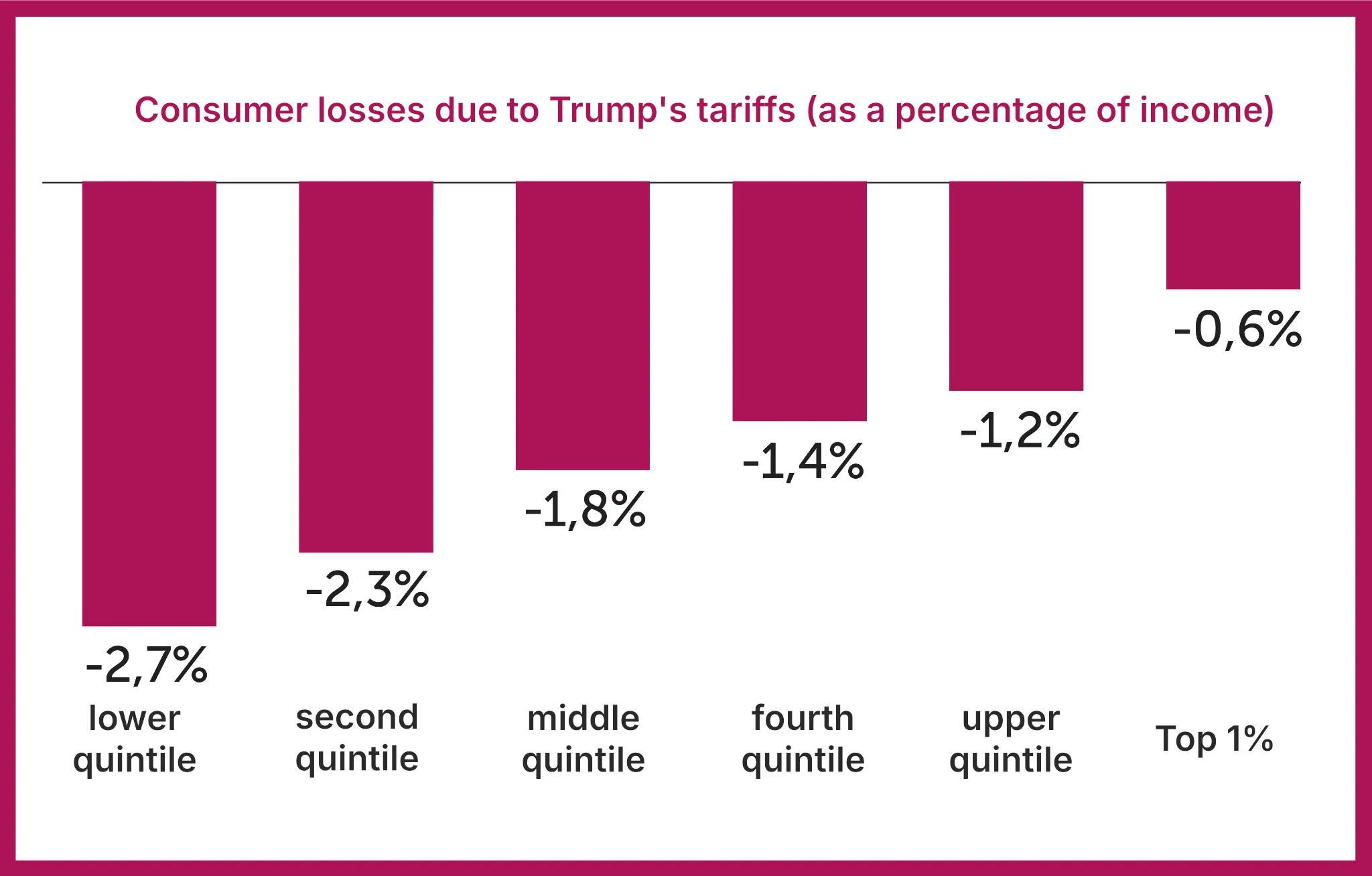
The consequences of the trade wars have weighed heavily on ordinary citizens. Rising prices for imports into the U.S., particularly for automobiles, electronics, and metals, have already impacted the wallets of American families:
- The 10% tariffs on goods from China and the 25% tariffs on products from Mexico and Canada alone cost Americans $1,200 a year, or 1.5% of the average household’s income;
- The poorest families were hit hardest by the price increases: they amounted to 2.7% of their income;
- At the same time, the U.S. plans to further raise tariffs on Chinese goods to 125%, which will lead to even higher prices and inflation – and thus an increase in expenses for citizens.
Tariff barriers also significantly impact the overall state of the economy.
- Due to disruptions in supply chains, European countries experienced a 0.3–0.7 percentage point decline in GDP;
- The United States has already faced rising consumer prices, inflation, and a $3 trillion increase in the budget deficit;
- In the medium term, maintaining the tariffs will lead to a 0.2% decline in U.S. GDP.
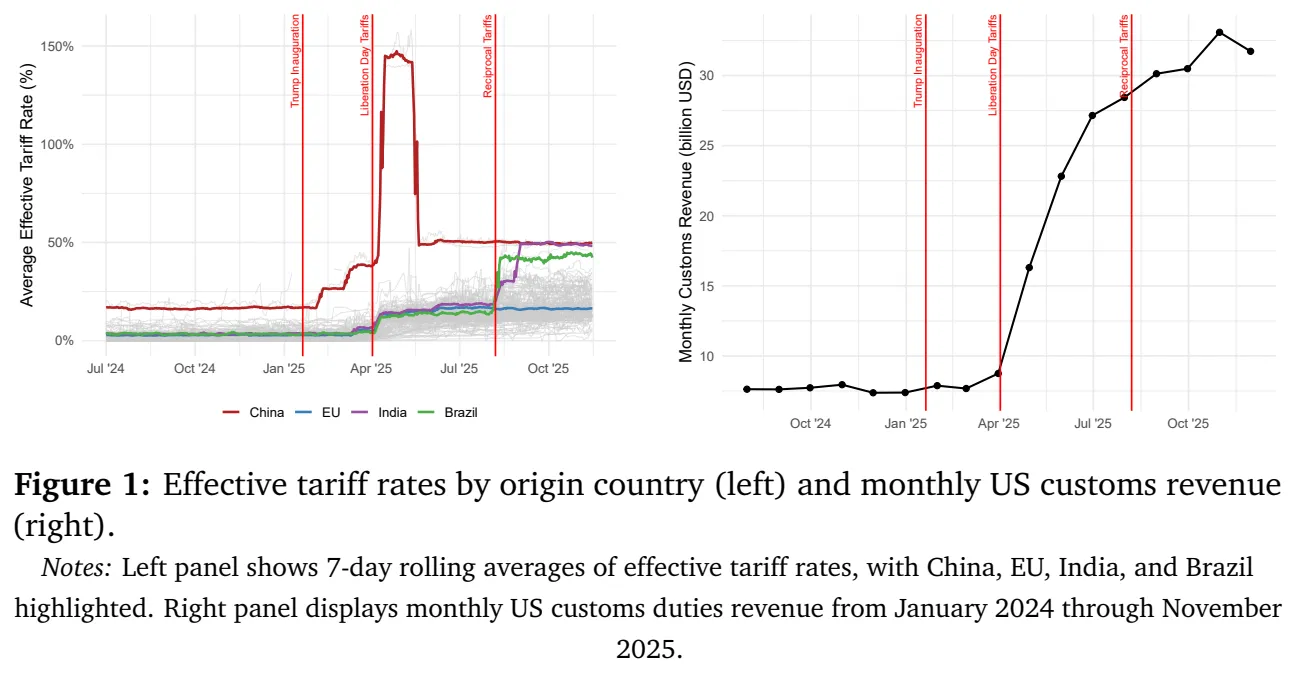
Protectionism has not softened the global economic crisis; rather, it has only accelerated it. The temporary influx of revenue from new tariffs is not enough to compensate for rising prices and the increased cost of production resulting from reduced imports. The overall rise in the cost of living, coupled with the decline in social welfare, is escalating tensions within the struggling states themselves. None of the governments is taking responsibility for the decline in quality of life. They are all trying to channel the growing discontent in a direction that serves their own interests – toward external enemies.
Why Do Trade Wars Happen?
Tariff and trade wars have only one goal: control over strategic resources and sales markets. Tariffs have become a convenient tool for dealing with competitors. By imposing tariffs, the U.S. is actively pushing Chinese companies out of energy markets in South America and the Middle East, and Russian companies out of markets across Europe and India.
The tariff war turned out to be extremely profitable for the largest multinational corporations, despite some occasional losses. Rising prices have led to higher profits. The funds collected through government tariffs are converted into profits for private companies. Through taxes paid by citizens, governments provide support to “their own” corporations.
But corporations get their biggest payoff from seizing and consolidating spheres of influence in which they seek to establish a monopoly.
II. Why Is Protectionism Returning?
The rollback of free trade policies has two main causes:
- Sharply intensified rivalry among imperialist blocs, primarily between the United States and China, driven by the growing economic power of Chinese capital.
- Broader historical conditions: the crisis of capitalism and the falling rate of profit intensify competition among capitalists for spheres of influence.
2.1 The Growing Rivalry Between the United States and China
One of the key reasons for the return of protectionism is the intensifying economic rivalry between the United States and China.
Protectionism has returned because free trade is no longer in the interest of the world's largest economy, the United States. In the past, free trade benefited the U.S. as the dominant capitalist power, but today the United States faces a competitor in the form of Chinese capital. China benefits from the free movement of goods and capital more rapidly and to a greater extent than the United States.
Having fully exploited the benefits of free trade policies to develop domestic production, China began actively expanding its foreign influence in Africa, North and South America, and Europe, pushing U.S. and European Union companies out of their own markets.
China also seeks to establish a broad network of countries dependent on it. These countries would be subordinated to the PRC and serve as markets for Chinese goods and sources of resources to satisfy the growing demands of Chinese capitalism.
To achieve this, China attempts to trap its partners in debt, thereby securing a monopoly position in local markets. Political and economic organizations and initiatives such as BRICS, the Shanghai Cooperation Organization (SCO), and the Belt and Road Initiative (BRI) serve as instruments of China's foreign expansion.
Faced with the prospect of losing its global leadership, the U.S.-led "democratic bloc" has taken countermeasures. It seeks to preserve its existing spheres of influence and seize those of China, combining economic measures with military adventurism.
- In 2026, a series of U.S. military operations dealt significant blows to China's sphere of influence in Latin America (Venezuela) and the Middle East (Iran).
- Economic pressure increased both on China itself, through the escalation of the trade war in 2025, and on countries within its spheres of influence: the tightening of the economic blockade against Cuba, the conflict over the Panama Canal, etc.
Chinese capital has responded with retaliatory tariffs in the trade war, a ban on exports to the United States of minerals essential for the production of microelectronics and semiconductors, and threats to escalate the conflict over Taiwan.
Following China and the United States, all other countries have become involved in the conflict to one degree or another, directly or indirectly aligning themselves with one of the opposing camps.
The current state of the global economy did not emerge by chance, nor is it the result of mistakes made by individual politicians. It is the outcome of a series of deep structural processes unfolding both within individual countries and across the world market as a whole.
2.2 How Did the Global Economy Reach Its Current State?
Protectionist measures are neither new nor unusual under modern capitalism. For example, in 1973, during the Yom Kippur War (the Arab-Israeli War), the international cartel of oil exporters, the Organization of Arab Petroleum Exporting Countries (OAPEC), announced a boycott of energy supplies to countries allied with Israel. The embargo triggered the first major global economic crisis since World War II.
The crisis dealt a serious blow to free trade. Following the rise in oil prices, the prices of goods increased sharply, doubling or tripling. This weakened the competitiveness of European and American products on the world market. As a result, several countries introduced restrictive measures to protect domestic producers.
However, the crisis of 1973–1979 did not bring an end to free trade. On the contrary, in 1981, U.S. President Ronald Reagan adopted a new economic policy known as "Reaganomics". Further liberalization of the international trading system became one of its most important components.
The American president secured a free trade agreement between the United States and Canada. It was also under Reagan that negotiations began between the United States, Canada, and Mexico, which later led to the creation of the North American Free Trade Agreement (NAFTA). This free trade agreement further strengthened the position of the United States on the North American continent.
The new president's policies, described as "neoliberal", immediately gained support from leading economists of the time. Representatives of the monetarist school of economics came to prominence, proclaiming a "crushing" defeat of protectionism.
However, Reagan's rhetoric about "free trade" did not prevent him from using protectionist measures in specific industries. For example, he introduced temporary tariffs on imported steel and automotive electronics whenever American manufacturers faced a threat.
Free trade reached its peak following the collapse of the Soviet Union and the subsequent integration of former socialist countries into the capitalist world economy. The systematic imposition of tariff-free trade zones on Eastern European countries and former Soviet republics became a prerequisite for obtaining loans, which were urgently required by the newly established market economies.
Beyond political concessions, this meant liberalizing domestic markets and granting multinational corporations access to them, with the latter actively participating in buying up the assets of former socialist countries. The populations of these countries rapidly fell into poverty. As a result, large numbers of skilled workers began leaving, providing a new source of cheap labor.
Access to new markets for goods and capital investment, new sources of raw materials, and cheap labor in Eastern Europe and Asia allowed the United States and Western Europe to overcome the crisis of the 1980s. It also contributed to their economic expansion and technological breakthroughs in the 1990s. It was during the 1990s that another key institution of global trade, the World Trade Organization (WTO), was established.
However, by the late 1990s, the economic momentum generated by incorporating new territories into the capitalist world had already been exhausted. In 2008, another global economic crisis erupted. Following this crisis, the world economy experienced a sustained decline in the rate of profit.
Producing new high-tech goods requires ever-greater capital investment, while profits grow more slowly than production costs. As a result, the rate of profit (the ratio of profit to invested capital) continues to fall.
The situation is further aggravated by growing difficulties in capital accumulation. The population lacks sufficient purchasing power to buy the entire mass of goods produced. The world remains in a chronic crisis of overproduction.
This has two consequences. On the one hand, governments and corporations increasingly resort to protectionism as a tool for defending domestic markets and maintaining the profitability of national producers. On the other hand, competition intensifies among corporations and the national states under their control over markets of raw materials, labor, goods, and opportunities for capital investment.
China's economic rise has turned the PRC into one of the main competitors of Western capital in global markets. The inflow of investment into the Chinese economy allowed China to build a powerful industrial base, laying the foundation for the Chinese ruling class's influence on the world stage. Now, the Chinese ruling class itself is seeking opportunities to invest its capital abroad.
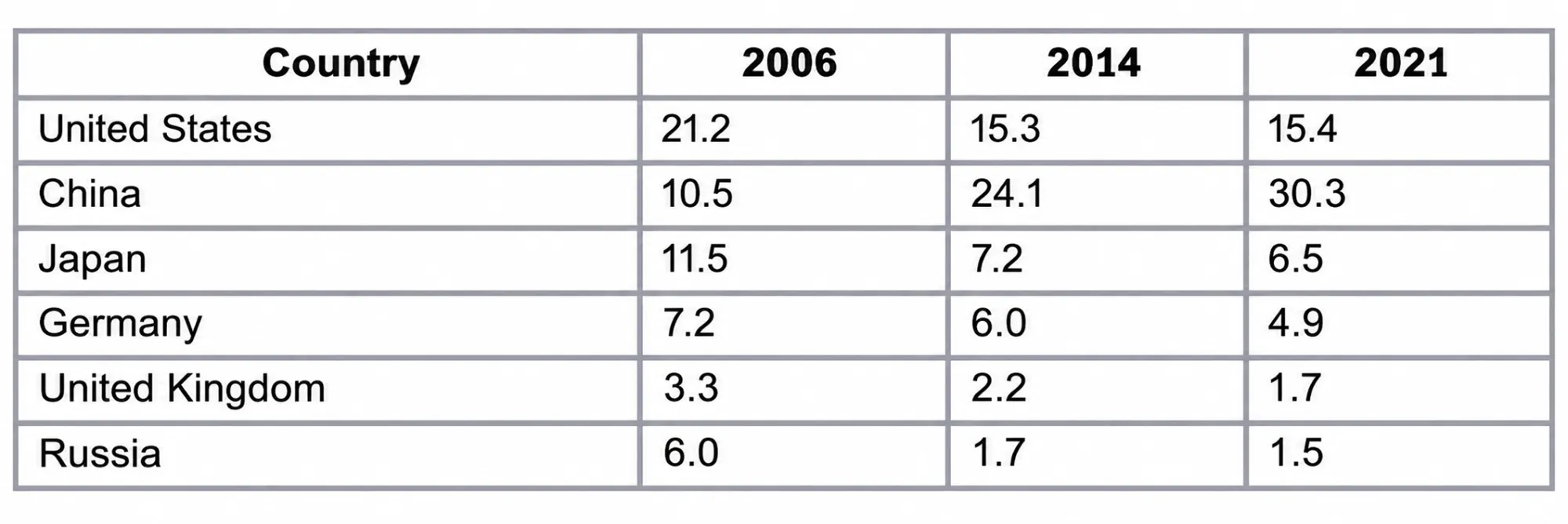
The growth of Chinese exports and foreign direct investment, the export of capital in the form of industrial production facilities and transportation infrastructure (such as the Belt and Road Initiative) poses a threat to the dominance of Western capital. This is precisely what drives the U.S., the EU, and other countries to adopt protectionist measures.
The most significant factor behind the new wave of protectionism has been the escalation of the trade and technology war between the U.S. and China. The USA has imposed tariffs, restrictions on technology exports, and limits on investment in China, treating the country as a systemic competitor.
Russia is also showing a tendency toward protectionism, using it as a tool to subordinate the post-Soviet region. Russia exerts pressure on neighboring countries through economic alliances such as the Eurasian Economic Union (EAEU), energy supplies, sanctions, and political influence.
Following another crisis in 2020, triggered by the COVID-19 pandemic, protectionist tendencies intensified sharply around the world. In 2020-2025, the U.S., the EU, and their partners actively pursued policies to bring production back home to reduce their dependence on China:
- Europe has been redirecting supplies of critical materials, including components for electric vehicle batteries, away from China and toward Australia and Canada.
- Intel and TSMC have relocated part of their chip production to the United States, Mexico, and Taiwan.
- Toyota and Honda have localized vehicle assembly in the United States and India, taking advantage of subsidies under the CHIPS Act.
- Following his victory in the 2024 presidential election, Donald Trump has consistently pursued an aggressive tariff policy under the slogan "America First".
- India raised tariffs on steel imports to 12%, citing the goals of creating 10 million jobs and increasing economic self-sufficiency.
- In 2026, Chinese President Xi Jinping announced a new economic stimulus strategy amid slowing GDP growth to 4.5% and a crisis in the construction industry.
All these developments are parts of a single process unfolding across the global economy.
The return of protectionism is an inevitable outcome of the underlying economic processes, because:
- The balance of power in the global economy has shifted, and corporations from different countries are fighting to preserve or expand their influence.
- The persistent crisis of overproduction intensifies competition for more favorable conditions for capital investment.
- The falling rate of profit, caused by increasingly technologically advanced production, narrows the scope for competition among capitalists.
The historical experience of the 19th and 20th centuries provides similar examples of how free trade policies gradually shifted toward protectionism as rivalry between the "great powers" intensified. Trade wars between Russia and Germany, Austria-Hungary and Serbia, and Great Britain and Turkey were among the factors that contributed to the outbreak of World War I. Similar processes also occurred before World War II.
2.3 How Do Politicians and Mainstream Economists Explain the Return of Protectionism?
The history of the modern imperialist system can be divided into three main stages:
- Before the 1990s, the main confrontation was between the capitalist and socialist systems. Capitalism formed a more or less unified camp led by the United States.
- From the collapse of the socialist bloc until the mid-2010s, contradictions within the capitalist system had not yet become severe enough to call the established spheres of influence into question. U.S. dominance remained unchallenged.
- During the 2010s, a new bloc emerged under China's leadership. A confrontation between the two poles of the modern capitalist system became inevitable.
These processes seem logical and relatively easy to understand. However, the picture changes completely when politicians and mainstream academics attempt to explain them.
A common feature of popular ideological arguments is the tendency to portray any existing state of affairs as eternal, unchanging, and the fairest.
For decades, pro-capitalist economists wrote books and articles presenting free trade as the best possible system. According to their arguments, removing trade barriers would allow the flows of goods and capital to bring all countries together into a harmonious network. They described protectionism as a relic of mercantilism, claiming such measures obstructed progress and slowed technology exchange. Economists praised "globalization": the development of multinational corporations promised to lower prices, raise living standards, and transfer technology to places where it could generate the greatest returns.
The economist Francis Fukuyama achieved enormous success with his idea of the "end of history", which he advanced in the 1990s. According to this idea, ideological disputes over forms of government and economic systems had supposedly come to an end. Liberal democracy and the market economy had established their permanent dominance.
But the global economy changed. Instead of a single imperialist hegemon, two opposing camps emerged. The prevailing ideological climate changed accordingly. Talk of "deglobalization" and "protecting national interests" became fashionable. These changes can be seen both in the rhetoric of individual politicians and in broader ideological shifts.
At a new technology forum in Warsaw, Polish Prime Minister Donald Tusk declared the end of the era of "naive globalization" and the beginning of an era of "economic nationalism". This means adopting policies that prioritize support for Polish companies in competition within the domestic market. It is worth pointing out that Tusk himself had long been one of the leading advocates of European integration and the free market economy.
In 2025 and 2026, virtually every major and well-known political leader including Vladimir Putin, Donald Trump, Xi Jinping, Emmanuel Macron, and Friedrich Merz declared themselves defenders of their countries' national interests. Yet these same politicians had spent decades emphasizing the importance of "universal human values" and defending the protection of private property rights and free trade. Their previous statements have been forgotten. Objective economic processes now require a different ideological justification.
The economic and political changes taking place around the world point to one conclusion: free trade in the 21st century has ceased to serve the interests of capitalist actors. As a result, they have adopted a different strategy: the direct seizure of spheres of influence.
III. Preparations for War
As the familiar saying goes, “war is the continuation of politics by other means”. As economic contradictions intensify, these “other means” become increasingly attractive to the ruling class.
Both the “globalization” of the economy and protectionist measures are merely instruments of capitalist policy, deployed according to the prevailing balance of forces. This is not simply a matter of the “ill will” of individual politicians or states, but the only way forward for the principal players in the imperialist system.
The deterioration of relations between states is a consequence of intensifying competition among monopolies and transnational corporations that control the world economy. At the root of this struggle lies competition among different national capitals for limited markets. The laws of capitalism demand the expansion of capital, but such expansion is possible only by taking over part of a rival’s sphere of influence or by creating a new market – something that does not happen very often.
Competition is waged in virtually every industry: mechanical engineering, mineral extraction and processing, metallurgy, electronics – every commodity is a “projectile” in this war between capitals. The rivalry is most striking in the relatively young fields of information technology and artificial intelligence. The most powerful corporations seek to bring the entire industry under their control.
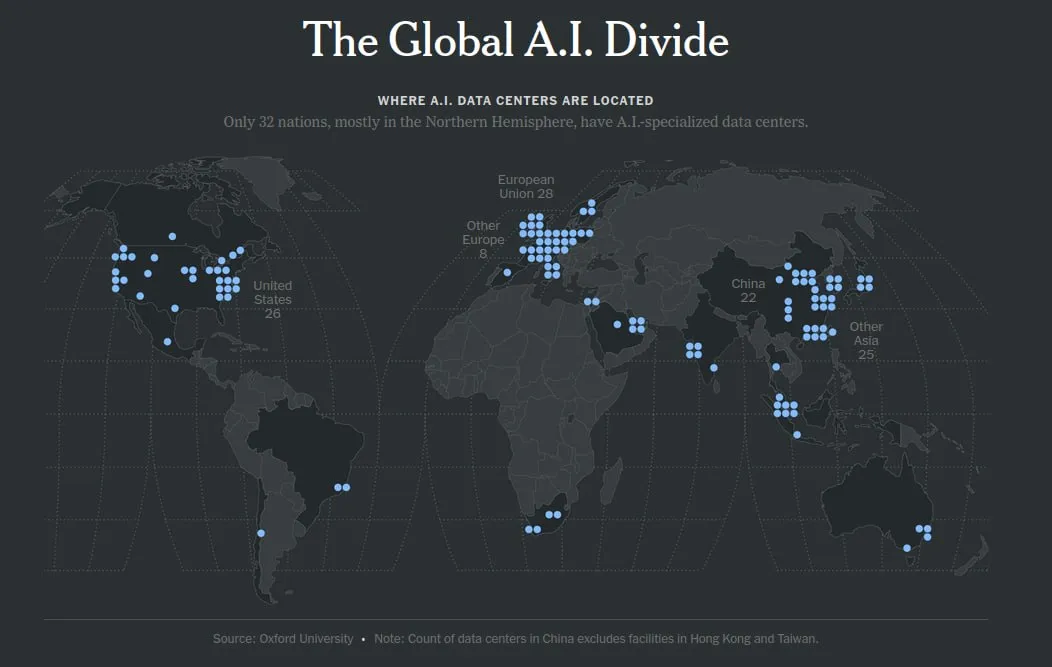
The crisis of overproduction further narrows the scope for the profitable investment of capital and drives the bourgeoisie toward an ever more acute struggle for the redivision of markets. And the deeper the crisis becomes, the more radical are the measures adopted by the ruling circles.
For many years, this rivalry remained largely concealed behind a facade of ostentatious friendliness between countries. Yet as the economic crisis deepened and the balance of forces shifted, the conflict escalated into a full-scale trade war.
Trade wars between countries, in turn, have often preceded full-scale armed conflicts.
Why Does Economic Competition Lead to Armed Conflicts Between States?
The state is an instrument of domination in the hands of the ruling class. Without the backing of oligarchs, no serious politician can count on winning an election or on receiving support afterward. Yet without the state and its coercive, judicial, political, diplomatic, and other institutions, transnational corporations would likewise be unable to compete successfully on the world stage.
The capitalist economic system is based on competition, and war is the highest expression of that competition – a natural and inevitable outcome. War cannot be understood apart from the economy.
Conflicts fomented between individual countries converge into a broader confrontation among the major imperialist powers, each of which seeks to support forces loyal to it and establish its own hegemony. The involvement of large numbers of states in military conflicts creates the preconditions for a more global conflict – a world war.
Today, representatives of the ruling class themselves openly acknowledge that they are preparing for war and for a global redivision of world markets:
- Global military spending continues to rise. In 2024 and 2025, NATO’s budget increased by 18.6% and 15.9%, respectively.
- In early 2026, the United States published new military strategies identifying China as a key long-term strategic challenge. The Pentagon requested a $901 billion military budget for 2026, with plans to increase it to $1.5 trillion by 2027.
- In 2026, China is actively modernizing its military, seeking to achieve the status of a “world-class military” by 2027. This rearmament is officially justified by the need to defend national interests, including Taiwan and disputed waters.
- Russia plans to carry out the largest rearmament program in its recent history between 2026 and 2036.
- In the fall of 2025, German Defense Minister Boris Pistorius said that some military experts were revising their estimates of when a possible conflict between NATO and Russia could occur, moving the date forward from 2029 to 2028. According to Pistorius, some analysts believed that the summer of 2025 might have been Europe’s last “peaceful” summer. He later clarified that he had made the statement to accelerate the rearmament of the German military.
- German industry is shifting to a war footing: it has increased ammunition production to a level higher than that of the United States and is reorienting the automotive industry toward military production.
The threat of world war has moved beyond the outrageous pronouncements of fringe figures and taken the form of concrete measures to prepare for such a war.
IV. What Is to Be Done?
On the world market, the interests of different groups of capitalists are constantly in conflict. The uneven development of countries means that the balance of forces is continually shifting. As a result, the outcome of the previous division of the world no longer corresponds to the new balance of forces in world politics. Representatives of the ruling class recognize this fact and seek to redivide the world once again. Today’s trade wars are merely the outlines of this struggle.
Choosing one trade policy over another cannot bring lasting peace and stability, because capitalist competition itself remains intact. Only its replacement with a different system can offer the peoples of the world a peaceful future. That system is socialism.
Capitalist competition and the violent seizure of spheres of influence are alien to socialism. Social ownership and power in the hands of working people do not require the seizure of other peoples’ resources. On the contrary, the history of the twentieth century, as exemplified by the Council for Mutual Economic Assistance (CMEA), demonstrates the heights that peoples can reach through cooperation.
The CMEA created a self-sufficient bloc in which countries, through mutual assistance, were able to rebuild Eastern Europe’s infrastructure and industry after World War II without imposed dependency or loans. In 1975, CMEA member countries accounted for 33% of global industrial production. Since 1949, the economic potential of these states had increased severalfold, without any competition.
The socialist system is a genuine, functioning alternative to capitalism, one whose viability has been demonstrated in practice. Only socialism can bring peace to the peoples of the world.
But socialism will not replace capitalism on its own, automatically. Achieving that requires effort and a long journey. Yet even the longest journey begins with a first step: the study of Marxist-Leninist theory and the building of a communist organization.
Sources
- Agence Europe — “Several EU Member States demand additional tariffs on Russian and Belarusian products” — November 7, 2025.
- Military Review (Voennoye Obozreniye) — “Trump’s Tariffs: A Prelude to Expansion or War” — June 27, 2025.
- Reuters — “Businesses sound alarm as Trump tariff chaos hits the economy” — March 12, 2025.
- CNN — “Trump announces 130% tariffs on China. The global trade war just came roaring back” — October 11, 2025.
- Global Times — “China hits back at US with 34% extra tariffs, lawsuit at WTO following its 'reciprocal tariffs” — April 4, 2025.
- BBC — “Trump's new global tariff comes into effect at 10%” — February 24, 2025.
- The Guardian — “What will happen to Trump’s tariffs after supreme court verdict?” — February 20, 2025.
- The New York Times — “Trump Administration Takes Steps to Refund $166 Billion in Tariffs” — April 21, 2026.
- CNN — “Trump announces global tariffs will increase to 15% from 10% ‘effective immediately’” — February 22, 2026.
- European Commission — “EU increases tariff duties on Russian and Belarusian imports of agricultural products and fertilizers” — July 23, 2025.
- Al Jazeera English — “EU backs tariffs on fertiliser imports from Russia, Belarus” — May 22, 2025.
- IISS — “The EU’s approach to tariffs on Chinese electric vehicles” — October 31, 2024.
- Euro News — “China hits Europe’s brandy exports with duties but adds exemptions” — July 4, 2025.
- ElDala — “Kazakhstan Plans to Raise the Recycling Fee on Equipment from Russia and Belarus” — January 28, 2026.
- RBC — “Russia Has Adjusted Its Recycling Fee for Inflation: How It Will Affect the Auto Market” — January 1, 2026.
- Herzog Fox & Neeman — “The New U.S. Tariffs” — April 9, 2025.
- BBC — “Russia not on Trump's tariff list” — April 3, 2025.
- NDTV — “"Will Crush Your Economy": US Senator's Big "Russia" Warning For India, China” — July 22, 2025.
- Fortune — “Macron warns EU may hit China with tariffs over trade surplus” — December 7, 2025.
- Independent — “Starmer to declare end of globalisation while Trump’s tariff war rages” — April 6, 2025.
- GURU — “Who Will Win and Who Will Lose from Trump’s Tariffs” — February 24, 2025.
- Erica York, Alex Durante — “Tracking the Impact of the Trump Tariffs & Trade War” // Tax Foundation — March 13, 2026.
- IG — “US-China trade war intensifies: tariffs hit 125% as other countries get reprieve” — April 9, 2025.
- EU Perspectives — “3% inflation, slower GDP growth. European Commission predicts energy shock fallout” — May 28, 2026.
- Reuters — “US annual consumer inflation posts largest gain in three years as prices increase broadly” — May 12, 2026.
- CNN — “The US wants to push China out of Latin America. The Panama Canal is the latest test” — February 5, 2026.
- The New York Times — “Trump Pushes Europe to Stop Buying Oil and Gas From Russia” — July 31, 2025.
- Foreign Policy — “Trump, Modi Reach Long-Awaited U.S.-India Trade Deal” — February 2, 2026.
- The New York Times — “Tariffs Raised Consumers’ Prices, but the Refunds Go Only to Businesses” — April 24, 2026.
- The New York Times — “Corporate America Aims to Preserve Profit Streak During War in Iran” — April 24, 2026.
- Vedomosti — “Who Pays for U.S. Tariffs on Foreign Goods” — January 23, 2026.
- Agenda Publica — “Europe Caught Between the US and China: Massive aid and new trade war” — April 24, 2023.
- Al Jazeera English — “Australia and EU seal trade deal to cut reliance on China’s rare earths” — March 24, 2026.
- Reuters — “Foxconn building Nvidia superchip facility in Mexico, executives say” — October 9, 2026.
- Reuters — “Toyota, Honda turn India into car production hub in pivot away from China” — November 6, 2025.
- Reuters — “India imposes temporary tariff on some steel to stem cheap imports from China” — November 6, 2025.
- Xinhua — “Xinhua Headlines: China targets quality growth in 2026 and beyond amid weakening global economy” — March 6, 2026.
- Notes from Poland — “Tusk declares end of “naive globalisation” and calls for “rebuilding of national economy”” — April 11, 2026.
- Time — “Remaking Poland” — April 8, 2008.
- The New York Times — “The Global A.I. Divide” — June 21, 2025.
- The New York Times — “New Vehicles, Face Paint and a 1,200-Foot Fall: The U.S. Army Prepares for War With China” — October 29, 2024.
- The Guardian — “Congress passes $901bn defense bill that includes support for Ukraine and Europe” — December 17, 2025.
- DefenseScoop — “DOD wants more than $2B in fiscal 2027 to move beyond ‘fragmented’ CJADC2 deployments” — May 28, 2026.
- Reuters — “China lifts military budget to modernize weapons, defence technology” — March 10, 2026.
- The Interpreter — “China, Taiwan, and the PLA’s 2027 milestones” — February 12, 2025.
- Kremlin.ru — “Expanded Meeting of the Defense Ministry Board” — December 17, 2025.
- Novinite — “Germany Issues Chilling Warning: 'This May Be Europe’s Last Peaceful Summer’” — November 17, 2025.
- Die Zeit — “Die Zeit: German Defense Minister Suddenly Rules Out Russia–NATO War Before 2030” — December 22, 2025.
- Süddeutsche Zeitung — “Rheinmetall wächst rasant — 350.000 Bewerbungen im Jahr” — April 24, 2026.
- Wall Street Journal — “Germany Is Reinventing Itself as a Weapons Factory” — April 19, 2026.